Home Blog Page 639

Trump’s 25% Tariffs On Imported Vehicles Spark Global Backlash
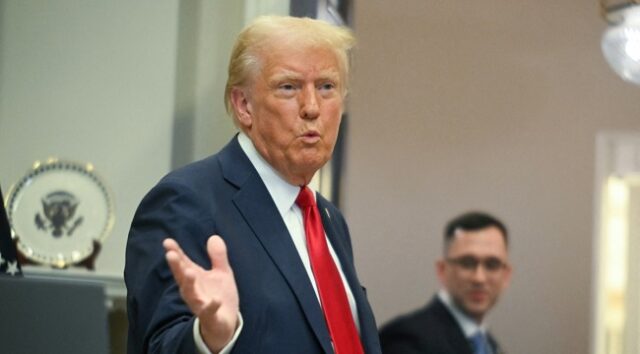
U.S. President Donald Trump has announced steep tariffs on imported cars and auto parts, a move that has triggered immediate backlash from global trading partners and financial markets.

The 25% tariff, which takes effect at 12:01 am (0401 GMT) on April 3, will apply to foreign-made cars and light trucks, with additional duties on key auto parts set to follow within the month.

The announcement rattled Wall Street, with General Motors and Stellantis shares falling over three percent ahead of Trump’s statement.

Meanwhile, in Japan, Toyota’s stock dropped by more than three percent, while Nissan, Honda, and Mitsubishi also suffered losses.

South Korea’s Hyundai saw a 2.7% decline in Seoul.

Japan’s Prime Minister Shigeru Ishiba called the move “extremely regrettable” and hinted at potential countermeasures. Canadian Prime Minister Mark Carney described the tariffs as a “direct attack” on Canadian workers and announced that his cabinet would meet to discuss retaliation. Brazil’s President Luiz Inácio Lula da Silva also signaled that his government “cannot stand still” in response.

Even Tesla CEO Elon Musk, a known Trump ally, voiced concerns about the tariffs’ economic impact, stating, “To be clear, this will affect the price of parts in Tesla cars that come from other countries. The cost impact is not trivial.”

Speaking from the Oval Office, Trump defended the move, saying, “What we’re going to be doing is a 25% tariff on all cars that are not made in the United States.”

His senior trade adviser, Peter Navarro, justified the decision, criticizing Germany and Japan for allegedly reserving high-value manufacturing for their own countries while turning the U.S. into a low-wage assembly operation.

Since his second term began in January 2025, Trump has already slapped new tariffs on Canada, Mexico, and China, along with a 25% duty on steel and aluminum imports.

However, the White House clarified that vehicles imported under the U.S.-Mexico-Canada Agreement (USMCA) may qualify for lower tariffs depending on their American content, while USMCA-compliant auto parts will remain duty-free for now.

Analysts warn that the tariffs could strain relations with major U.S. trading partners, including Japan, South Korea, Canada, Mexico, and Germany.

“Imposing 25% tariffs on imported cars will have a devastating impact on many of our close trading partners,” said Wendy Cutler, vice president of the Asia Society Policy Institute and a former U.S. trade negotiator.

She also warned that the move calls into question the value of U.S. trade agreements, given that many affected countries have free trade deals with Washington.

The American Automotive Policy Council, which represents Ford, General Motors, and Stellantis, issued a carefully worded response, supporting efforts to boost U.S. auto production but cautioning that “it is critical that tariffs are implemented in a way that avoids raising prices for consumers.”

According to the Center for Automotive Research, Trump’s tariffs on metals and auto imports could increase car prices by thousands of dollars and harm job growth in the industry.

Beyond automobiles, Trump is considering sector-specific tariffs on pharmaceuticals, semiconductors, and lumber.

His latest announcement comes just ahead of his planned “Liberation Day” on April 2, during which he promises reciprocal levies tailored to specific trading partners in response to what he deems unfair trade practices.

Trump has invoked emergency economic powers for some recent tariffs, but his auto levies are based on a 2019 government investigation that found excessive imports were weakening the U.S. economy and potentially harming national security.

Google search engine

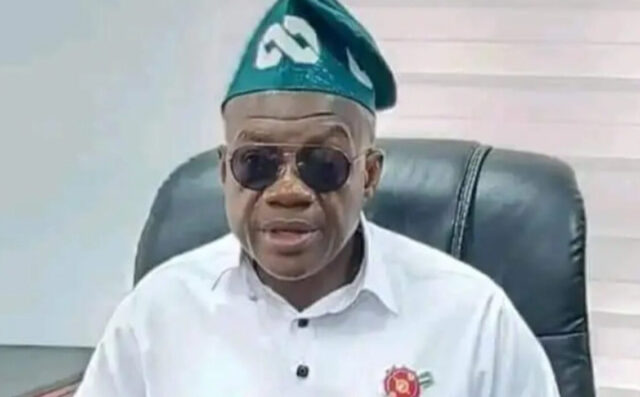
Why I Went Into Hiding Before Tinubu Declared Emergency Rule In Rivers – Okocha


The Chairman of the Rivers State chapter of the All Progressives Congress (APC), Chief Tony Okocha, has revealed that he went into hiding out of fear for his life until President Bola Ahmed Tinubu declared a state of emergency in Rivers State.

Speaking with reporters on Thursday at the APC national secretariat in Abuja, Okocha insisted that Tinubu’s intervention saved Rivers from plunging into anarchy.

According to him, “People like us could hardly leave certain places because we were hiding for fear of the unknown as non-state actors brandished guns and made statements tailored toward anarchy and lawlessness. We all knew there was a looming problem before the President intervened.”

He emphasized that Rivers State plays a crucial role in Nigeria’s economy, and those criticizing Tinubu’s decision would have condemned him had he failed to act.

“Some of these people shouting that the President did wrong when he stepped in would have also said, ‘You had this decision at your fingertips and did nothing,’ if things had gone out of hand.”

Okocha took a swipe at former President Goodluck Jonathan for criticizing Tinubu’s declaration of emergency rule, arguing that it was a necessary measure to bring stability to the state.

“Security and intelligence have been beefed up in Rivers since the state of emergency was declared. With the emergency declared, people like us who are in the opposition in the state can now move around.”

He further claimed that Nyesom Wike, Minister of the Federal Capital Territory (FCT) and a key political figure in Rivers, had been working behind the scenes to resolve the crisis with Governor Siminalayi Fubara but was hindered by certain self-serving politicians.

Okocha pointed to the Supreme Court’s judgment as a key factor that made the political crisis in Rivers unavoidable, saying it was impossible for Governor Fubara to govern effectively without a functional legislative arm.

“The governor jettisoned 27 lawmakers and was dealing with only three lawmakers while withholding the finances of the State Assembly, which was abnormal. It was a misnomer, unheard of in a democracy, to have 12.5 percent of legislators in place to run the government. The governor also pulled down the State Assembly under the guise of renovating it due to structural defects without prior notice, which was an affront to democracy.”

He welcomed the Peoples Democratic Party’s (PDP) decision to challenge the emergency rule at the Supreme Court, describing it as an opportunity to deepen Nigeria’s jurisprudence.

Additionally, Okocha called on the Nigerian Bar Association (NBA) to take legal action, criticizing their silence when Governor Fubara allegedly ordered the demolition of the State Assembly complex.

Google search engine

2027: No Vacancy In Aso Vila – Akpabio

Senate President Godswill Akpabio has declared that President Bola Ahmed Tinubu can be confident of securing a second term in office, despite opposition efforts to challenge his leadership in the 2027 election.

Speaking at a special Iftar/Lent dinner hosted by the Progressive Governors Forum (PGF) on Wednesday night in Abuja, Akpabio expressed optimism that the All Progressives Congress (APC) would not only retain power but also expand its hold on elective positions across the country in 2027.

Applauding the efforts of Governor Hope Uzodinma, who leads the PGF, Akpabio urged party members to remain united and work toward the party’s success.

He said: “Can we say amen! We will offer prayers for our party, that yes, indeed, victory shall be ours in 2027. Can we say a loud amen! And we will also pray for Mr. President that his second term is assured. Can we shout a loud amen!

“So, for the party, our governors, you will grow in numbers, you will grow in numbers. On our part in the parliament, ours is to continue to add the numbers to you. We just recently sent one of our own in the Senate to go and take care of Edo State. Is that not a good thing?”

Governor Hope Uzodinma described the gathering as a platform for party leaders to reflect on national development and strategize for APC’s continued dominance.

He emphasized that the success of the ruling government should be seen as a collective responsibility.

“Because we practice partisan democracy, and because we produce the government, we must take ownership of the government no matter where we are and where we sit. The success of the government is our collective success. The failure of the government is our collective failure. And the government is like a product,” he said.

“And all of us are marketing officers that must market this product. So the whole idea behind this… is to once more have a platform to appreciate ourselves, to celebrate our own, because the government is our own.

“So, as we work towards a more prosperous Nigeria, as we confront the challenges of leadership and governance, it is like a sweet and sour soup. Sometimes it is sweet, sometimes it looks bitter and sour, but at the end of the day, it is a food we must all eat.”

Wale Edun, Minister of Finance and Coordinating Minister of the Economy, praised Tinubu’s administration for making bold economic decisions that have led to positive changes in the country.

“According to him, we are all living it. Inflation is down, food prices are coming down, energy prices are coming down, the exchange rate is stable.

“Those are the things that affect the cost of living that people are feeling. There are other figures and metrics that are behind the scenes. But what matters is how people are feeling, how it is impacting them. And that is why Mr. President continues to make every effort to intervene, particularly on behalf of the poor and the most vulnerable.

“For coming together, Muslim brothers and sisters observing Ramadan, Christian brothers and sisters observing Lent. In brotherhood and in sisterhood, we stand. God will keep us strong, make our party strong, and help us to support, encourage, and work with President Tinubu to make Nigeria strong, make Nigeria great.”

The high-profile event was attended by several political leaders and government officials, including: National Security Adviser (NSA), Malam Nuhu Ribadu, Governors; Lucky Aiyedatiwa, Monday Okpebholo, and Francis Nwifuru

Others were; former Governor Yahaya Bello, former Secretary to the Government of the Federation (SGF), Boss Mustapha, Deputy Speaker of the House of Representatives, Mr. Benjamin Kalu, House Leader, Prof. Julius Ihonvbere, 36 state and FCT APC chairmen, members of the APC National Working Committee (NWC), led by Dr. Abdullahi Umar Ganduje

Google search engine

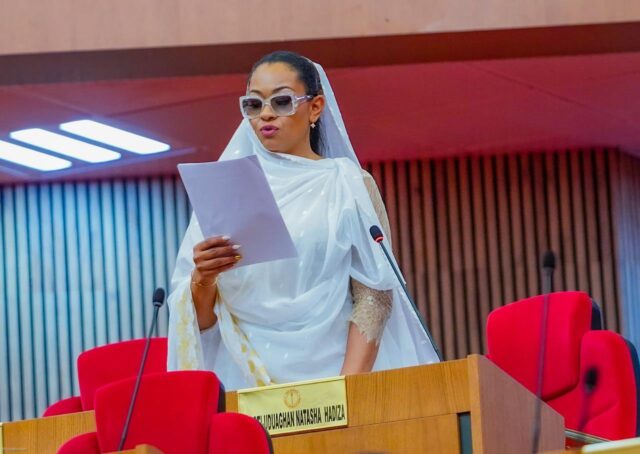
Group Seeking Senator Natasha’s Recall Not Registered – CAC


The Corporate Affairs Commission (CAC) has denied the existence of a group named Kogi Central Political Frontier, which recently petitioned the Independent National Electoral Commission (INEC) for the recall of Senator Natasha Akpoti-Uduaghan.

The commission clarified that the group is not registered in its records as a legally recognized entity.

On March 25, 2025, the group submitted a petition to INEC, seeking to recall Akpoti-Uduaghan, who represents Kogi Central Senatorial District.

In response to an inquiry regarding the registration status of Kogi Central Political Frontier, CAC Registrar General, Mainunat Hamu Modi, stated that the commission does not register political bodies or pressure groups.

A letter from the CAC read:

“We refer to your letter dated March 20, 2025, requesting the registration status of Kogi Central Political Frontier.

“Kindly be informed that the exact name, Kogi Central Political Frontier, is not available on record as a registered entity with the Commission.

“Furthermore, be guided that the Commission does not register political bodies or pressure groups.”

Despite this, on March 25, 2025, Kogi Central Political Frontier submitted a petition signed by Saliha Habib to the INEC Chairman, demanding Akpoti-Uduaghan’s recall.

The petition stated:

“Following the press release/observation of the Independent National Electoral Commission on the recall petition by the above body, attached is the contact of the petitioners.”

The group accused Akpoti-Uduaghan of failing to engage with her constituents and neglecting their concerns.

A representative of the group said:

“From the process the Kogi Central Indigenous people have carried out so far, this would be the first successful recall. We have spoken with one voice. We need a credible representative.”

However, Nigerians are now questioning how an unregistered group with no official address could initiate a recall process against a sitting senator.

Senator Natasha Akpoti-Uduaghan had earlier stated that she had not received any formal notification from INEC regarding the petition for her recall.

When contacted to confirm receipt of the INEC notice, Akpoti-Uduaghan questioned whether INEC’s publication of the notice on social media platforms was sufficient.

She said: “I haven’t been served. Guess publishing it on their social media handles suffices? I will ask my lawyers. It’s all crazy.”

DAILY GAZETTE obtained a notice from INEC titled, “Receipt of a petition for your recall from the Senate of the Federal Republic of Nigeria,” addressed to Senator Natasha.

Dated March 25, 2025, and signed by the Secretary to the Commission, Mrs. Rose Oriaran Anthony, the notice read:

“Pursuant to Section 69 of the Constitution of the Federal Republic of Nigeria 1999 (as amended), I write to notify you of the receipt of a petition from representatives of registered voters in your constituency seeking your recall from the Senate.

“This notification is in line with the provision of Clause 2(a) of the Commission’s Regulations and Guidelines for Recall, 2024.

“This letter is also copied to the presiding officer of the Senate and simultaneously published on the Commission’s website.”

DAILY GAZETTE reported that INEC had initially rejected the petition due to the absence of verifiable contact information but later accepted it after the petitioners provided the required details.

Google search engine

Godfrey Okoye University Appoints New Acting Registrar

Mrs. Ike, 

The Governing Council of Godfrey Okoye University, Enugu, has appointed Mrs. Peace Ike as the new Acting Registrar of the institution.

The announcement was made by the Vice-Chancellor, Rev. Fr. Prof. Christian Anieke, during the 102nd Joint Senate and Academic Board Meeting.

He described Mrs. Ike as a dedicated administrator with the experience and competence to uphold the university’s academic and administrative standards.

Prof. Anieke expressed confidence in her ability to contribute positively to the institution’s growth.

He urged staff and students to support her in ensuring the smooth operation of the university.

Reacting to her appointment, Mrs. Peace Ike expressed gratitude to the Governing Council and the university leadership for entrusting her with the responsibility.

She pledged to work diligently to uphold the values and mission of the institution.

Google search engine

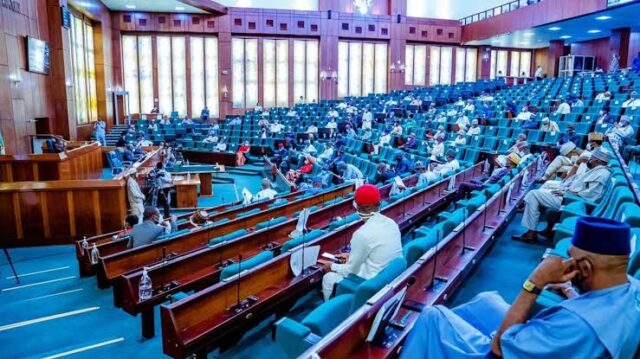
Bill Seeking To Return Nigeria To Parliamentary System Scales Second Reading


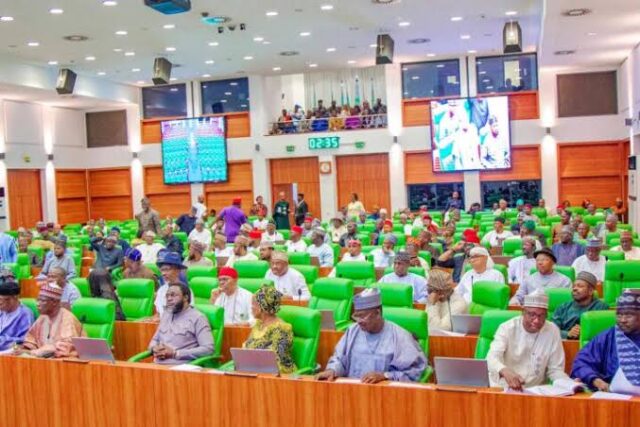
A bill aimed at restoring Nigeria’s parliamentary system of government has passed its second reading in the House of Representatives.

The proposed legislation, sponsored by House Minority Leader Kingsley Chinda and 59 other lawmakers, seeks to restructure the country’s governance framework by introducing the office of a Prime Minister as the Head of Government and a President as the ceremonial Head of State.

During Thursday’s plenary session, presided over by Deputy Speaker Benjamin Okezie Kalu, the bill was among 31 constitutional amendment proposals that successfully scaled second reading.

If enacted, executive powers will shift from a directly elected President to a Prime Minister chosen by the legislature, echoing Nigeria’s First Republic governance structure.

The bill, formally titled A Bill for an Act to Alter the Provisions of the Constitution of the Federal Republic of Nigeria, 1999, to Provide for the Office of the Prime Minister as Head of Government and the Office of President as Head of State and to Provide for a Framework for the Mode of Election to the Said Offices and for Related Matters (HB.1115),” is part of a broader push by lawmakers to amend the 1999 Constitution.

On February 14, 2024, 60 legislators introduced three bills proposing a shift from the presidential to the parliamentary system by 2031. These bills—HB.1115, HB.1116, and HB.1117—outline constitutional alterations necessary for the transition.

Speaking on behalf of the sponsors, Abdussamad Dasuki emphasized the urgent need for reform, pointing out flaws in the current system.

“Over the years, the imperfections of the presidential system of government have become glaring to all, despite several alterations to the constitution to address the shortcomings of a system that has denied the nation the opportunity of attaining its full potential.

“Among these imperfections are the high cost of governance, leaving fewer resources for crucial areas like infrastructure, education and healthcare, and consequently hindering the nation’s development progress, and the excessive powers vested in the members of the executive, who are appointees and not directly accountable to the people.”

Highlighting Nigeria’s historical experience with parliamentary governance, Dasuki recalled the First Republic, when executive and legislative powers were concentrated in parliament.

“That (parliamentary) was the governance system of the First Republic, a period when legislative and executive powers were exercised by the representatives of the people in parliament and in the executive, and by the nature of the system, these representatives were accountable to the people. For six years while it was in operation, the system worked for the country,” he said.

Supporters of the bill argue that restoring the parliamentary system will foster greater accountability, efficiency, and cost-effectiveness in governance.

They believe the shift will lead to a more responsible and responsive government while reducing financial burdens on the nation.

Google search engine

Hamas Spokesman Killed In Israeli Airstrike On Gaza

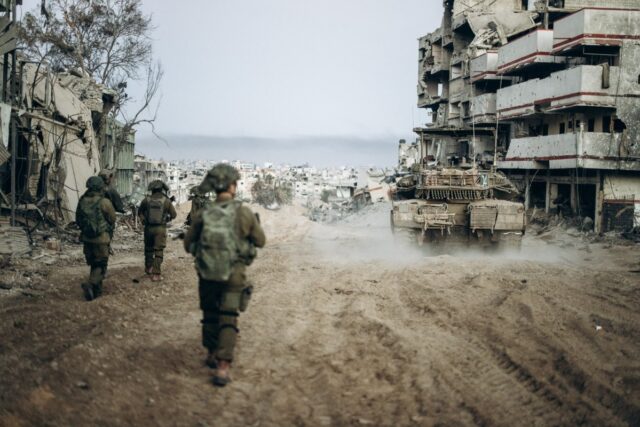
This handout picture released by the Israeli army on January 1, 2024 shows Israeli soldiers operating in the Gaza Strip amid continuing battles between Israel and the Palestinian militant group Hamas. (Photo by Israeli Army / AFP) / === RESTRICTED TO EDITORIAL USE - MANDATORY CREDIT "AFP PHOTO / HANDOUT / ISRAELI ARMY' - NO MARKETING NO ADVERTISING CAMPAIGNS - DISTRIBUTED AS A SERVICE TO CLIENTS == - === RESTRICTED TO EDITORIAL USE - MANDATORY CREDIT "AFP PHOTO / Handout / Israeli Army' - NO MARKETING NO ADVERTISING CAMPAIGNS - DISTRIBUTED AS A SERVICE TO CLIENTS == /


Hamas announced on Thursday that one of its official spokesmen, Abdul Latif al-Qanou, was killed in an Israeli airstrike in northern Gaza.

The group stated that he died in a “direct” strike on a tent in the Jabalia area.

The attack comes as Israel continues its bombardment of Gaza following the collapse of a fragile ceasefire on March 18.

Since the resumption of hostilities, the Hamas-run health ministry reports that at least 855 people have been killed.

Qanou is among several senior Hamas figures targeted in recent Israeli strikes.

Last week, Israel’s military confirmed the killing of Rashid Jahjouh, the head of Hamas’s internal security agency.

Earlier, Hamas acknowledged the deaths of key officials, including its government head in Gaza, Essam al-Dalis, and interior ministry chief Mahmud Abu Watfa.

The Israeli military confirmed Dalis’ death, identifying him as a political bureau member who had led Hamas’ administration in Gaza since June 2021.

Additionally, Hamas has confirmed the deaths of political bureau members Salah al-Bardawil and Yasser Harb.

In response to the latest strike, Hamas declared that targeting its leaders and spokespersons would not weaken its resolve, stating, “The occupation’s targeting of the movement’s leaders and spokespersons will not break our will.”

Google search engine

Reps Withdraw Bill Seeking To Strip Vice President, Governors, Deputies Of Immunity


The House of Representatives has reversed its earlier decision to pass for second reading an amendment bill seeking to remove the immunity granted to the vice president, governors, and deputy governors.

The lawmakers also rescinded their decision on a separate bill aimed at reviewing capital punishment provisions in the constitution.

The move comes amid backlash over the passage of the bills without extensive debate.

Lawmakers opted to withdraw them to allow for further discussion before any final decision is made.

During Thursday’s plenary, House Leader Prof. Julius Ihonvbere moved a motion to rescind the second reading passage of the bills and have them relisted for debate.

Deputy Speaker Benjamin Okezie Kalu, who presided over the session, emphasized the importance of a thorough deliberation on such critical legislative changes.

“The decision to rescind the passage of the bills was to enable lawmakers to thoroughly debate the bills before passage, given their sensitive nature,” Kalu said.

DAILY GAZETTE recall that the bill proposing the removal of immunity for certain public officeholders had originally passed its second reading on Wednesday.

Sponsored by Rep. Solomon Bob (Rivers PDP), the bill sought to amend Section 308 of the 1999 Constitution to eliminate immunity for the vice president, governors, and deputy governors.

According to its sponsors, the amendment aims to prevent abuse of office and promote transparency in governance.

The bill’s official title states:

“A Bill for an Act to alter the Constitution of the Federal Republic of Nigeria, 1999 to qualify the immunity conferred on the President, remove the immunity conferred on the Vice President, the Governors and their deputies, in order to curb corruption, eradicate impunity and enhance accountability in public office and for Related Matters.”

Additionally, the House withdrew a separate bill that had passed second reading on Wednesday.

Sponsored by Deputy Speaker Kalu and six others, the bill seeks to amend the 1999 Constitution to review penalties for certain capital offenses in alignment with international best practices.

Google search engine

ADC Amends Constitution To Attract New Members Ahead Of 2027


The African Democratic Congress (ADC) has announced amendments to its constitution aimed at expanding its membership base and providing a more accessible platform for Nigerians aspiring to contest elections.

Following a National Executive Committee (NEC) meeting in Abuja on Thursday, the party’s National Chairman, Chief Ralphs Nwosu, disclosed that the changes would allow more Nigerians to run on the ADC platform without prior membership restrictions.

According to Nwosu, the party remains committed to offering a credible alternative for qualified and patriotic Nigerians ahead of the 2027 elections.

As part of its efforts to foster unity and inclusivity, the ADC is introducing a symbolic Handshake” Ritual, a nationwide ceremony to be observed every October 1st.

Another key amendment includes the waiver of the two-year membership requirement previously needed to contest elections or hold party positions.

Under the new rules, new members will be eligible to contest immediately after joining the party.

The ADC is also gearing up for a national convention, during which Nwosu confirmed he would not seek re-election as National Chairman.

He stressed the importance of fresh leadership to mobilize Nigerians and drive a movement centered on accountability and transparency.

Addressing speculation about a potential alliance with Labour Party’s 2023 presidential candidate, Peter Obi, Nwosu clarified:

“I have not seen Mr. Peter Obi for the past one year, so we couldn’t have been in talks.

However, if he sees what we are doing and decides to join us, our doors are open.”

Regarding broader coalition efforts for the 2027 elections, he acknowledged ongoing discussions with the People’s Redemption Party (PRP) and several civil society organizations.

The goal, he emphasized, is to work collectively towards credible leadership in Nigeria.

“We will look Nigerians in the face and say, ‘Enough is enough.’ We will beg Nigerians to accept true leaders.”

Google search engine

Ebonyi Assembly Moves To Create 12 New LGAs, Approves N518m For Local Government Elections


The Ebonyi State House of Assembly has adopted a referendum to establish 12 additional Local Government Areas (LGAs), aiming to bring governance closer to the people and enhance service delivery.

With this decision, the number of LGAs in the state will rise from 13 to 25.

Lawmakers believe the expansion will help address developmental and economic challenges while correcting perceived imbalances in LGA distribution based on landmass and population density.

The resolution was unanimously approved during plenary at the State Legislative Complex, Nkaliki Road, Abakaliki.

The proposed LGAs include:

  • Ikwo South and Ikwo North from Ikwo LGA
  • Ekumenyi from Abakaliki LGA
  • Ebyia from Izzi LGA
  • Ndiagbo from Edda LGA
  • Ishielu South from Ishielu LGA
  • Akaeze, Ukaba, and Effium from Ivo, Onicha, and Ohaukwu LGAs
  • Izzikworo, Amohai, and Imoha from Ezza-South, Ezza-North, and Afikpo LGAs

Once officially gazetted, these LGAs are expected to strengthen governance, alleviate economic hardship, and ensure more equitable resource distribution across the state.

The motion for adoption was moved by the Chief Whip of the House, Hon. Prince Nkemka Okoro-Onuma (Edda West Constituency), and seconded by Hon. Ifeanyi Nwakpu (Ikwo North Constituency).

Meanwhile, at the same plenary session, the House passed the first reading of a bill to establish the Ebonyi State Diversity, Equity, and Inclusion Commission.

Google search engine

MOST COMMENTED

- Advertisement -
Google search engine