Just In: Police Summon Nigerian Senator Over Alleged Russian KGB Infiltration Of National Assembly
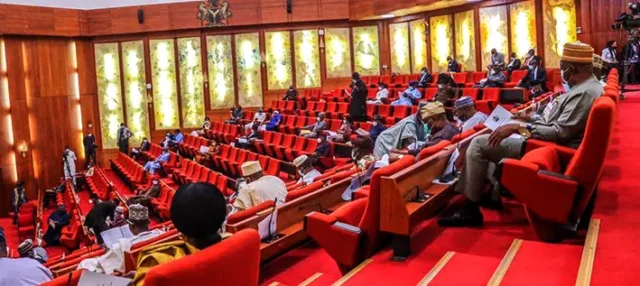
Senator Sunday Karimi has been summoned by the Nigeria Police Force for questioning following a report alleging that Russia’s KGB (Komitet Gosudarstvennoy Bezopasnosti), the former Soviet security agency, has infiltrated the National Assembly, raising concerns about Nigeria’s democratic stability.
Karimi is expected to cooperate with the investigation and disclose details regarding the report’s origin and sources.
The controversy began when the senator allegedly shared a report titled “KGB Agent Group Warns Senate: A Call for Vigilance Amidst Threats to Democracy” on the official WhatsApp group of the 10th Senate on February 23, 2025.
The report, first published by The Reporters, an online media outlet, sparked immediate debate within the National Assembly.
Senator Natasha H. Akpoti-Uduaghan, currently under suspension, petitioned the Inspector General of Police (IGP), raising alarm over the report’s implications for national security.
In her petition, dated March 5, 2025, Akpoti-Uduaghan warned about the seriousness of the claim, stating that “No nation can afford to ignore the presence of such a group within its legislative body.”
She emphasized that an immediate investigation was necessary to address the potential threat.
The petition further specified that Karimi shared the report in the Senate’s WhatsApp group at 4:08 AM Singapore time (8:08 PM Nigerian time) on February 23, 2025, while Akpoti-Uduaghan was in Singapore.
Given the weight of the allegations, the police have moved swiftly.
Karimi has been ordered to appear for questioning at the Force Headquarters in Abuja on March 24, 2025.
His invitation letter, dated March 17, 2025, was signed by Deputy Commissioner of Police Akin Fakorede, Head of the IGP Monitoring Unit.
With Reference No: CR:3000/IGP.SEC/MU/OPS.T1/ABJ/VOL.115/281, the letter is titled: “Re: Petition for the investigation of a publication titled ‘KGB Agent group warns Senate: A call for vigilance amidst threats to democracy.’”
The letter further states: “This office is investigating the above-mentioned case reported to the Inspector General of Police, in which your name featured prominently. You are kindly requested to interview the undersigned through CSP. Sunny Amison on 24th March, 2025, to shed more light on the allegations.”

Explosion Hits NLNG Facility In Rivers Days After Sole Administrator Took Office
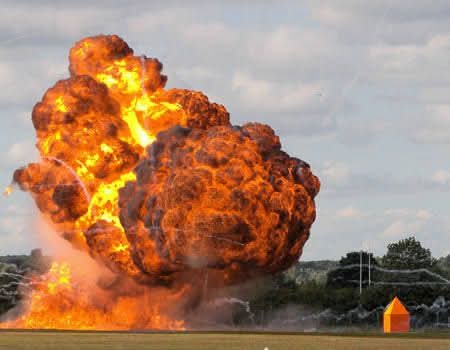
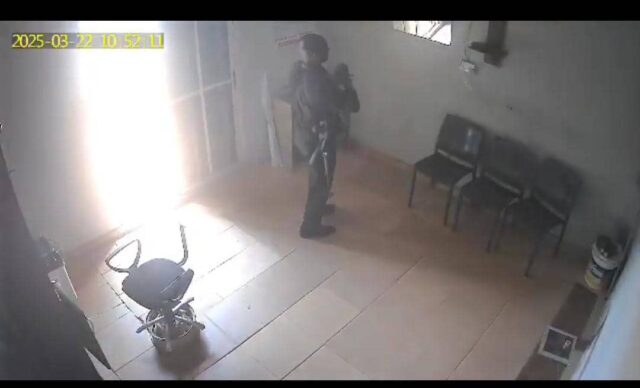
An explosion has been confirmed at the Soku oil facility operated by the Nigeria Liquefied Natural Gas (NLNG) Limited in Akuku Toru Local Government Area of Rivers State.
However, the exact cause of the explosion remains unclear, with possibilities ranging from equipment failure to sabotage or an attack on the facility.
The incident comes amid the ongoing political crisis in Rivers State, following the alleged impeachment notice to suspended Governor Siminalayi Fubara by the State Assembly.
In the past week, multiple reports of explosions at various oil facilities across the state have surfaced.
While some of these reports were accurate, others turned out to be false.
For instance, a viral video claiming that suspected militants bombed two Nigerian National Petroleum Company Limited (NNPCL) flow stations at Cawthorne Channel was debunked.
It was later confirmed that the video was an old clip from an explosion that occurred on February 19, 2025, at Cawthorne Channel 1 in Iloamatoru, Bonny, which resulted in three fatalities.
However, reports of explosions in Bodo Community in Ogoniland and Ogba/Egbema Ndoni Local Government Area were confirmed to be true.
In a nationwide broadcast on March 18, President Bola Tinubu declared a six-month state of emergency in Rivers State, citing the recent explosions as part of the justification for taking action to protect critical oil infrastructure.
Confirming the explosion in Soku, the Executive Director of Youths and Environmental Advocacy Centre (YEAC-Nigeria), Dr. Fyneface Dumnamene Fyneface, stated that the incident was accompanied by fireballs.
However, the leadership of the Soku Kingdom has dismissed reports circulating on social media that fire engulfed the Soku gas plant.
The General Secretary of Soku Kingdom, Mr. Witness Alasia, clarified the situation, explaining that while a fire outbreak occurred on a gas pipeline along the Soku-Abua-Rumuji right of way, the Soku gas plant remains intact and fully operational.
Part of his statement reads: “On behalf of the leadership of the Soku Kingdom, I write to debunk the falsehood escalating on all social media that there was an explosion in the Soku Gas Plant. It is disheartening and worrisome that people will mischievously misinform the public with a baseless and untrue story.”
“The public should disregard this unguided and untrue report. We use this medium to inform the public that Soku and her satellite communities are safe and calm. Regards.”
UNN Celebrates Former Enugu Lands Commissioner, Prof. Victor Nnam, On Elevation To Fellow Of The Nigerian Institution Of Surveyors

The University of Nigeria, Nsukka (UNN) has honored Professor Victor Nnam, former Enugu State Commissioner for Lands and Urban Development, on his elevation to the prestigious rank of Fellow of the Nigerian Institution of Surveyors.
In a heartfelt message, the Acting Vice Chancellor of UNN, Professor Oguejiofor Ujam, commended Prof. Victor Nnam for his outstanding contributions, dedication, and commitment to the field of surveying and geoinformatics.
He described the achievement as a great honor not only for Nnam but also for the university.
“As a volunteer professor, you have selflessly imparted your knowledge and expertise to our students, providing them with invaluable guidance and mentorship. Your generosity and willingness to give back to the academic community are traits we hold in high esteem,” Prof. Ujam stated.
In his congratulatory letter, obtained by DAILY GAZETTE, the vice chancellor further described Prof. Victor Nnam’s elevation as “a source of pride for our institution,” expressing delight that UNN is associated with his success.
“On behalf of the management of the University of Nigeria, we extend our warmest congratulations to you,” he added.
Prof. Victor Chukwuemeka Nnam, a distinguished expert in surveying and geoinformatics, has made significant contributions to academia and professional practice, earning him widespread recognition in the field.
His elevation to Fellow of the Nigerian Institution of Surveyors marks another milestone in a remarkable career dedicated to excellence and service.
DAILY GAZETTE reports that investiture is scheduled to hold on Tuesday, 6th May 2025, at Akure, the Ondo state capital.
Amnesty International Demands Investigation Into Senator Natasha’s Allegations Against Akpabio
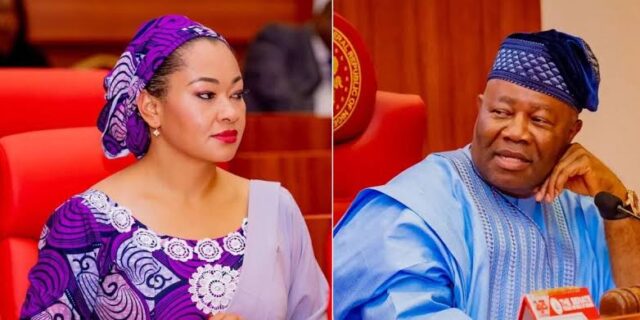
Amnesty International has called for an independent probe into the allegations made by Senator Natasha Akpoti-Uduaghan against Senate President Godswill Akpabio.
The human rights organization made this demand in a statement on X, signed by Isa Sanusi, the Director of Amnesty International Nigeria.
“Amnesty International calls on the Nigerian authorities to immediately institute an independent and impartial investigation into the allegations of sexual harassment by Senator Natasha Akpoti-Uduaghan against the President of the Senate Godswill Akpabio,” Sanusi stated.
Akpoti-Uduaghan, who represents Kogi Central under the Peoples Democratic Party (PDP), alleged that Akpabio had been suppressing her legislative rights after she rejected his advances.
According to her, she has been prevented from participating in debates and raising issues affecting her constituents in the Senate.
While Akpabio has denied the allegations, the Senate later suspended Akpoti-Uduaghan, citing what it described as her “unruly conduct.”
Amnesty International emphasized the urgency of addressing the issue, warning of the broader consequences of inaction.
“The weight and scale of the allegations of the sexual harassment are one more pressing reason for establishing an independent, resourceful and impartial investigation.
“The National Assembly must not continue to look away while the allegations remain and are being trivialized, unaddressed and ignored.
“Blatant failure of the authorities to investigate the allegations raised by Senator Natasha Akpoti-Uduaghan will have devastating consequences, that include perpetuating a system that makes it increasingly difficult for survivors of sexual harassment to get justice, while allowing perpetrators to get away with gross human rights violations.
“This is one case that the authorities can use to show that there is zero tolerance for sexual harassment, no matter who is involved.
“The fear of not being believed, or even being blamed, is already creating a dangerous culture of silence that prevents women who faced sexual harassment from seeking justice. The tide of sexual impunity against women and girls must be turned now,” Sanusi stated.
Rivers House Of Assembly Complex Will Be Ready In Six Months – Administrator Ibas
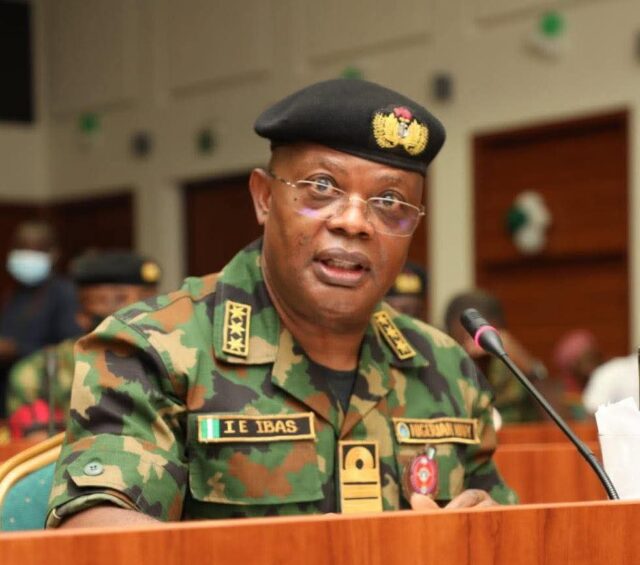
The Rivers State Sole Administrator, Vice Admiral Ibok-Ete Ibas, has assured that the Rivers State House of Assembly Complex will be completed within six months, before the end of his tenure.
Ibas made this known on Saturday while inspecting the project site, noting that in his first two days in office, he observed a missing pillar in the state’s governance structure.
During the visit, Ibas urged the contractor handling the project to accelerate work and ensure the timely completion of the complex as mutually agreed.
He stressed that part of his mandate is to restore full legislative functions in the state.
Ibas, who was accompanied by Dr. George Nwaeke, the Head of Rivers State Civil Service, was led around the site by Engineer Omaka Oko, the General Manager of the contracting firm.
“I had been at the executive arm of the state governance structure, and one of the pillars that is missing for now is the legislature, and for them to function effectively, they also need a place to work from,” Ibas said.
“And perhaps, I am yet to be sure that work is going on as expected, so that by the end of the six months, this place will be ready for those who need to use it. I think basically that is what it is.”
He further expressed confidence in the contractor’s ability to adhere to project timelines.
“They (contractor) have a schedule, and they have timelines that I believe they will like to adhere to. I think the state has done its own bit by providing the necessary funds, I was briefed.”
Ibas emphasized that his appointment was primarily to restore law and order, ensuring that the state returns to normalcy.
2027: SDP’s Adebayo Rules Out Merger With APC, Others
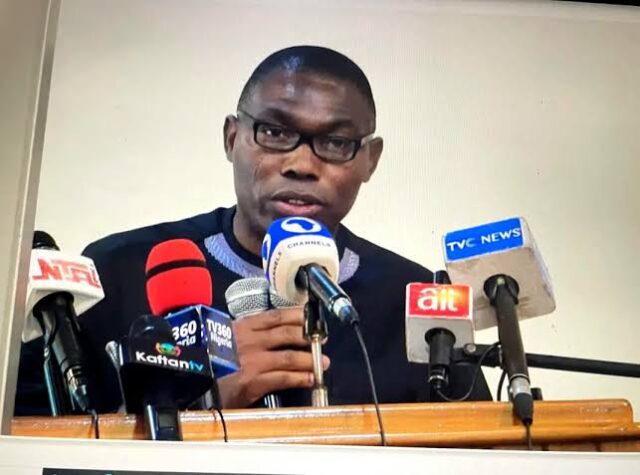
The 2023 presidential candidate of the Social Democratic Party (SDP), Adewole Adebayo, has dismissed any possibility of a merger or alliance with the ruling All Progressives Congress (APC) or any other party ahead of the 2027 elections.
Speaking in Abeokuta, the Ogun State capital, on Saturday during a meeting with the state executive of the SDP, Adebayo reaffirmed the party’s independence and commitment to the welfare of Nigerians.
He was accompanied by former Sports Minister Solomon Dalung and the SDP chairmen from Ogun, Oyo, and Lagos states, among others.
Addressing speculations that the SDP was an appendage of the APC, Adebayo strongly refuted such claims.
“Maybe APC has appendicitis, they should go to the hospital to kill it. We are a strong party. We are older than any of the parties available. Our mission is clear: we are not in government with them.
“I led the party in the last election. I’m still standing here. I’m not a minister under Tinubu, all the State Chairman, the National Chairman are intact, National Secretary. So, we are standing on our own,” he said.
Adebayo also explained why the party avoids confrontational politics, emphasizing its intellectual approach to national issues.
“The reason people look down on us is because we don’t attack people to tackle issues, because our party is a party of intellect. We are the only party that’s a little to the left. Having been a little to the left since we came in 1989 we remain so.
“The problems of Nigeria can only be found with solutions on the left, which is that chapter two of the Constitution, invest money in education, in housing, in healthcare, good infrastructure, let Nigerians live what Chief Obafemi Awolowo called a life more abundant.”
He reiterated the party’s principles and its commitment to upholding the legacy of the late Chief MKO Abiola.
“Is there any kind of agreement between the two parties to make or to act together? Anybody who wants to join the SDP is welcome, except that you must learn our creed. We are for justice, and progress.
“As white as the horse is, so is our heart. We want the Nigerian people to regain what MKO Abiola promised.
“Abiola promised farewell to poverty.
“He sacrificed his life for it. So, anybody who wants to come to SDP must first ask himself, can you make the sacrifice Abiola made?”
Adebayo made it clear that while the party is open to new members, it will not accommodate individuals of questionable character.
“We are merging with the Nigerian people. You cannot be on the side of the poor and the side of big men at the same time. If anybody tells you: I’m a party that wants to help poor people and is hanging around with those who are oppressing the people, that person doesn’t know what you want. SDP is clearly on the side of the people,” he said.
During the meeting, the SDP chairman in Ogun State, Ola Williams, welcomed new members who share the party’s values and vision.
Canada Rejects Over 13,000 Asylum Claims From Nigerians
Between January 2013 and December 2024, no fewer than 13,171 Nigerians seeking refugee protection in Canada had their claims rejected, according to data from the Refugee Protection Division (RPD) of the Immigration and Refugee Board of Canada (IRB).
In 2024 alone, 811 Nigerian asylum seekers had their claims denied.
Nigeria ranked fifth among countries with the highest number of rejected refugee claims, alongside Mexico (2,954), India (1,688), Haiti (982), and Colombia (723), according to a report by Sunday Punch.
The IRB grants refugee status to applicants who meet the United Nations’ definition of a Convention refugee, which is incorporated into Canadian law.
The 1951 UN Convention on Refugees defines refugees as individuals with a well-founded fear of persecution based on their race, nationality, religion, political beliefs, or membership in a particular social group.
These social groups can include sexual orientation, gender identity, being a woman, or individuals living with HIV/AIDS.
Applicants must also provide evidence of torture, threats to life, or the risk of cruel and unusual treatment or punishment if they are forced to return to their home country.
Typically, refugee claims are made when immigrants notify the Border Services Agency upon arrival at a Canadian port of entry or report to an immigration officer.
If a claim is deemed eligible, it is referred to the RPD to begin the refugee determination process.
During the period under review, 94 claims from Nigerian passport holders were abandoned, often due to:
- Failure to submit the Basis of Claim Form on time
- Inability to provide correct and current contact information
- Non-attendance at refugee protection hearings
Additionally, 78 claims were withdrawn, meaning the applicants chose not to proceed with their requests. As of 2024, 19,889 claims from Nigerians were still pending.
The number of rejected claims fluctuated over the years:
- 2013 – 127 rejections
- 2014 – 241 rejections
- 2015 – 248 rejections
- 2016 – 476 rejections
- 2017 – 917 rejections
- 2018 – 1,777 rejections
- 2019 – 3,951 rejections (highest annual figure)
- 2020 – 1,770 rejections
- 2021 – 1,686 rejections
- 2022 – 728 rejections
- 2023 – 439 rejections
- 2024 – 811 rejections
Despite the high rejection rate, 10,580 Nigerians successfully obtained refugee protection over the past decade.
In 2024 alone, 2,230 Nigerians were granted asylum.
Nigeria ranked 8th among the top 10 countries with the highest number of accepted claims.
Other countries in the top 10 include:
- Turkiye – 4,866 successful claims
- Mexico – 4,363 successful claims
- Colombia – 3,340 successful claims
- Iran – 3,200 successful claims
- Pakistan – 2,556 successful claims
- Haiti – 2,211 successful claims
- Afghanistan – 1,921 successful claims
- Kenya – 1,653 successful claims
The number of successful Nigerian asylum claims has varied over the years:
- 2013 – Fewer than 20 approvals
- 2014 – 308 approvals
- 2015 – 394 approvals
- 2016 – 389 approvals
- 2017 – 764 approvals
- 2018 – 755 approvals
- 2019 – 1,733 approvals
- 2020 – 1,534 approvals
- 2021 – 2,302 approvals
- 2022 – 1,315 approvals
- 2024 – 2,230 approvals
While thousands of Nigerians continue to seek refugee status in Canada, the rejection rate remains significant.
With over 19,000 claims still pending, the outcome of these applications will determine future trends in Canada’s immigration policy toward Nigerian asylum seekers.
Tinubu’s Corrupt Decree In Rivers Proves Lord Lugard’s Point About Nigeria – Odinkalu

Nigeria’s President, Bola Tinubu,
In Nigeria, history tends to repeat itself with unerring accuracy and tiresome syntax. When he wrote his Report on the Amalgamation of Northern and Southern Nigeria and Administration in 1919, Frederick Lugard described Nigeria as an “anomaly…. of a country with aggregate revenue practically equal to its needs, but divided into two by an arbitrary line of latitude.” While one portion was fiscally viable, he suggested, the other “was dependent on a grant paid by the British taxpayer.”
Through the Amalgamation in 1914, Lugard created a Customs Union in which extraction could be sustained by administering mechanisms of fiscal compensation to smooth over these disparities.
From the get-go, the invention of Nigeria was about the exploitation of resources and property. Rivers State is at the centre of these resources.
Towards this goal, the powers of government have historically been mobilised.
More than 111 years after the Amalgamation, this raison d’être of the Nigerian estate remains resilient. It is both evident and explicit in the machinations that have now eventuated in the declaration of a state of emergency over Rivers State.
When he addressed the country on March 18, 2025, to proclaim a state of emergency in Rivers State, Bola Ahmed Tinubu, Nigeria’s president, claimed that he acted on “security reports made available to him” showing “disturbing incidents of vandalization of pipelines by some militant without the governor taking any action to curtail them.”
Importantly, he had not bothered to speak to the state governor to hear his own side of the story, nor did he indicate that any humans had been injured or killed.
The State Security Service (SSS) provides security reports in such situations. It is [currently headed as Director-General by Oluwatosin Ajayi, whose stint as state director of security (SDS) in Rivers State coincided with the tenure as governor of Nyesom Wike, a principal belligerent in the political conflict in the state.
As a result, the president continued, “no good and responsible president will stand by and allow the grave situation to continue without taking remedial steps prescribed by the Constitution to address the situation in the state, which no doubt requires extraordinary measures to restore good governance, peace, order and security.”
These words were not new. When he moved the motion in the federal parliament on May 29, 1962, to declare a state of emergency in the old Western Region, Prime Minister Abubakar Tafawa-Balewa uttered the original version of the same sentence. After rendering his version of the events in the regional parliament in Ibadan the previous week, the Prime Minister declared “No responsible Government of the Federation could allow an explosive situation such as that which now exists in Western Nigeria to continue without taking adequate measures to ensure that there is an early return to the Region of peace, order and good Government.”
Then in the Western Region, as today in Rivers State, there was a political dispute between a predecessor and his successor, both of them of the same party. The predecessor was Chief Obafemi Awolowo, leader of the Action Group, who had transitioned from the office of regional premier to being leader of the opposition in the federal parliament. His successor as Premier was Ladoke Akintola. Although both lawyers, these men had fundamental differences in both provenance and ideology. Awolowo was Ijebu from the south of Yoruba land. Akintola, who grew up in Northern Nigeria, was from Ogbomosho in the north of Yoruba land. Ideologically, Akintola’s politics tended towards conservative populism; Awolowo was more towards democratic socialism.
In May 1962, the National Executive Committee of the Action group resolved to request Akintola to resign as both deputy leader to Chief Awolowo in the party and as premier of the Western Region. Rival factions emerged in the party claiming a majority in the regional parliament. Akintola sought to have the parliament convened for the purpose of procuring a vote of confidence on his government. Both the regional governor and the Speaker of the parliament rebuffed his overtures. Instead, outside the parliament, some party officials led by Bola Ige, secured the signatures of a majority of elected members withdrawing support from Akintola’s administration.
The party presented these signatures to the Governor, Oba Adesoji Aderemi, then the Ooni of Ife who thereafter invited Alhaji Dauda Adegbenro to form a new government as regional Premier. Attempts to re-convene the regional parliament ended in fracas. As [recalled by Chief Awolowo “one Mr. Oke, a supporter of Chief Akintola, a Member from Ogbomosho, jumped on the desk and was running about on the desk and then lifted a chair and struck somebody on the head. That is how it started, and then thereafter, a certain Mr Ebubedike, the member from Badagry who lives in Ajeromi, took the Mace and then, in an attempt to strike the Speaker with the Mace, the Mace struck the table and broke into two.”
On receiving notification of the governor’s decision to remove him and designating Alhaji Adegbenro as regional premier on May 21, 1962, Akintola began proceedings at the High Court of the Western Region. The Chief Justice of the Region – they were called Chief Justice then –Samuel Okai Quashie-Idun, had acted as Chief Justice of Ghana under the government of Kwame Nkrumah.
He headed to Nigeria after resigning from Ghana’s judiciary in 1958 over disagreements with the Nkrumah government in the first flush of post-colonial authoritarianism. In 1960, Quashie-Idun became Chief Justice of the Western Region in succession to Robert Yorke Hedges. As Chief Justice, he was said to enjoy the support and patronage of Premier Akintola.
The expectation of Akintola was reportedly that the Chief Justice would afford him an expedited hearing and a favourable verdict, handing him under colour of law the boost he needed in this battle of his political life. Instead, Chief Justice Quashie-Idun decided to distil the legal issues and, rather than rule on them, transmitted those to the then Federal Supreme Court for decision.
The case eventually travelled to [the Privy Council, where Akintola lost the legal dispute. It is said that a disappointed Ladoke Akintola withdrew patronage from Quashie-Idun, and their relationship never recovered. The following year, Quashie-Idun left the judiciary of the Western Region to East Africa, becoming the President of the East African Court of Appeal, where [he died in 1966
It is thought that Quashie-Idun tried, albeit unsuccessfully, to recover the relationship. In June 1963, he dismissed the action by Alhaji Adegbenro of the Action Group, seeking to invalidate the appointment of Odeleye Fadahunsi as regional governor. He denied Adegbenro leave to appeal to the federal Supreme Court.
The disagreement between Quashie-Idun and Akintola was, in reality, unbridgeable. As Chief Justice, he saw a legal dispute which deserved judicial dispassion. For Akintola, it was a political dispute in which the role of the judiciary was to serve as his instrument. In 1962, Quashie-Idun chose to stick with his judicial brief. Today in Nigeria, judges at the highest levels have chosen to discard judicial robes and purchase sides in the political dispute in Rivers State,becoming shamefully complicit in instrumentalizing the highest courts for a proverbial mess of political pottage.
When he addressed the country this past week, therefore, the president was not content with merely plagiarising Tafawa-Balewa; he found comfort in the partisanship of a willful judiciary. On February 28, the Supreme Court restrained the Central Bank from releasing the federal allocations of Rivers State until the State House of Assembly had passed a lawful budget. In his address declaring the state of emergency, the president said his newly appointed military administrator in Rivers State would not be able to make any laws. In effect, he could not pass a budget to implement the Supreme Court judgment.
Yet, the day after he was installed, the Central Bank released the withheld allocation to the military administrator. On the same day, the National Assembly approved the emergency proclamation on an unlikely voice vote after what was reported to be a [splurge of money to sweeten that outcome. If the statutory allocation of Rivers State was used to purchase an emergency proclamation over the state, it is entirely in keeping with the project originated by Frederick Lugard to preserve Nigeria as a proposition in extractive anomaly.
A lawyer and a teacher, Odinkalu can be reached at chidi.odinkalu@tufts.edu
BREAKING: Gunmen Kidnap Navy Officer Attached To Defence Headquarters, Two Others, Demand N100m Ransom

Gunmen have kidnapped a Nigerian Navy officer attached to the Defence Headquarters, Navy Lt. Cynthia Akor, along with two others in the Mpape area of Abuja.
The abduction took place on Friday night at the victims’ residence, raising fresh concerns over the growing insecurity in the Federal Capital Territory.
A source familiar with the incident, who spoke on condition of anonymity, confirmed that the kidnappers contacted the victims’ families on Saturday, demanding a ransom of N100 million for their release.
“Three individuals were abducted on Friday night in the Mpape area, including a DHQ official, Lt. Akor. The kidnappers have contacted their families and are insisting on a N100 million ransom,” the source said.
Efforts to obtain a response from the Director of Defence Media Operations, Maj. Gen. Markus Kangye, and the Director of Defence Information, Brig. Gen. Tukur Gusau, were unsuccessful, as both officials had yet to reply to messages as at the time of filing this report.
When contacted for a reaction, the spokesperson for the Federal Capital Territory Police Command, Josephine Adeh, said she would verify the incident and provide updates.
“I will confirm and get back to you shortly,” she said.