Home Blog Page 69

Navy Chief Of Operations Katagum Dies In Egypt


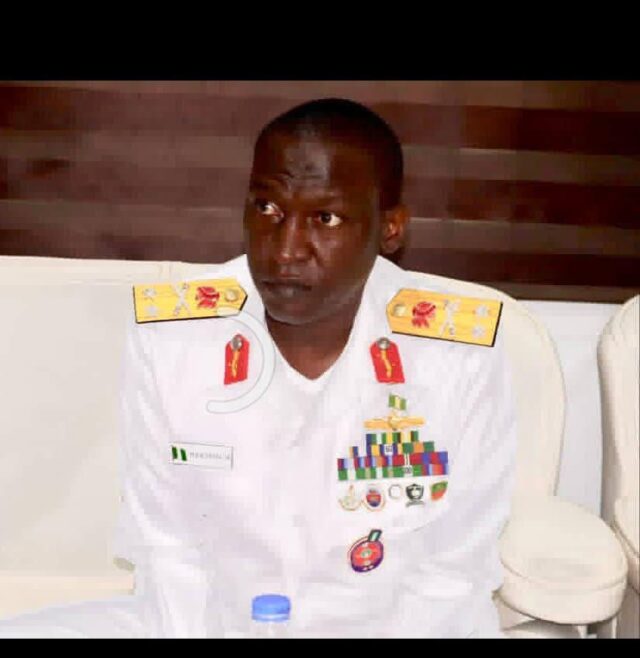
The Nigerian Navy has announced the death of Rear Admiral Musa Bello Katagum, the Chief of Operations at the Naval Headquarters, following a brief illness.

He passed away in Egypt, where he was receiving medical treatment, and was buried according to Islamic rites, the Navy confirmed through its spokesman, Capt. Abiodun Folorunsho.

Rear Admiral Katagum’s tenure at the Naval Headquarters was marked by significant contributions to the operational successes of the Nigerian Navy.

Capt. Folorunsho described him as a dedicated and highly respected officer whose career reflected professionalism, strategic insight, and commitment to national security.

“The Chief of the Naval Staff, officers, ratings, and civilian staff of the Nigerian Navy mourn this profound loss. Rear Admiral Katagum’s legacy will remain a source of inspiration to all personnel across the Services,” the statement read.

As Chief of Operations, he played a critical role in coordinating the Navy’s operational activities nationwide, including maritime security, counter-insurgency support, and the protection of Nigeria’s territorial waters and economic assets.

His leadership was particularly vital as the Navy intensified efforts against piracy, oil theft, and other maritime crimes.

Rear Admiral Katagum is remembered for his exceptional dedication, unwavering loyalty, and strategic leadership, leaving behind a legacy that continues to inspire naval personnel and strengthen Nigeria’s maritime security.

Google search engine

APC Hails Peaceful, Credible Ward Congresses Across Enugu’s 260 Wards

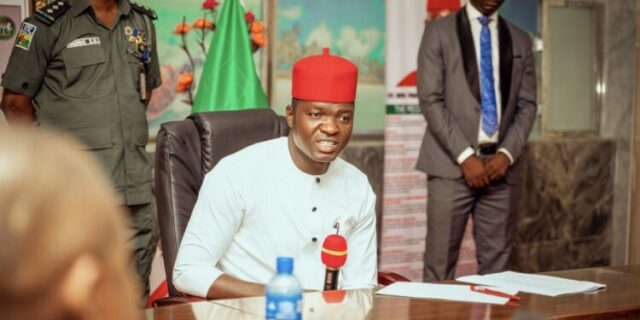
The All Progressives Congress (APC) has commended its Enugu State chapter for what it described as peaceful, transparent and credible ward congresses conducted across the 260 political wards in the state.

Chairman of the APC Ward and Local Government Congresses Committee for Enugu State, Hon. Solomon Funkekeme, gave the commendation on Thursday in Enugu, expressing satisfaction with the overall conduct of party members during Wednesday’s exercise.

Funkekeme said the congresses were orderly and in strict compliance with the party’s constitution and guidelines.

He noted that the monitoring team, acting on the directive of the party’s national leadership, engaged stakeholders and supervised activities in several wards across the state.

According to him, the exercise reflected unity within the party, describing the Enugu APC as a cohesive family under the leadership of Governor Peter Mbah, who emerged as leader of the party in the state in October 2025.

He stated that the committee was impressed by the conduct of party faithful and leaders, adding that there were no reports of major disputes or irregularities.

Funkekeme also praised the level of inclusivity demonstrated during the congresses, noting that positions reserved for women were duly filled in line with gender mainstreaming principles.

He added that provisions for persons living with disabilities were equally respected, underscoring the party’s commitment to inclusiveness.

He expressed confidence that the forthcoming local government congresses scheduled to hold across the 17 local government areas of the state would be conducted in the same peaceful and credible manner.

In his remarks, the Secretary of the Enugu APC Caretaker Committee, Hon. Eugene Odoh, appreciated the national panel for its oversight role and commitment to ensuring transparency and orderliness throughout the ward congress process.

Google search engine

FCT Council Poll: Another PDP Flagbearer Quits Race, Endorses APC Candidate

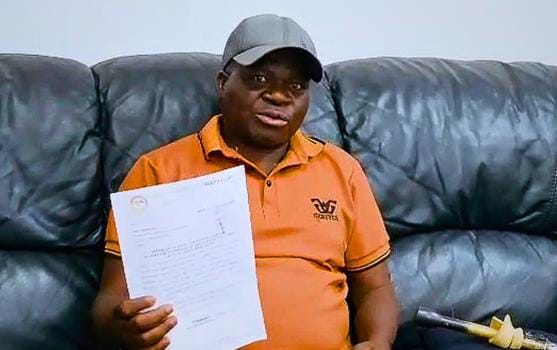
The Peoples Democratic Party (PDP) chairmanship candidate for Abuja Municipal Area Council (AMAC), Zadna Dantani, has withdrawn from the forthcoming Federal Capital Territory (FCT) Area Council elections and declared support for the candidate of the All Progressives Congress (APC).

In a letter dated February 18 and addressed to the Independent National Electoral Commission (INEC), Dantani said his decision followed consultations with family members and political stakeholders.

He described the move as voluntary and taken after careful consideration.

Dantani subsequently called on his supporters to back the APC candidate and incumbent AMAC chairman, Christopher Maikalangu, in Saturday’s poll.

In a video message, he also thanked the FCT Minister, Nyesom Wike, for what he termed guidance and intervention.

His withdrawal comes barely 24 hours after the PDP chairmanship candidate in Bwari Area Council, Julius Adamu, stepped down from the race and endorsed the APC candidate, Joshua Musa.

Adamu had similarly cited consultations before announcing his decision.

With Dantani’s exit, two prominent PDP chairmanship candidates have now pulled out of the contest in quick succession, signalling a shift in the political landscape ahead of the elections.

The 2026 FCT Area Council elections are scheduled for Saturday, February 21.

The exercise, conducted directly by INEC, will see voters across the six area councils — Abaji, AMAC, Bwari, Gwagwalada, Kuje and Kwali — elect six chairmen and 62 councillors across 68 constituencies.

INEC has announced that the Bimodal Voter Accreditation System (BVAS) will be deployed in all polling units, with results to be transmitted electronically to its Result Viewing Portal.

Security agencies have also confirmed widespread deployment of personnel, while movement restrictions are expected between 6am and 6pm on election day.

Campaigns officially ended at midnight on February 19, two days before voters head to the polls.

Google search engine

Owo Church Attack: Court Admits Fresh Confessions, Forensic Evidence Against Five

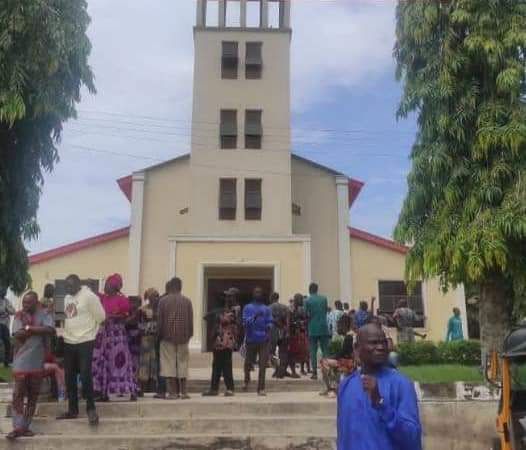
The Federal High Court in Abuja has admitted additional confessional statements and a digital forensic examination report in the ongoing trial of five men accused of involvement in the June 5, 2022 terror attack on St. Francis Xavier Catholic Church, Owo, Ondo State.

Justice Emeka Nwite admitted the exhibits, which included a Tecno mobile phone said to contain communication records among the defendants before and after the attack.

The court allowed the documents and device in evidence after defence counsel, Abdullahi Mohammed, raised no objection.

The five defendants — Idris Abdulmalik Omeiza (25), Al Qasim Idris (20), Jamiu Abdulmalik (26), Abdulhaleem Idris (25) and Momoh Otuho Abubakar (47) — are facing a nine-count charge over the attack that left 41 worshippers dead and 140 others injured.

At Thursday’s sitting, the Federal Government formally closed its case after presenting 11 witnesses to establish the allegations against the accused persons.

Justice Nwite subsequently adjourned the matter to March 4 and 5 for the defendants to open their defence.

Counsel to the accused earlier informed the court that only the defendants would testify in their own defence and indicated that the case could be concluded within a day.

He, however, requested that the court direct the Department of State Services (DSS) to grant him unhindered access to his clients in custody to facilitate preparations.

The prosecution’s final witness, a DSS operative identified by the code name PSSK, told the court that he led forensic and counter-terrorism investigations following the attack.

According to him, investigators deployed geospatial network filtering technology to analyse thousands of mobile phone lines connected to the Egbeka and Ifon areas of Ondo State.

The witness said the process narrowed investigations to the phone line of the fifth defendant, Idris Abdulmalik Omeiza, leading to his arrest in Ifon.

He added that Omeiza’s alleged confession subsequently led to the arrest of the four other defendants.

Further forensic analysis, the court heard, revealed frequent communication among the accused persons before and after the attack.

The prosecution maintained that their arrests were the result of targeted technological tracking rather than coincidence.

Under cross-examination, the government stated that post-incident investigations lasted over a month and that the five defendants were apprehended in August 2022 at various locations across Kogi and Ondo states.

The trial continues.

Google search engine

Telcos Dispute Lawmakers’ Claims, Say Nigeria Ready For E-Result Transmission

Nigeria’s leading telecommunications operators have rejected assertions by some members of the National Assembly that the country lacks the infrastructure for real-time electronic transmission of election results, insisting that national network coverage is sufficient to support the process ahead of the 2027 general elections.

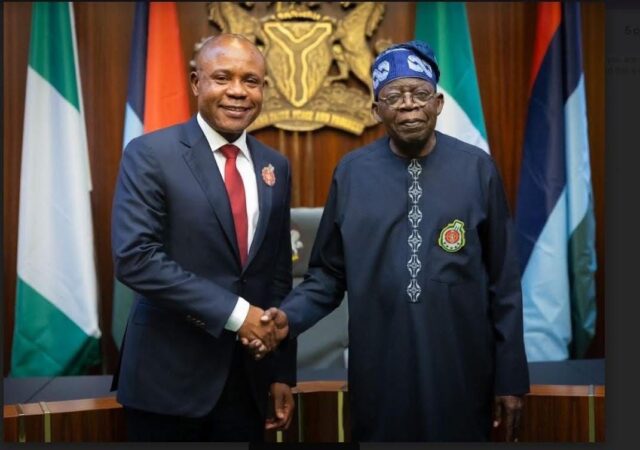
The development followed President Bola Tinubu’s signing of the Electoral Act 2026 (Amendment) into law, despite lingering controversy over provisions relating to electronic transmission of results.

Speaking at the Presidential Villa in Abuja, Tinubu maintained that the credibility of elections depends more on effective management and human oversight than on technology alone.

He stressed that while technology can support the process, final outcomes are determined by designated electoral officials, not computers.

He also questioned the country’s broadband capacity and long-term technical readiness for real-time transmission.

In response, operators including MTN Nigeria, Airtel Nigeria and Globacom, under the umbrella of the Association of Licensed Telecom Operators of Nigeria (ALTON), dismissed concerns about inadequate coverage as outdated and inaccurate.

ALTON Chairman, Gbenga Adebayo, said over 70 per cent of the country is currently covered by 3G and 4G networks, with 5G coverage reaching about 11 per cent, while other areas operate on 2G, which he argued is still capable of transmitting results electronically.

He urged lawmakers to rely on verified data from the Nigerian Communications Commission rather than broad claims about infrastructural gaps.

Although acknowledging security challenges in parts of the country affected by insurgency, the operators maintained that such issues should not justify a nationwide rejection of electronic transmission.

They argued that collaboration among stakeholders would better address isolated network constraints.

The position aligns with that of the Independent National Electoral Commission (INEC), which has previously stated that results uploaded to its Result Viewing Portal would transmit automatically once devices enter areas with network coverage.

Meanwhile, the House of Representatives defended its decision to retain manual transmission as a fallback option in certain circumstances.

Deputy House Spokesperson Philip Agbese said while electronic transmission to the INEC Result Viewing Portal remains mandatory, the manual clause was preserved to prevent disenfranchisement in the event of technical failures.

Similarly, lawmaker Gboyega Nasir Isiaka said concerns over weak digital infrastructure and security vulnerabilities informed the National Assembly’s decision to soften the clause mandating real-time transmission.

According to him, the compromise followed extensive negotiations during the harmonisation process between both chambers.

However, former INEC Resident Electoral Commissioner Mike Igini warned that allowing discretionary manual transmission could endanger presiding officers at polling units.

He argued that disputes over network availability could expose officials, particularly youth corps members, to threats where voters perceive that network signals are present.

Also weighing in, former Education Minister Obiageli Ezekwesili expressed strong support for electronic transmission, describing it as a critical safeguard against result manipulation.

She said embedding e-transmission firmly in law would enhance transparency and restore public trust in the electoral process.

On his part, former Kaduna Central senator Shehu Sani cautioned that electronic transmission alone cannot guarantee credible elections.

While supporting the innovation, he emphasised that deeper structural and ethical reforms are required to address persistent malpractice, including voter inducement.

As debates intensify, the issue of electronic transmission remains central to Nigeria’s preparations for the 2027 polls, with stakeholders sharply divided over the balance between technology, security and electoral integrity.

Google search engine

Ebonyi Crisis: Gov Nwifuru Eases Movement Restrictions, Orders Continued School Shutdown

Ebonyi State Governor Francis Nwifuru has relaxed the curfew earlier imposed on Amasiri community following deadly boundary clashes, but ordered that schools in the area remain closed pending further security review.

The adjusted curfew will now run from 7:00 am to 6:00 pm replacing the previous restriction of 10:00 am to 2:00 pm.

The governor said the decision followed what he described as measurable progress made by security agencies deployed to contain the crisis.

Despite the easing of movement, Nwifuru maintained that educational institutions in Amasiri would remain shut, stressing that the safety of students and teachers remains a top priority.

He said the decision would be reassessed after another evaluation by the State Security Council.

The governor reiterated his earlier directive asking the community to produce four human heads and individuals allegedly abducted during the violence.

He warned that stricter actions would follow if the directive is not complied with.

Speaking after a security meeting, Nwifuru said the curfew was introduced as a preventive step to avert further breakdown of law and order, noting that intelligence reports suggested the dispute could have escalated into a broader communal conflict involving neighbouring communities.

On ongoing investigations, the governor disclosed that law enforcement agencies have been directed to accelerate prosecution of suspects arrested in connection with the killings.

While reaffirming the presumption of innocence, he revealed that investigators had uncovered a shallow grave and obtained confessional statements, describing the findings as significant breakthroughs.
Security forces, he added, are intensifying efforts to track down other suspects believed to be at large.

Beyond the curfew adjustment and school closure, the State Security Council approved additional emergency measures aimed at restoring calm in Amasiri and surrounding areas.

Although specific operational details were withheld for security reasons, the governor assured residents that government actions are intelligence-driven and focused on preventing further loss of life.

He also cautioned against the spread of unverified information and inflammatory comments on social media, warning that such actions could undermine security operations and heighten tensions.

Google search engine

DSS Rearrests El-Rufai

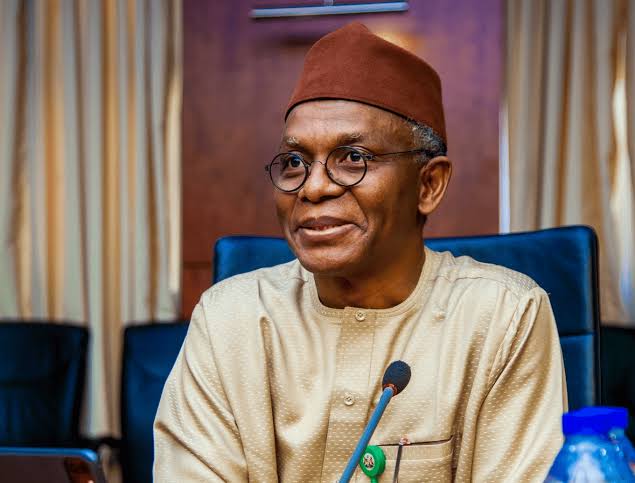
Former Kaduna State governor Nasir El-Rufai was reportedly rearrested on Wednesday night by the Department of State Services shortly after regaining freedom from the Economic and Financial Crimes Commission.

El-Rufai had been in EFCC custody since Monday over corruption-related allegations and was granted bail around 8 pm on Wednesday.

However, witnesses said DSS operatives were stationed at the EFCC headquarters and immediately took him into custody upon his release.

Sources indicated that the DSS action is linked to allegations that the former governor unlawfully intercepted the phone communications of Nigeria’s National Security Adviser, Nuhu Ribadu.

Earlier in the week, the DSS filed cybercrime charges against El-Rufai at the Federal High Court in Abuja over the alleged phone-tapping incident.

The case followed remarks he made during a live interview on Arise TV, where he claimed that Ribadu’s phone had been tapped and that he overheard instructions directing security operatives to detain him.

El-Rufai also alleged that the directive led to an attempted arrest at the Nnamdi Azikiwe International Airport, where he reportedly had a confrontation with security personnel and briefly had his passport seized before being escorted out.

Prosecutors accused him of cybercrime offences, claiming he admitted to intercepting the NSA’s communications and failed to disclose others allegedly involved.

They further argued that the action endangered public safety and national security.

The charges are said to be based on provisions of the Cybercrimes (Prohibition, Prevention, etc.) (Amendment) Act, 2024, and the Nigerian Communications Act, 2003.

No date has been fixed for his arraignment, and El-Rufai has yet to publicly respond to the latest allegations.

The sequence of his detention by the EFCC and subsequent arrest by the DSS has intensified the legal and political controversy surrounding the former governor.

Google search engine

Suspected Lakurawa Militants K!ll Scores In Fresh Kebbi Border Attacks

Dozens of people are feared dead following coordinated attacks by suspected Lakurawa militants on multiple rural communities in Arewa Local Government Area of Kebbi State.

The assailants reportedly struck on Wednesday, targeting villages in the remote border district and opening fire on residents in what witnesses described as calculated and indiscriminate shootings.

Security sources provided a breakdown of casualties, indicating that 16 persons were killed in Mamunu, five in Awashaka, and three in Masama.

Two residents each were also reportedly killed in five other affected communities, pushing the overall death toll to several dozens.

Survivors said the attackers stormed homes, shooting at civilians and throwing the communities into chaos.

The violence sparked widespread panic, forcing many residents to abandon their homes in search of safety.

Security operatives have since been deployed to the area to restore calm, support affected families, and prevent the attackers from fleeing. Authorities say tracking and clearance operations are ongoing.

Confirming the development, the Kebbi State Police Public Relations Officer, Bashir Usman, said investigations are underway and assured that more details would be made public as they emerge.

Google search engine

Senegalese Fans Face Up To Two Years In Moroccan Jail Over AFCON Final Unrest

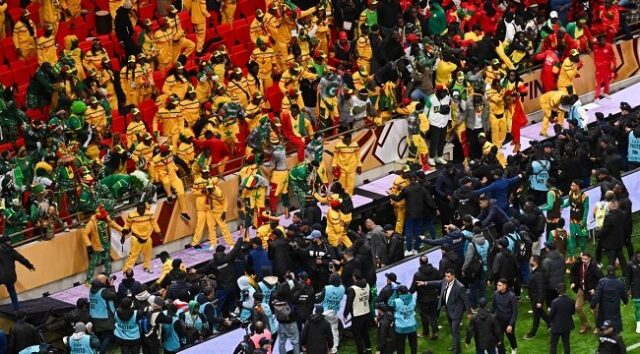
Senegal supporters clash during the Africa Cup of Nations (CAN) final football match between Senegal and Morocco at the Prince Moulay Abdellah Stadium in Rabat on January 18, 2026. (Photo by Paul ELLIS / AFP)

Moroccan prosecutors have requested prison sentences of up to two years for 18 Senegalese football supporters detained in Rabat following unrest at last month’s Africa Cup of Nations (AFCON) final.

The fans have been in custody since January 18, the day of the tense final between Senegal and Morocco at the Prince Moulay Abdellah Stadium in Rabat. Senegal defeated the hosts 1-0 to clinch the continental title.

According to prosecutors, the accused supporters engaged in acts described as “hooliganism” and deliberately attempted to disrupt the smooth conduct of the match.

The court heard that some of the incidents were captured live on television during the closing minutes of the game.

Trouble erupted shortly before the final whistle, with reports that some Senegalese fans tried to invade the pitch.

Senegal’s players also temporarily halted play for nearly 20 minutes in protest over a late penalty awarded to Morocco. Objects, including a chair, were allegedly thrown onto the field during the chaos.

The prosecution said its case is supported by stadium surveillance footage and medical reports detailing injuries sustained by security personnel and stadium stewards.

Authorities also estimated material damage to the stadium at more than 4 million Moroccan dirhams, roughly $430,000.

The defendants have denied wrongdoing.
The incident comes at a sensitive time for Morocco, which is preparing to co-host the 2030 FIFA World Cup alongside Spain and Portugal.

Google search engine

Another Serving Senator Dies

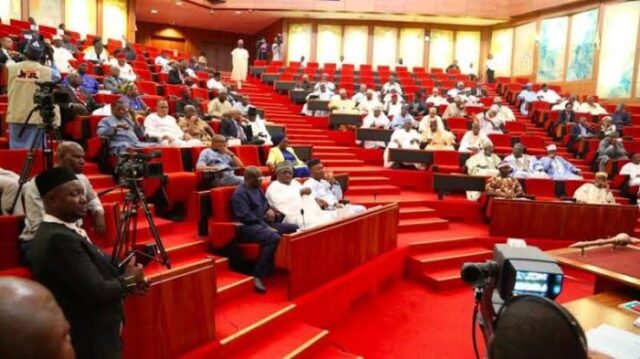
The Nigerian Senate has been thrown into mourning following the death of the lawmaker representing Rivers South-East Senatorial District, Barinada Mpigi, who passed away at the age of 64 after a brief illness.

Sources within the National Assembly confirmed that the senator died on Thursday, bringing a somber mood to the chamber during legislative proceedings.

Until his death, Mpigi served in the 10th Senate and chaired the Committee on Works, a strategic body responsible for oversight of federal road infrastructure and related projects nationwide.

He was first elected into the House of Representatives in 2011 and returned for another term before moving to the Senate in 2019 on the platform of the Peoples Democratic Party.

During the 9th Assembly, he also led a joint Senate committee mandated to investigate crude oil theft in the Niger Delta, at a time the country faced revenue losses and widespread pipeline vandalism.

News of his passing filtered into the Senate chamber during committee sessions, prompting tributes from lawmakers.

Senator Mohammed Onawo described the late legislator as committed and dedicated to national service, while colleagues observed a minute’s silence in his honour.

Tributes also came from members of the House of Representatives, including Works Committee Chairman Akin Alabi, who praised Mpigi’s contributions to legislative work and national development.

His death comes just months after the passing of another serving senator, Okey Ezea, highlighting a string of losses within the current Assembly.

Mpigi’s demise has once again left the Senate grieving one of its active members, with colleagues recalling his role in infrastructure oversight and national policy engagement.

Google search engine

MOST COMMENTED

- Advertisement -
Google search engine