Home Blog Page 691

Rivers Commissioners Drag Amaewhule-Led Assembly To Court Over Move To Nullify Appointments
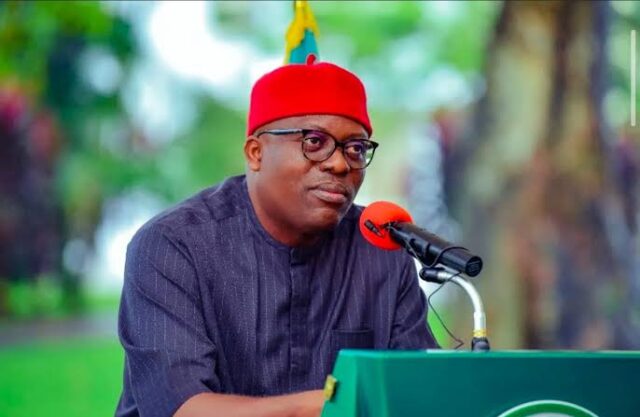
The ongoing political crisis in Rivers State has taken a legal turn as commissioners appointed by Governor Siminalayi Fubara have dragged the Martin Amaewhule-led House of Assembly to court over attempts to nullify their appointments.

The commissioners, whose nominations were confirmed by four lawmakers loyal to Governor Fubara, filed a lawsuit at the Rivers State High Court seeking to restrain the Assembly from invalidating their positions in the state executive council.

Their legal action comes in the wake of a Supreme Court ruling affirming Martin Amaewhule as the legitimate Speaker of the Rivers State House of Assembly, a verdict that dismissed a cross-appeal by Governor Fubara and has further deepened the state’s political turmoil.

The commissioners are seeking an interlocutory injunction to prevent the Assembly from enforcing resolutions passed on March 5, 2025, which declared their appointments illegal.

They are also asking the court to prohibit the Assembly from interfering in their functions as members of the state government.

In a related development, the Chairman of the Rivers State Independent Electoral Commission (RISIEC), Justice Adolphus Enebeli (retired), and his commissioners have also approached the court to challenge the Assembly’s authority to summon them for questioning.

The Assembly had initially issued a 48-hour ultimatum for Enebeli to appear and explain the circumstances surrounding the annulled October 2024 local government elections.

After he failed to show up, the lawmakers extended the deadline by another 72 hours.

Enebeli and his team, however, argue that the summons is beyond the Assembly’s powers and have asked the court to restrain lawmakers from compelling them to appear.

Presiding over the matter, Justice Frank Onyiri granted leave for the claimants to serve the Assembly through substituted means and adjourned the case to April 17, 2025.

Despite the pending litigation, the Rivers Assembly, during its plenary session on Wednesday, reaffirmed its decision to summon RISIEC officials.

Lawmakers insist that Enebeli and his team must account for the funding of the nullified elections and disclose budget plans for the fresh polls scheduled for August 9, 2025.

House Leader, Major Jack, informed lawmakers that official letters had been sent to RISIEC officials and Governor Fubara, urging him to present the 2025 Appropriation Bill.

However, both the governor and RISIEC chairman have yet to respond.

Speaker Martin Amaewhule warned that the Assembly is taking legislative notice of Governor Fubara’s refusal to present the 2025 budget and will take necessary action at the appropriate time.

The lawmakers passed a resolution directing the Clerk of the House to invite RISIEC officials again to appear before lawmakers on March 10, 2025.

They also threatened to invoke Section 129 (1) (d) of the Constitution if the officials fail to comply.

Meanwhile, the Rivers State Police Command has vowed to maintain order amid rising security concerns.

This follows threats by militant groups to attack oil installations in response to the ongoing political crisis.

Commissioner of Police, Olugbenga Adepoju warned against any attempts to destabilize the state, assuring residents that security forces are fully prepared to deal with any threats.

“We are ready for anything. All eyes are on Rivers State, and we will not allow anyone to escalate tensions,” Adepoju said.

Google search engine

NAFDAC Destroys N100bn Worth Of Fake Drugs, Banned Substances In Oyo

The National Agency for Food and Drug Administration and Control (NAFDAC) on Saturday destroyed counterfeit drugs and other illicit products valued at approximately N100 billion at the Moniya dump site in Ibadan, Oyo State.

Speaking at the destruction site in Akinyele Local Government Area, NAFDAC’s Director General, Mojisola Adeyeye, emphasized the agency’s commitment to safeguarding public health.

Adeyeye, represented by the Director of Narcotics, Yedunni Adenuga, disclosed that the destroyed items included banned drugs such as Analgin and controlled substances like Tramadol 225mg.

She revealed that the confiscated products were seized during enforcement operations across major drug markets in Nigeria, including Idumota (Lagos), Onitsha (Anambra), Ariaria (Abia), and Ezeukwu (Abia).

“The recent discovery of counterfeit and unregistered drugs in these markets is alarming,” Adeyeye stated. “These harmful substances contribute to the insecurity in our country and pose serious health risks to unsuspecting consumers.”

She acknowledged the support of National Security Adviser Nuhu Ribadu, who approved the deployment of over 1,000 security personnel, including military, police, and Department of State Services (DSS) operatives, to assist in the enforcement exercise.

NAFDAC’s Director of Investigation and Enforcement, Shaba Mohammed, condemned the sale of drugs in open markets, describing it as illegal and punishable under Nigerian law.

“It is a crime to sell drugs in open markets, kiosks, or vehicles,” Mohammed warned. “The agency will continue to crack down on those violating drug distribution regulations.”

Several suspects were reportedly arrested during the operation, and investigations are ongoing to ensure appropriate legal actions are taken against those found guilty.

Google search engine

Anambra 2025: Guber Aspirant Urges Tinubu To Reconcile With Ngige, Aggrieved Party Members

Anambra State governorship aspirant, Johnbosco Onunkwo, has called on President Bola Tinubu and the National Chairman of the All Progressives Congress (APC), Dr. Abdullahi Ganduje, to extend an olive branch to former Minister of Labour and Employment, Senator Chris Ngige, and other aggrieved members of the party.

Speaking at the APC national secretariat in Abuja on Saturday, shortly after passing the party’s primary screening, Onunkwo emphasized the need for unity within the party ahead of the November 8 governorship election in Anambra State.

He stressed that the APC must present a united front to stand a strong chance in the polls.

When asked whether Ngige still identifies as an APC member despite his long silence, Onunkwo affirmed that the former minister remains committed to the party.

“Ngige is still a full member of the APC. If he wasn’t, we wouldn’t have seen him at the caucus meeting of our National Executive Committee (NEC), where he was present in person,” he said.

Onunkwo also expressed support for Tinubu’s recent directive for party reconciliation, urging the committee to move swiftly in resolving internal disputes.

“The reconciliation committee must commence work without delay because expectations are high. Many party members who have been part of the APC since its days as AD, AC, and ACN feel sidelined. We need to reintegrate them,” he added.

According to him, these members hold significant electoral influence and must be engaged to ensure victory for the party.

Ngige, a former Anambra State governor, has had a strained relationship with the APC leadership since 2022, when he refused to publicly endorse Tinubu’s presidential bid.

His reluctance to declare support for Tinubu over his kinsman, Peter Obi of the Labour Party, during a live interview on Channels Television’s Politics Today stirred controversy within party ranks.

Ngige’s stance placed him among prominent APC figures, including former Vice President Yemi Osinbajo and former Rivers State Governor Rotimi Amaechi, who distanced themselves from Tinubu’s campaign.

Onunkwo’s appeal follows President Tinubu’s directive at the last NEC meeting, where he urged APC leaders to initiate reconciliation efforts across all states ahead of the 2027 elections.

“The National Working Committee is doing a commendable job. However, we must reconcile with aggrieved members at the state level,” Tinubu stated.

“Let us work together to sustain the progressive ideals of our party and navigate the economic challenges affecting not just Nigeria but the world.”

Google search engine

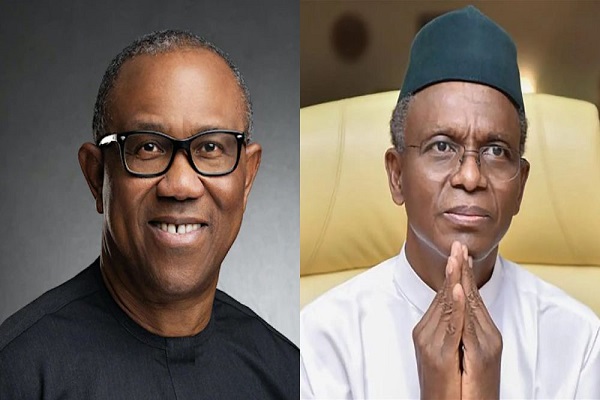
2027: Claim That Five Governors Are Working For El-Rufai/Obi Ticket Is False – PDP Governors

The Peoples Democratic Party (PDP) Governors’ Forum has denied claims that five of its members are backing a potential Nasir El-Rufai/Peter Obi presidential ticket for the 2027 election.

In a statement released by the Forum’s chairman, Bauchi State Governor Bala Mohammed, and signed by its Director General, Dr. Emmanuel Agbo, the governors described the speculation as false, mischievous, and aimed at destabilizing the party.

Dr. Agbo condemned what he called “unpleasant and provocative publications” being circulated by individuals seeking to undermine the credibility of the Forum.

“The PDP Governors’ Forum has no association with these claims and has never entertained any discussions regarding such an arrangement,” the statement read.

The governors alleged that these rumors were part of a broader effort by certain political elements to cast doubt on the leadership of the PDP, especially as the party continues its efforts to address economic challenges in Nigeria.

“It is evident that these mischief-makers, alarmed by the impressive performance of PDP governors in tackling economic hardship despite pressure from the ruling APC, are resorting to baseless accusations to distract from our achievements,” they added.

Dismissing the allegations as a desperate attempt by some factions to sow division, the PDP Governors’ Forum reaffirmed its unity and commitment to the party’s core values, urging the public to disregard the false reports.

Google search engine

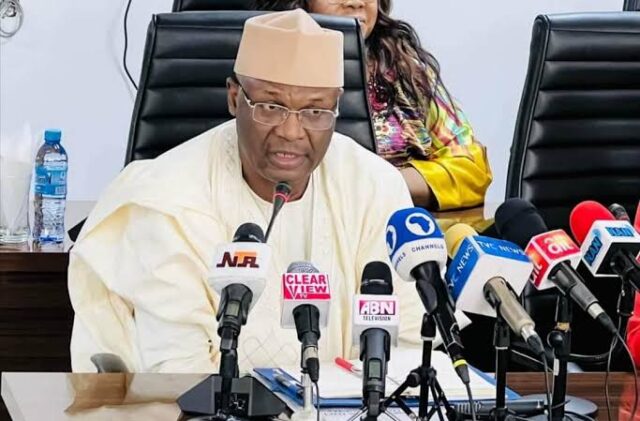
Future Of Democracy Tied To Women Participation In Electoral Process – INEC Chairman

The Independent National Electoral Commission (INEC) has emphasized that the future of democracy in Nigeria is closely linked to the empowerment of women and their active participation in the electoral process.

In a statement issued on Saturday to mark International Women’s Day, INEC, through its Director of Voter Education and Publicity, Victoria Eta-Messi, reiterated its commitment to fostering an inclusive political environment where women can fully engage in shaping the nation’s electoral system.

The Commission acknowledged the barriers women face, including societal expectations, limited support systems, and gender-based violence, and pledged to continue breaking down these obstacles.

It called on all Nigerians to support gender equality, not just in elections but in all aspects of national life.

“When women are given equal opportunities to take leadership roles, democracy becomes stronger, governance becomes more inclusive, and the nation’s future becomes brighter,” the statement read.

INEC also highlighted ongoing efforts to increase women’s representation at various levels of the electoral process, ranging from candidates and voters to election administrators and party representatives.

“As we celebrate International Women’s Day, INEC reaffirms its dedication to gender equality and the empowerment of women in Nigeria’s electoral landscape. True democracy cannot thrive without meaningful female participation,” the statement continued.

The Commission noted that while it has made progress in ensuring women’s representation within its leadership structures, more work is needed.

Currently, two out of 12 INEC National Commissioners are women, making up 16.7% of the leadership team.

Additionally, a woman serves as INEC Secretary, overseeing the Commission’s operations, while four out of 32 Resident Electoral Commissioners are female, accounting for 12.5% of this key decision-making group.

INEC further stressed that the 2025 International Women’s Day theme, Accelerate Action,” aligns with its mission to advance gender balance in leadership and governance, ensuring that Nigerian democracy reflects the voices of all citizens.

Google search engine

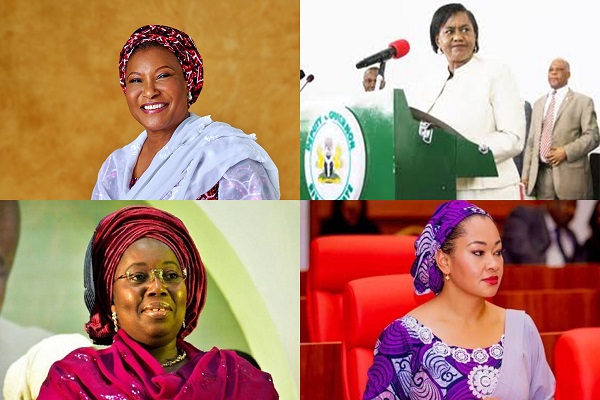
Meet The Four Female Senators In Nigeria’s 10th Senate

Out of 109 Senate seats in the 10th National Assembly, only four are occupied by women, representing just 2.7% of the upper legislative chamber.

The remaining 105 seats are held by men, underscoring the persistent underrepresentation of women in Nigerian politics.

This marks a decline from the 9th Senate, where eight women served (7.3%).

In the House of Representatives, however, female representation has slightly improved from 13 members (3.6%) in the previous Assembly to 17 (4.7%) in the current session.

In total, women now occupy only 4.2% of the 469 seats in both chambers of the National Assembly.

Despite seven general election cycles since 1999, female participation in the Senate remains disproportionately low.

Here’s a look at the four women currently serving in the 10th Senate:

1. Ireti Heebah Kingibe (Senator, FCT – Labour Party)

Ireti Kingibe represents the Federal Capital Territory (FCT) under the Labour Party (LP). She holds a Bachelor of Science (B.Sc.) degree in Civil Engineering from the University of Minnesota, USA.

Kingibe first contested the FCT senatorial seat in 2003 under the now-defunct All Nigeria Peoples Party (ANPP).

Over the years, she switched political affiliations, joining the People’s Democratic Party (PDP) and later the All Progressives Congress (APC) in 2014 before settling with the Labour Party.

Born on June 2, 1954, she is the younger sister of Ajoke Mohammed, wife of former Head of State Murtala Mohammed.

She was also married to Babagana Kingibe, a former Secretary to the Government of the Federation (SGF).

2. Ipalibo Banigo (Senator, Rivers West – People’s Democratic Party)

Representing Rivers West on the PDP platform, Dr. Ipalibo Banigo made history as the first female Deputy Governor of Rivers State, serving from 2015 to 2023 under Governor Nyesom Wike.

She studied medicine at the University College Hospital, Ibadan, where she earned her MBBS degree.

She later obtained a Master’s degree in Public Health from Harvard University.

Before entering politics, Banigo held several high-ranking positions in the Rivers State Ministry of Health, including Director of Public Health Services, Acting Commissioner, Director, and Permanent Secretary.

3. Idiat Oluranti Adebule (Senator, Lagos West – All Progressives Congress)

Idiat Adebule, representing Lagos West under the APC, served as Deputy Governor of Lagos State from 2015 to 2019.

An educationist, she holds a Doctorate degree in Curriculum Studies from Lagos State University.

She previously worked as a junior lecturer at the Michael Otedola College of Primary Education and Lagos State University.

Adebule also served as a Commissioner in the Lagos State Post Primary Teaching Service Commission (PP-TESCOM), now known as the Teachers’ Establishment and Pensions Office.

In 2011, she was appointed Secretary to the Lagos State Government by then-Governor Babatunde Fashola.

4. Natasha Akpoti-Uduaghan (Senator, Kogi Central – People’s Democratic Party)

A barrister and politician, Natasha Akpoti-Uduaghan was elected in 2023 to represent Kogi Central in the Senate.

Born to a Nigerian father and a Ukrainian mother, she studied law at the University of Abuja before proceeding to the Nigerian Law School. She was called to the bar in 2005.

In 2012, she earned an MBA in Oil and Gas Management from the University of Dundee, Scotland.

Before venturing into politics, Akpoti-Uduaghan founded the Builders Hub Impact Investment Program (BHIIP).

She first contested the Kogi State gubernatorial election in 2019 under the Social Democratic Party (SDP).

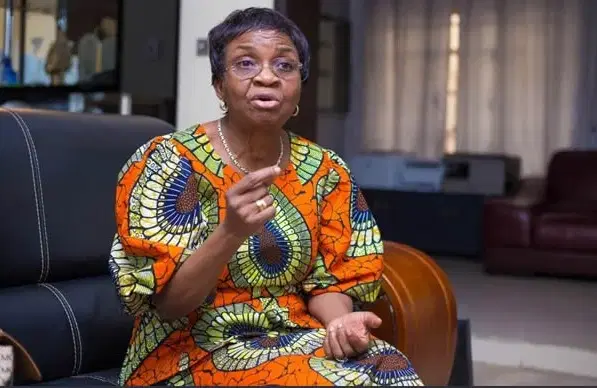
In February 2025, Akpoti-Uduaghan accused Senate President Godswill Akpabio of sexual harassment in an interview with Arise News.

The Senate’s Ethics Committee, chaired by Akpabio, dismissed her claims, citing procedural violations.

On March 6, 2025, the Senate suspended her for six months, barring her from office and withdrawing her allowances and security privileges.

In response, she has filed a lawsuit against Akpabio, seeking ₦100 billion in damages.

Google search engine

Opposition Senators Pay Solidarity Visit To Natasha Akpoti-Uduaghan, Pledge To Challenge Senate’s Decision

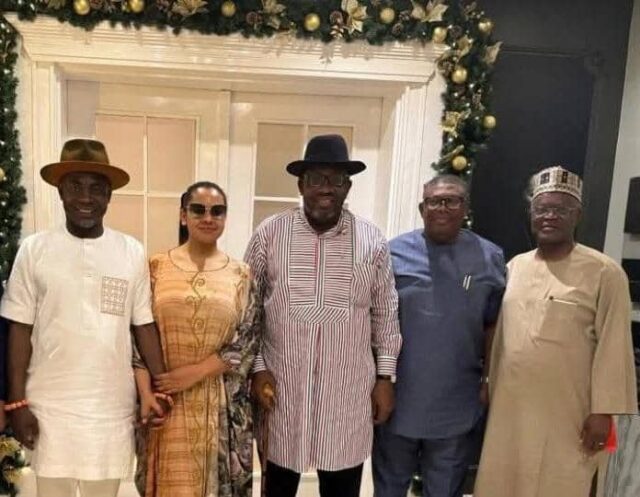
A group of opposition senators on Friday paid a solidarity visit to Senator Natasha Akpoti-Uduaghan at her residence, vowing to challenge what they described as an unjust suspension imposed by the Senate under the leadership of Godswill Akpabio.

The delegation was led by former Bayelsa State Governor and Senator representing Bayelsa West, Seriake Dickson, who is also a member of the Senate Ethics and Privileges Committee, the same committee that recommended Akpoti-Uduaghan’s suspension.

Sharing photos from the visit on social media, Dickson clarified that he was not present during the Senate plenary session when the decision to suspend Akpoti-Uduaghan was taken, as he was engaged in discussions on tax reform bills.

“As senators, we experience both high and low moments, and it is part of our tradition to stand by one another in times of crisis,” Dickson stated, emphasizing the importance of unity among lawmakers.

He further disclosed that the delegation provided encouragement, prayers, and counsel to Akpoti-Uduaghan on how to navigate the political situation.

“Having listened to her and her husband for the first time, I intend to discuss with my colleagues possible avenues for intervention and engagement with the Senate leadership to ensure a resolution to this matter as soon as possible,” he added.

Akpoti-Uduaghan was suspended from the Senate for six months on Thursday following her refusal to accept a new seating arrangement in the chamber.


Google search engine

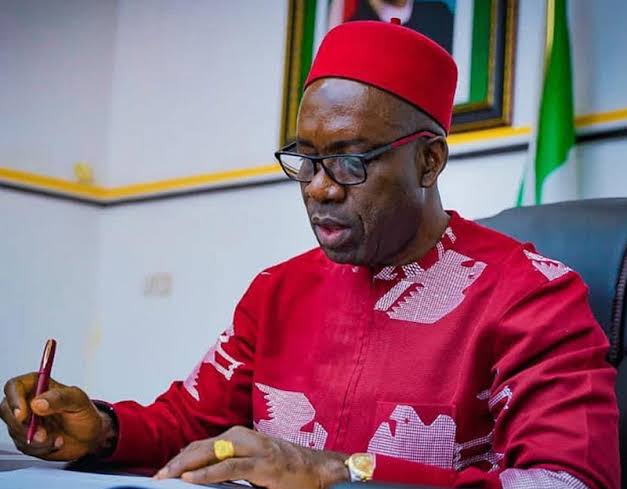
Soludo Bans Loud Preaching In Anambra Markets, Imposes N500,000 Fine

Anambra State Governor, Prof. Chukwuma Soludo, has prohibited the use of loudspeakers for preaching in public spaces, particularly markets, citing concerns over noise pollution and public disturbance.

Soludo warned that anyone caught violating the directive would face a fine of ₦500,000.

In a viral video circulating on social media, the governor was seen confronting a street preacher at a market, urging him to stop disrupting traders with his loud sermons.

He advised the preacher to conduct his activities in a church or rent an open space where willing listeners could gather, rather than imposing his message on marketgoers.

Addressing traders, reportedly at Ochanja Market in Onitsha, Soludo said:

If you want to preach the word of God, go to your church. This is a marketplace, not a church. You cannot disturb everyone with loudspeakers.”

He emphasized that unauthorized public preaching violates state regulations, warning that the government is taking a firm stance against noise pollution and unregulated religious activities.

We have banned loudspeakers in markets to protect people from excessive noise that can harm their hearing. If you violate this rule, you will be fined ₦500,000. We are also intensifying our crackdown on fake pastors and prophets in Anambra,” Soludo declared.

The directive is part of the state government’s broader efforts to regulate public spaces and maintain order in commercial areas.

Google search engine

Just In: Nnamdi Kanu’s Case Reassigned To A New Judge After Six Months


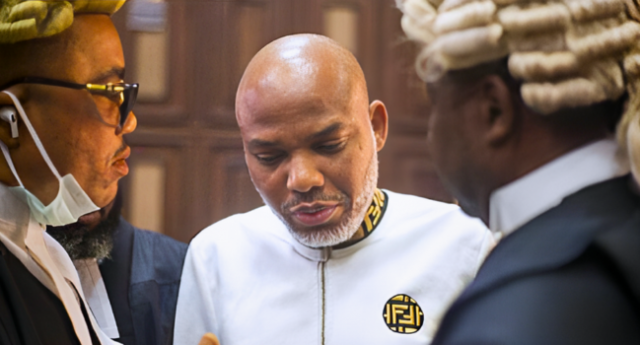
The case of Nnamdi Kanu, the leader of the Indigenous People of Biafra (IPOB), has been reassigned to a new judge by the Chief Judge of the Federal High Court, Justice John Tsoho.

This comes six months after the previous judge handling the matter withdrew from the case.

Kanu’s lead counsel, Aloy Ejimakor, confirmed the reassignment, revealing that his legal team received two official correspondences before their scheduled visit to Kanu.

First, from the Chief Justice of Nigeria (CJN), was a response to their request for administrative intervention to expedite the reassignment.

The second, from the Chief Judge of the Federal High Court, formally notified them of the change.

Kanu and his legal team have expressed appreciation to the CJN for the intervention and to the public for their continued support in ensuring due process is followed.

Ejimakor emphasized that the delay since September 2024 had significantly affected Kanu’s constitutional right to a fair and timely trial.

“With this latest development, Mazi Nnamdi Kanu and his defense team will now redirect their focus towards preparing for the next phase of legal proceedings,” Ejimakor stated.

Kanu, who has been in detention since June 2021, maintains his innocence and has consistently demanded a fair judicial process.

The reassignment is expected to provide a new direction in the ongoing legal battle.

Google search engine

VC Appointments: Stakeholders Decry Lack Of Merit As Culture Of Impunity Creeps Into Universities

Concerns over the declining integrity of Nigeria’s higher education system have intensified following recent controversies surrounding the appointment of Vice Chancellors (VCs) in various universities.

Stakeholders fear that the entrenched culture of impunity in the country is making its way into the heart of tertiary institutions, threatening the credibility of their leadership selection processes.

At the center of the debate is the increasing influence of vested interests in the selection of university leaders.

Critics argue that the process is becoming less about merit and more about political maneuvering, with procedures being ignored or manipulated to favor preferred candidates.

Under President Bola Ahmed Tinubu’s administration, irregularities in VC appointments have surfaced in multiple institutions, including Nnamdi Azikiwe University (UNIZIK), the University of Abuja (UNIABUJA), and the Federal University of Health Sciences, Otukpo, Benue State.

These cases prompted the federal government to intervene, leading to the dissolution of governing councils and the removal of appointed officials.

At UNIABUJA, for instance, the governing council attempted to install a VC who did not meet the mandatory five-year post-professorial experience requirement.

The move sparked protests, which only subsided after President Tinubu dissolved the council and removed the improperly appointed VC.

Just as those controversies were unfolding, another storm emerged at Admiralty University of Nigeria (ADUN), Ibusa, Delta State, where the selection of a new Vice Chancellor took an unexpected and contentious turn.

To ensure a credible and transparent selection process, ADUN reportedly engaged KPMG, a globally respected consulting firm, at a cost of N25 million.

Following a rigorous evaluation, Professor Lucian Obinna Chukwu, a Marine Biology professor and Deputy Vice Chancellor at the University of Lagos, emerged as the top candidate with a score of 83.41 percent.

However, despite leading the selection process, Chukwu was overlooked in favor of Professor Ogbogbo Christopher of the University of Ibadan’s Department of History, who ranked second.

The decision shocked observers, especially as the announcement was made by the university’s Registrar without the involvement of the Pro-Chancellor, Rear Admiral Dele Ezeoba (rtd).

Ezeoba swiftly dismissed the appointment as illegitimate, citing Section 6(8) of the university’s enabling law, which specifies that only the Pro-Chancellor can convene a governing council meeting.

He stated that he had neither summoned nor attended the meeting that led to Ogbogbo’s appointment.

Stakeholders have pointed out that the meeting of February 28, which purportedly endorsed Ogbogbo, did not follow due process.

The absence of the Pro-Chancellor and questions over the Registrar’s authority to announce the appointment have fueled concerns about the university’s governance.

Ezeoba criticized the process, arguing that if the institution did not intend to select the highest-scoring candidate, it was wasteful to spend millions on an independent assessment.

He also emphasized President Tinubu’s stance that university leadership should be based on merit.

On the other hand, ADUN’s Registrar, Isaac Mankilik, defended the selection, stating that the university was only required to pick from the top three shortlisted candidates and was not bound to appoint the highest scorer.

Despite the controversy, the Federal Ministry of Education later endorsed Ogbogbo’s appointment.

A statement signed by the ministry’s Director of Press and Public Relations, Folasade Boriowo, on March 5, declared that after reviewing the selection process, the ministry found Ogbogbo to be the most eligible candidate.

The statement emphasized the government’s commitment to merit and fairness while referencing the declassification of the council’s extraordinary meeting report.

This endorsement has not quelled concerns among education stakeholders, many of whom fear that procedural violations in VC appointments could undermine the credibility of Nigerian universities.

Admiralty University, which operates under the ethos of the Nigerian Navy and prides itself on professionalism and excellence, now finds itself at the center of a leadership crisis.

With its selection process under scrutiny, questions remain about the long-term impact of these governance lapses on Nigeria’s academic institutions.

For many observers, the issue extends beyond ADUN.

If universities continue to disregard due process in leadership appointments, the consequences could be far-reaching, potentially damaging the reputation of Nigerian tertiary institutions and weakening their ability to attract top talent.

While the Ministry of Education’s endorsement appears to have settled the matter administratively, the broader implications of this case suggest that the battle for merit-based university leadership in Nigeria is far from over.

Google search engine

MOST COMMENTED

- Advertisement -
Google search engine