Home Blog Page 695

NUC’s Closure Of Abia Varsity Unlawful – Appeal Court Rules

The Court of Appeal in Enugu has upheld the judgment of the Federal High Court, which ruled that the National Universities Commission (NUC) and its former Executive Secretary, Professor Peter Okebukola, acted unlawfully when they closed down Richmond Open University in Arochukwu, Abia State, in 2006.

In a unanimous decision delivered by a three-member panel of justices on December 6, the Appeal Court dismissed the NUC’s appeal, stating that it lacked merit.

The case concerned a lawsuit filed by Dr. Ifeanyichukwu Okonkwo, a representative of Richmond Open University, challenging the NUC’s closure of the institution.

The other respondents in the appeal were the Federal Government of Nigeria and the Inspector General of Police.

Justice Olasumbo Goodluck, delivering the lead judgment, rejected the appellant’s argument that the lower court’s judgment was a nullity, emphasizing that the Federal High Court had rightly dismissed the NUC’s application to set aside its judgment.

The appellate court supported the trial court’s decision to decline the NUC’s request, finding that there were no grounds to alter the previous ruling.

Justice Goodluck further dismissed the NUC’s claim that the originating summons, filed by Okonkwo, a layman, invalidated the entire process.

She referred to the trial court’s reasoning, which noted that the matter was best addressed at the appellate level and that any attempt to review the decision at the trial court would amount to the court overstepping its role.

The Appeal Court judges, Justice R. Maiwada Abdulahi and Justice Joseph Eyo Ekanem, concurred with the lead judgment, affirming the decision of the lower court.

The dispute began in 2006 when Richmond Open University, founded by Okonkwo, was closed by the NUC, which declared it an illegal institution.

Okonkwo, who represented the university in court, argued that the closure was unconstitutional and violated the right to establish a private university in Nigeria.

In a landmark judgment delivered on July 14, 2006, Justice A.L. Allagoa of the Federal High Court ruled in favor of Richmond Open University.

The court held that, under the Nigerian Constitution, the NUC had no legal basis to shut down the university.

Justice Allagoa further declared that the NUC’s actions were unconstitutional, arbitrary, and void, emphasizing that there was no provision in the NUC Act that could restrict private individuals from establishing a university.

In addition, the court awarded N5 million in exemplary damages against the NUC and other defendants, which was subsequently paid to the plaintiffs.

A perpetual injunction was also issued, preventing the defendants from further interfering with the operations of Richmond Open University.

Google search engine

BREAKING: Mahama Wins Ghana’s Presidential Election, Bawumia Concedes Defeat

Mahamudu Bawumia, Ghana’s vice president, has conceded defeat in the country’s presidential election, acknowledging that John Mahama has secured victory.

Bawumia, the candidate for the ruling New Patriotic Party (NPP), made the announcement following the release of partial election results, which indicate that Mahama of the National Democratic Congress (NDC) is on track to win.

With votes still being counted, Mahama has accumulated 976,644 votes, or 56.39 percent, while Bawumia has garnered 738,493 votes, amounting to 42.64 percent.

In a press conference held at his residence on Sunday, Bawumia, acknowledging the results, stated that the outcome was in the best interest of Ghana. He also confirmed that he had called Mahama to offer his congratulations.

“From our internal tally, it is clear that former President John Dramani Mahama has decisively won the election,” Bawumia remarked.

“Additionally, the NDC has also secured victory in the parliamentary elections, and while some seats are still being finalized, I believe the results will not alter the overall outcome.”

Bawumia emphasized that his decision to concede before the official announcement by the Electoral Commission was meant to avoid further tension and maintain peace in the country.

He also highlighted the importance of preserving Ghana’s reputation as a peaceful and democratic nation in the eyes of the international community.

“I accept the will of the Ghanaian people with humility,” Bawumia concluded.

Google search engine

Jubilation In Syria As President Assad’s Regime Collapses

On Sunday, 8 December 2024, Syrian President Bashar al-Assad’s regime appeared to have collapsed after a swift offensive by rebel forces.

Assad was reportedly seen fleeing Damascus aboard a plane, according to multiple sources, including two senior Syrian military officers and the Syrian Observatory for Human Rights.

The Syrian army has confirmed the end of Assad’s 24-year rule.

The fall of the Syrian capital comes after intense fighting in Homs, where rebels declared complete control of the city in just one day.

Thousands of Syrians poured into the streets to celebrate, chanting for freedom and the end of Assad’s rule.

In Damascus, crowds gathered in a central square, while in Homs, celebrations erupted with chants of “Assad is gone, Homs is free.”

In an announcement, the rebels stated they were continuing efforts to establish a transitional government in Syria, marking the shift from opposition to state-building.

“The great Syrian revolution has moved from the stage of struggle to overthrow the Assad regime to the struggle to build a Syria together that befits the sacrifices of its people,” a statement from the rebel coalition declared.

Earlier, Syria’s prime minister, Mohammad Ghazi al Jalali, who remained in Damascus, stated his readiness for a peaceful transition of power but refrained from commenting on Assad’s reported flight.

The conflict, which has raged for years, has caused profound divisions within Syria. As Assad’s forces lost control of key areas, including the capital, reports emerged of looting and widespread celebrations in former government strongholds.

In addition to the fall of Homs and Damascus, rebels also claimed victory in other cities like Deir el-Zor and Deraa.

Celebrations were marred by signs of instability. Gunfire was heard in central Damascus, though the source was unclear, and some protests in the capital targeted statues of Assad’s father, Hafez al-Assad.

The situation has raised concerns about what comes next for Syria, with various rebel factions vying for power and the risk of further fragmentation.

Rebel forces, led by Hayat Tahrir al-Sham (HTS), the main opposition group that has been instrumental in the recent offensive, have pledged to respect those who surrender, offering assurances that those laying down arms would not be harmed.

However, the path forward remains uncertain, with fear of further civil conflict and the difficulty of transitioning power in a deeply divided nation.

International reactions to Assad’s fall have varied. U.S. President Joe Biden’s administration has expressed concern but reaffirmed its commitment to countering ISIS in the region.

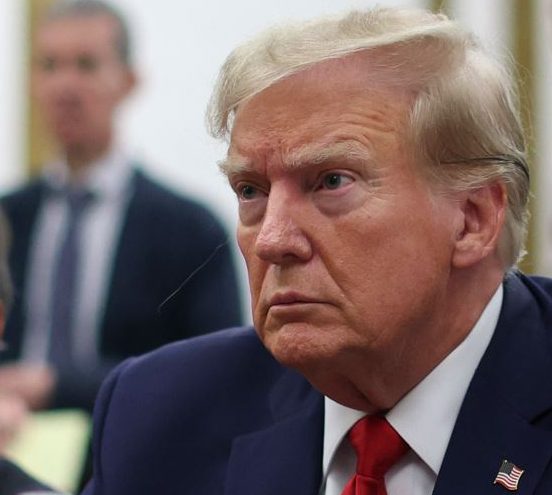
President-elect Donald Trump, on social media, described Syria as a “mess” and distanced the U.S. from further involvement.

Meanwhile, Russia and Iran, Assad’s key allies, have signaled their diminished support as they face pressures from other global conflicts.

Despite the celebrations, the future of Syria remains precarious.

As the country emerges from decades of brutal authoritarian rule, questions remain about the rebuilding process and the role of various rebel factions in establishing a stable government.

The international community, including the United Nations, is calling for dialogue and respect for human rights as Syria enters a critical phase of its history.

Google search engine

Syria: 53 Years of President Assad’s Dynasty Overthrown, Trump Reacts

US President-elect, Donald Trump reacted to the breaking news on Sunday morning that Syrian leader Bashar al-Assad had fled the country after rebels stormed the capital, Damascus.

Trump, expressing his thoughts on the development through a post on his social media platform, Truth Social, declared: “Assad is gone. He has fled his country.”

In his statement, Trump continued to criticize Russia’s involvement in Syria, writing, “Russia, Russia, Russia, led by Vladimir Putin, was no longer interested in protecting Assad.”

He suggested that Russia’s focus had shifted to the ongoing war in Ukraine, where the toll has been severe, with “close to 600,000 Russian soldiers wounded or dead.”

Trump emphasized the unnecessary nature of the war in Ukraine and called for a ceasefire and negotiations, arguing that the ongoing violence in both Ukraine and Syria had resulted in excessive loss of life.

“Russia and Iran are in a weakened state right now, one because of Ukraine and a bad economy, and the other due to Israel’s success in its fighting efforts,” Trump continued.

“Zelenskyy and Ukraine are ready to make a deal and stop the madness. They’ve lost 400,000 soldiers and many civilians. A ceasefire and negotiations must begin immediately.”

As news of Assad’s escape spread, Syrian state television reported that the dictator had fled with his wife, Asma al-Assad, and their three children, but their exact whereabouts were unknown.

A group of men appeared in a video statement on Syrian state TV declaring that Assad had been overthrown and that all prisoners had been released.

The statement urged opposition fighters and citizens to preserve the institutions of a “free Syrian state” and called for unity among the country’s various ethnic and sectarian groups.

In his post, Trump reiterated the gravity of the situation: “Too many lives are being wasted, too many families destroyed,” adding that the situation could spiral into something far worse if not addressed.

He also called on Russia and China to take action to help end the ongoing violence.

Syrian Prime Minister Mohammad Ghazi al-Jalali, speaking earlier on Sunday, confirmed he did not know the location of Assad, deepening the uncertainty surrounding the fate of the Syrian leader.

The situation in Syria remains tense as the country grapples with a new phase in its long-running conflict.

Google search engine

#GhanaDecides: Ministers, Incumbents Lose Parliamentary Seats

Several high-profile ministers and incumbents in Ghana have lost their parliamentary seats in the recent election, signaling a shift in political power.

Communications Minister Ursula Owusu-Ekuful, who had held the Ablekuma West seat since 2012, was defeated by Reverend Kweku Addo of the National Democratic Congress (NDC). Owusu-Ekuful received 26,575 votes, while Addo triumphed with 31,866 votes.

The result was confirmed by the Electoral Commission of Ghana (EC), with a total of 58,441 valid votes cast.

Tourism Minister Andrew Egyapa Mercer, a key member of the New Patriotic Party (NPP), also lost his seat in Sekondi to Blay Nyameke Armah of the NDC.

Mercer, who had represented Sekondi since 2016, secured 11,084 votes, while Armah won with 14,558 votes. Armah, in his victory speech, expressed his gratitude to his supporters, promising to work towards rebuilding the constituency.

Interior Minister Henry Quartey faced defeat in the Ayawaso Central constituency, losing to Abdul Rauf Tubazu of the NDC.

Quartey garnered 23,345 votes, while Tubazu secured 29,755 votes. Tubazu, in his statement, assured voters of his commitment to work for the people’s benefit.

In a surprising turn of events, independent candidate Ohene Kwame Frimpong emerged victorious in the Asante Akim North constituency.

Frimpong secured over 18,000 votes, beating the incumbent NPP candidate Andy Appiah Kubi, who received just 8,933 votes.

The election process saw some challenges, including power outages at two collation centers—Ayawaso North and Madina—leading to delays and heightened tension among supporters.

The Electoral Commission assured that efforts were being made to restore power to the affected centers.

Additionally, there were incidents of electoral misconduct, with one person arrested in the Western region for double voting at the Wassa Akropong-Appiahkrom polling station.

In Okaikwei South, another individual was detained for carrying a weapon at the St. Theresa school polling station.

The EC also confirmed the arrest of an official in the Bono East region.

Google search engine

President Assad Flees Syria As Rebels Take Over Capital

Syrian President, Bashar al-Assad has reportedly fled the country, with opposition fighters claiming control of Damascus following a rapid two-week offensive. Senior Syrian military officials have confirmed Assad’s departure, though independent confirmation is still awaited.

The United Arab Emirates, where rumors suggest Assad may have sought refuge, declined to comment on the matter.

Rebels celebrated the collapse of Assad’s 24-year rule on Syrian state television, calling for national unity and the restoration of Syria’s sovereignty.

Celebrations broke out across Damascus as residents tore down posters of Assad and his late father, Hafez al-Assad, while also removing statues that symbolized the regime.

Prisoners, including those from the infamous Sednaya prison, were freed as the opposition forces took control.

Videos emerging from the capital showed Syrians joyfully destroying portraits of the Assad family and trampling on statues that had long been symbols of the regime.

Assad, who succeeded his father in 2000 after his father’s nearly 30-year reign, had ruled with an iron fist.

His brutal crackdown on the 2011 uprising led to a civil war that has claimed over 300,000 lives over the past decade.

The rebel offensive, primarily led by Hayat Tahrir al-Sham, successfully breached Assad’s defenses, with video footage showing government soldiers abandoning their posts as the opposition closed in on the capital from multiple directions.

While many Syrians hailed the fall of the regime as a historic moment akin to the fall of the Berlin Wall, a sense of mourning persisted for the thousands of people who disappeared under Assad’s rule.

Human rights activists are calling for justice and accountability for the disappeared, as the country enters a new chapter in its tumultuous history.

Google search engine

10 Presidential Elections Annulled Globally

Babangida, 

Romania’s top court recently annulled its ongoing presidential election over alleged irregularities, following a trend of similar decisions in recent years.

Here are some notable instances from around the world:

1. Gabon: Military Coup
After Ali Bongo Ondimba was declared victorious in the August 30, 2023, presidential election, a military coup led by General Brice Oligui Nguema ousted him, accusing the election of being rigged.

The coup ended the Bongo family’s 55-year rule, with a new presidential election set for 2025 following a promised transition back to civilian leadership.

2. Malawi: Violent Protests
In 2020, Malawi’s constitutional court annulled the re-election of President Peter Mutharika, citing irregularities.

Following months of protests led by opposition leader Lazarus Chakwera, Chakwera won a fresh election in June 2020.

3. Bolivia: Political Crisis
In October 2019, Bolivia’s election results, which initially showed Evo Morales winning a fourth term, were delayed amid widespread protests.

Morales later resigned, and his challenger, Carlos Mesa, disputed the results. Morales was later exiled, and the interim government annulled the election results.

4. Kenya: Controversial Vote
Kenya’s 2017 presidential election, where President Uhuru Kenyatta was declared the winner over Raila Odinga, was annulled by the Supreme Court on September 1, 2017, citing irregularities.

A rerun was ordered, but Odinga boycotted the new election, leaving Kenyatta to claim victory.

5. Austria: Lengthy Election Process
In 2016, Alexander Van der Bellen won Austria’s presidential election in a contentious race.

A May 2016 runoff against Norbert Hofer was annulled due to irregularities, and a re-run was delayed due to issues with postal votes.

Van der Bellen was ultimately elected in December 2016 after a prolonged process.

6. Haiti: Electoral Crisis
Jovenel Moise’s 2015 election victory in Haiti was annulled by the court due to fraud allegations.

A re-election in 2016 was marred by low turnout and a power vacuum, though Moise was eventually re-elected in November 2016.

7. Maldives: Electoral Disputes
The Maldives’ 2013 presidential election was annulled by the Supreme Court due to discrepancies in the voter roll.

Mohamed Nasheed, initially declared the winner, went on to contest a re-run of the first round in November 2013 but was defeated by Abdulla Yameen in the second round.

8. Ukraine: Orange Revolution
In 2004, the presidential election in Ukraine, which saw Viktor Yanukovych declared the winner, was annulled after allegations of election rigging.

The decision led to the “Orange Revolution,” and Viktor Yushchenko, despite being poisoned during the campaign, won the subsequent re-run.

9. Serbia: Invalid Elections
Between 2002 and 2003, Serbia saw three presidential elections ruled invalid due to voter turnout falling below the required 50%.

A fourth election in 2004 saw Boris Tadic, a reformist candidate, defeating ultra-nationalist Tomislav Nikolic.

10. Nigeria’s 1993 Presidential Election
Nigeria’s 1993 presidential election, widely regarded as one of the fairest in the country’s history, was annulled by then-military leader General Ibrahim Babangida on June 23, 1993, just days after Moshood Kashimawo Olawale Abiola was believed to have won.

The annulment sparked widespread protests and condemnation both domestically and internationally.

Google search engine

Ghana’s Ballot Counting Continues After Tight Presidential Race

Ghana has begun tallying votes following a tightly contested presidential election on Saturday, where Vice President Mahamudu Bawumia faced off against former President John Mahama.

The election was heavily influenced by widespread voter frustration over economic difficulties.

Although the voting process was mostly peaceful, the police reported two deaths in separate incidents, casting a dark shadow over the proceedings.

The election was held to choose a successor to President Nana Akufo-Addo, who is stepping down after completing two terms.

Polls closed at 1700 GMT, with preliminary results expected by early Sunday, and the final official counts anticipated by Tuesday.

Economic issues were central to the election, as Ghana, once hailed as one of Africa’s most stable economies, has struggled with rising inflation, a weakened currency, and a $3 billion IMF bailout following a debt default.

Ballot counting is still in progress as election officials work to tally the votes in Accra.

Bawumia, a trained economist, campaigned on promises to stabilize the economy and further digitize services.

In contrast, Mahama focused on rebuilding the nation, including renegotiating the IMF deal and establishing a 24-hour economy.

Both candidates hail from northern Ghana, a crucial area that traditionally supports Mahama’s National Democratic Congress (NDC). Mahama, who served as president from 2012 to 2017, is seeking a political comeback after losing twice to Akufo-Addo.

Despite some signs of economic improvement, many Ghanaians remain dissatisfied.

While inflation has decreased from over 50% to 23%, challenges such as the high cost of living, job scarcity, and illegal gold mining continue to fuel frustration.

The ruling New Patriotic Party (NPP) is seeking an unprecedented third term, campaigning under the “Break the 8” slogan, but it faces mounting criticism over its handling of the economy.

Additionally, northern Ghana has seen increasing threats from conflict spillovers from neighboring Burkina Faso and Niger, raising the stakes for this election.

Google search engine

Zion Prayer Movement Announces Dates For 2024 ‘Odeshi Programme’ In Lagos

The Zion Prayer Movement Outreach (ZPMOM) has revealed that its highly anticipated annual event, “Odeshi,” will take place in Lagos from Friday, December 13, to Sunday, December 15, 2024.

Evangelist Chukwuebuka Anozie Obi, the Spiritual Director of ZPMOM, made the announcement over the weekend, confirming that the event will be held at Zion Ground, Agor, Okota, Lagos, starting at 10 a.m. each day.

The “Odeshi” programme, which translates to “Does not leak or penetrate,” is a spiritual prayer and fasting session aimed at fortifying participants spiritually.

It marks the conclusion of the ministry’s year-long activities.

Evangelist Ebuka explained that the primary purpose of Odeshi is to seek divine protection for those traveling during the busy Christmas and New Year period, as well as to prepare the congregation for God’s blessings and favour in the year 2025.

Given the increase in accidents and crime during the festive season, he emphasized the importance of seeking divine safeguarding for those traveling locally and internationally to reunite with family and friends.

Looking ahead to this year’s programme, Evangelist Ebuka expressed high hopes that the 2024 edition of Odeshi would witness significant spiritual breakthroughs.

He anticipates thousands of attendees giving their lives to Christ, as well as powerful miracles, healings, deliverances, and salvation.

“We’ve experienced similar remarkable events in the past, and we expect even more this year,” he shared.

In addition to the profound testimonies and accurate prophecies that have become synonymous with Zion, Evangelist Ebuka is gaining recognition for his transformative work in society, including converting native doctors, cultists, and prostitutes, saving troubled marriages, and providing charitable services through his Seraphic Foundation.

His efforts include free medical treatment at Seraphic Hospital and financial assistance to converted individuals and reconciled couples to help them establish new, stable livelihoods.

Google search engine

After Much Delay, Date For 2025 National Youth Conference Is Finally Announced

The Federal Government has announced that the long-awaited National Youth Conference will take place in February 2025, following several months of delays.

President Bola Tinubu initially proposed the conference during his Independence Day speech, aiming to address critical issues affecting Nigeria’s youth, such as unemployment, education, and political participation.

The conference, which was intended to engage young Nigerians in meaningful dialogue and encourage their involvement in national development, was originally scheduled for much earlier.

However, its postponement has led to frustration among various youth groups, including the Arewa Youth Consultative Forum, Yoruba Youths Council, Ohanaeze Ndigbo Worldwide, and the Ijaw National Congress.

These groups have expressed their disappointment over the lack of progress in organizing the event.

Zaid Ayuba, the National President of the Arewa Youth Consultative Forum, criticized the government’s delay, calling it a sign of neglect and lack of interest in addressing the challenges facing Nigerian youth.

“The President’s announcement should have immediately led to action, but this has not been the case,” he said.

“We remain hopeful, but we urge the government to prioritize the conference in early 2025.”

Similarly, Eric Oluwole, President of the Yoruba Youths Council, expressed frustration over the government’s inaction.

He emphasized that youth inclusion in governance is a critical demand, as young people make up 70% of the country’s population.

He called on the government to act swiftly and ensure that the conference delivers concrete solutions.

Dr. Alex Ogbonnia, spokesperson for Ohanaeze Ndigbo Worldwide, highlighted the importance of the youth conference for the President’s credibility, stating that it would provide valuable insights into the concerns of Nigeria’s youth.

He stressed that the conference should not be delayed further, as it would help address pressing issues such as unemployment and social unrest.

In contrast, Peluola Adewale of the Democratic Socialist Movement criticized the conference as a “diversionary tactic” by the Tinubu administration, arguing that it was an attempt to placate young people amid rising public discontent.

Responding to concerns, Minister of Youth Development, Mr. Ayodele Olawande, confirmed that the event would begin in February 2025, lasting for one month.

The conference will involve extensive grassroots engagement, with three weeks dedicated to interacting with youth at the local level across Nigeria, followed by one week in the Federal Capital Territory (FCT), Abuja, to discuss findings and formulate actionable steps.

Olawande noted that the approach would be different from previous conferences, with a focus on actionable outcomes rather than lengthy discussions.

He revealed that the President had approved the new format, which includes nominating representatives from various ministries and agencies to collaborate with delegates.

The minister emphasized the importance of ensuring the conference leads to real change, mentioning that a task force would be set up to help implement the recommendations.

He also acknowledged that the President had expanded the duration of the conference to a month after reviewing the original proposal.

National Association of Nigerian Students (NANS) President, Lucky Emonefe, also called for urgent action, stressing the need for increased youth participation in government.

He said NANS would demand that at least 50% of public leadership positions be filled by young people, and urged the government to act swiftly to hold the conference as soon as possible.

Google search engine

MOST COMMENTED

- Advertisement -
Google search engine