Home Blog Page 723

Oyedele Urges Swift Implementation Of Tax Reforms For Economic Growth
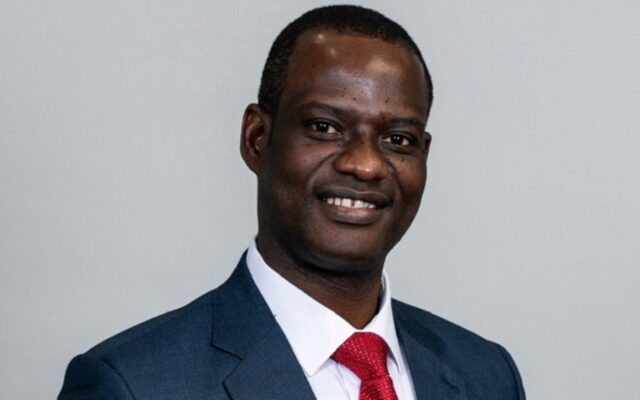
Taiwo Oyedele, Chairman Presidential Fiscal Policy and Tax Reforms Committee, 

Taiwo Oyedele, the Chairman of the Presidential Fiscal Policy and Tax Reforms Committee, has called for the rapid implementation of the proposed tax reforms by mid-2025, emphasizing that the current tax system is hindering Nigeria’s economic progress and must be restructured.

Speaking at the Annual Roundtable Summit organized by the CEO’s Group of the Covenant Community Groups in Lagos, Oyedele highlighted that while increasing government revenue doesn’t automatically improve the economy, a stronger economy will naturally lead to higher revenues.

He stressed the need for policies that are inclusive and address the disparities in inflation and income, ensuring that all Nigerians benefit from the reforms.

In his keynote speech, titled ‘May Nigeria Work for Me’, Oyedele underscored the importance of human capital development, proposing initiatives like interest-free education loans, consumer credit systems, skills development programs, and tax policies that could stimulate Nigeria’s economic growth and stability.

He cautioned against the risks of economic mismanagement, drawing comparisons with Zimbabwe’s hyperinflation crisis, and warned that unsustainable subsidy policies had drained national resources, leaving the country vulnerable to financial collapse.

He explained how the Nigerian National Petroleum Corporation (NNPC) had used critical national resources, such as equity crude and profit oil, to fund subsidies, which he said contributed to the economic strain.

“Our tax system is like trying to race in a 1960s car against Ferraris. It’s a major constraint, and it must be fixed,” Oyedele remarked, highlighting the urgency of the proposed reforms.

Oyedele expressed hope for Nigeria’s economic future, predicting that the reforms would lead to reduced inflation, stable exchange rates, and an uptick in industrial output.

He also encouraged both public and private sectors to address the rising demand for foreign exchange, urging Nigerians to shift from speculative practices to productive investments.

“Our reforms aim to ease pressure on monetary authorities and bring about greater stability. We’re turning a corner, and 2025 will signal the start of a new era,” he added.

The tax reform advocate also emphasized the need for accessible and relevant education, proposing interest-free loans and stipends for students from disadvantaged backgrounds to support their studies.

He stressed that such initiatives would offer hope to many students and foster inclusivity in education.

Oyedele also criticized the current state of Nigeria’s educational system, noting that the focus on degrees disconnected from practical skills does not meet the needs of society.

“We need to redirect students toward more practical fields of study. Education should be more than theoretical; it must serve the demands of the economy,” he stated.

On the issue of salaries for academics, Oyedele expressed concern over the low wages paid to Nigerian professors, which he argued made it difficult to attract qualified educators.

He compared the salaries of Nigerian professors to those in developed countries, lamenting that earning N400,000 per month would not allow professors to dedicate themselves fully to their work.

“The quality of education suffers when we don’t invest in our lecturers. If we don’t make teaching an attractive profession, our education system won’t thrive,” he said.

Oyedele also discussed the potential benefits of a more inclusive credit system, proposing consumer loans to support the purchase of locally manufactured goods.

He argued that such loans could boost domestic industries and help Nigerians build wealth over time, citing the example of using credit to buy homes instead of spending decades saving.

“Why should it take you 35 years to build a house when you can live in one and pay for it over time? This is how you foster economic growth,” he concluded, reinforcing the need for reforms that support sustainable local economic development.

Google search engine

Debate Over Local Government Autonomy As FG Implements Direct Funding

As Nigeria’s 774 local government areas (LGs) prepare to begin receiving direct funding from the Federal Government, concerns have emerged about the ability of local council chairmen and existing institutional frameworks to ensure accountability and transparency.

These issues are exacerbated by a lack of democratic oversight at the local level, where corruption, abuse of power, and a loss of public trust in governance have been persistent challenges.

Historically, state governments have controlled local government affairs, with many councils performing limited functions.

Governance structures, such as legislative bodies, are often non-operational, further undermining the effectiveness of local councils.

Additionally, there are worries about the local governments’ ability to implement state-wide minimum wage policies due to poor revenue generation, weak economic activity, and inadequate infrastructure in many areas.

Some fear a return to the pre-1999 period, when local governments struggled to pay salaries for essential workers like primary school teachers and health center staff.

An investigation by The Guardian revealed that unless local government laws and regulations are amended in accordance with the Supreme Court’s ruling granting financial autonomy, state governors and political figures will continue to control the finances of the councils.

Currently, state houses of assembly oversee the operations of local governments, but their regulations are largely dictated by governors through state ministries.

These ministries control procurement rules, set spending limits, and manage council funds, often limiting the autonomy of council chairmen and councillors.

Former Ijebu East Local Government Chairman, Wale Adedayo said only Lagos State has begun updating its local government administrative laws to address current challenges in financial management.

He urged other states to follow this example and align their laws with the Supreme Court ruling.

In order to prevent a repeat of past financial crises, Adedayo called for the Federal Government to instruct the Central Bank of Nigeria (CBN) to prioritize the payment of salaries and pensions for local government workers, particularly in education and health, ensuring that funds are deposited into separate accounts for transparency.

At the same time, the National Assembly faces the challenge of amending the Constitution to remove Section 162(6), which governs the states/local government joint account (JAAC), in order to fully implement the Supreme Court’s ruling on financial autonomy.

However, there has been little action on this front, with both the Presidency and state governors hesitant to agree on how the ruling will be executed.

In 2023, the Federation Account Allocation Committee (FAAC) paid N3.774 trillion into the JAAC, which is controlled by state governors, while local governments received N9.56 trillion between 2019 and 2023.

Financial management expert and former Ogun State Finance Commissioner, Kehinde Shogunle, emphasized the need for clear federal guidelines to ensure that local government expenditures are transparent and accountable.

He pointed out that for years, local governments have struggled with poor allocations and the overwhelming control of state governors.

Shogunle stressed that local councils lack the political and administrative capacity to manage large amounts of funds and to ensure accountability without proper oversight.

Professor Remi Aiyede from the University of Ibadan warned that without sufficient oversight, local government autonomy could result in “decentralized corruption.”

He called for stronger internal systems within local councils and for anti-corruption agencies to take a more active role in monitoring local government activities.

Despite these concerns, former President of the Association of Local Governments of Nigeria (ALGON), Kolade Alabi, dismissed claims that local government chairmen are not capable of managing funds and ensuring transparency.

Alabi argued that the new financial autonomy would lead to significant development at the grassroots level, benefiting communities across the country.

He assured Nigerians that mechanisms are in place to monitor local government expenditures, and any chairmen found misappropriating funds would face legal consequences.

In a similar vein, former ALGON Chairman in Oyo State, Abbas Aleshinloye, argued that governors should no longer impose limits on local government spending, as this unnecessarily ties the councils to state control.

He stressed that local governments must have the freedom to manage their funds autonomously.

Adedayo, who previously chaired Ijebu East Local Government, explained that the administrative framework at the state level is mirrored in local governments, where a treasurer, head of local government administration, and auditor general are responsible for overseeing financial management.

He assured that councillors have the necessary training to approve and monitor budgets effectively.

However, there has been little visible progress on the part of the National Assembly to implement the Supreme Court’s judgment on local government autonomy.

Despite Senate President Godswill Akpabio’s commitment to removing Section 162(6) of the Constitution, which enforces the JAAC system, no concrete legislative action has been taken.

State governors, however, continue to resist full implementation of the ruling. Governor Chukwuma Soludo of Anambra State, for instance, signed a new law establishing a State Joint Local Government Account, despite criticism from civil society groups.

Soludo defended the law, arguing that granting full autonomy to local governments could lead to instability and hinder development.

He insisted that the new legislation aligns with the Supreme Court ruling and is intended to facilitate its implementation rather than undermine it.

On the federal level, representatives such as Mark Esset from Akwa Ibom State have expressed doubts about the Supreme Court’s ruling, arguing that the states should retain some oversight over local governments, as mandated by the Constitution.

Esset contended that the ruling does not provide full autonomy to local governments, given that state assemblies are constitutionally tasked with overseeing their operations.

Political scientist, Professor Gbade Ojo emphasized that local government officials are capable of managing funds, suggesting that anti-corruption agencies should focus on overseeing the use of public resources.

He also pointed to informal mechanisms in some states that help safeguard funds for local government workers, particularly pensioners and teachers.

Prof. Akeem Amodu, a former head of the Political Science Department at Lead City University, also called for state auditors and public accounts committees to monitor local government finances closely.

He urged the use of digital tools and systems, such as e-budgeting and automated payment platforms, to ensure transparency in fund allocation.

Dr. Damilola Agbalajobi from Obafemi Awolowo University emphasized the importance of punitive measures for any council chairmen who mismanage funds, calling for public disgrace and repayment of misused funds.

She also stressed the need for citizens’ participation in local government administration, ensuring that local councils are held accountable to the people they serve.

As Nigeria moves toward implementing local government financial autonomy, the challenge will be ensuring that the new system leads to greater development and transparency at the grassroots level.

Google search engine

Trump’s Meme Coin Surpasses $13 Billion Market Capitalization

A meme coin launched by President-elect Donald Trump over the weekend has seen its market cap soar past $13 billion, marking his latest venture into the cryptocurrency world and merchandise sales ahead of his inauguration.

Trump made the announcement of his meme coin, $TRUMP, via a post on Truth Social Friday, explaining that the cryptocurrency symbolizes “WINNING” the presidential election and his forthcoming inauguration.

By Saturday morning, the price of $TRUMP had skyrocketed by over 300%, continuing to climb throughout the weekend.

By Sunday afternoon, it had surpassed $65 per coin, bringing the market capitalization to a staggering $13.3 billion, according to CoinMarketCap.

The coin, which is based on the Solana blockchain, briefly touched $75 early Sunday, pushing the market cap to $15 billion.

The developers behind $TRUMP have capped the initial supply at 200 million coins, with plans to expand the total supply to 1 billion over the next three years, as stated on the coin’s website.

Deportation Raids Set to Begin as Trump Takes Office:

Meanwhile, U.S. sources report that raids aimed at detaining and deporting undocumented immigrants are set to commence on the first full day of Donald Trump’s presidency.

These operations, which have been threatened by Trump’s “border tsar” Tom Homan, are expected to begin in various locations, with Chicago reportedly being one potential target due to its large immigrant population.

Homan told The Washington Post that, despite early reports, the administration is reconsidering the timing and locations for the raids after the potential details were leaked.

Trump has promised to lead the largest deportation effort in U.S. history, prioritizing criminals and gang members in these operations.

Google search engine

Federal Polytechnic Expels 100 Students Over Exam Malpractices

The management of Federal Polytechnic Nasarawa, located in Nasarawa State, has expelled 100 students over their involvement in examination malpractices during the 2023/2024 academic session.

This was revealed by the Acting Rector, Dr. Hauwa Muhammad, at the 41st matriculation ceremony for about 15,000 newly admitted students for the 2024/2025 academic session.

The ceremony took place in Nasarawa Local Government Area over the weekend.

The newly matriculated students, who enrolled in National Diploma (ND), Higher National Diploma (HND), and Part-Time programs, were cautioned by Dr. Muhammad to refrain from engaging in exam malpractice, as those expelled for similar offenses had faced serious consequences.

In her address, Dr. Muhammad also advised the new students to avoid social vices such as drug abuse, cultism, and indecent dressing.

She emphasized the importance of peaceful coexistence and urged them to uphold good conduct during their time at the institution.

Google search engine

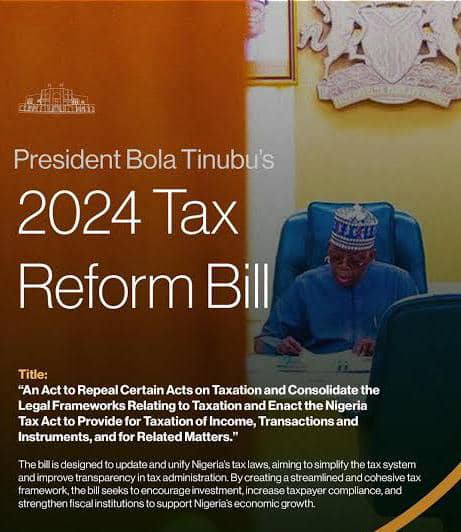
ASUU Opposes Tinubu’s Controversial Tax Reform Bill, Warns Of Harm To Education

The Benin Zone of the Academic Staff Union of Universities (ASUU) has strongly opposed the proposed Nigeria Tax Reform Bill, expressing concerns that it could cripple public institutions in the country.

Speaking to journalists over the weekend, the Zonal Coordinator, Prof. Monday Lewis Igbafen, representing nine universities in the region, highlighted Section 59(3) of the Tax Bill (NTB) 2024, which states that only 50% of the Development Levy would go to the Tertiary Education Trust Fund (TETFund) in 2025, with the remaining funds allocated to NITDA, NASENI, and NELFUND.

This provision would further decrease TETFund’s share to 66% in 2027, 2028, and 2029, and result in zero funding from 2030 onwards.

Igbafen expressed alarm over the potential long-term effects, warning that this change would severely affect public education, as TETFund plays a critical role in infrastructure development, postgraduate training, and research in Nigerian universities.

“As a union of intellectuals, we reject this tax reform bill, especially its attempt to diminish the vital role of TETFund in the development of tertiary education,” Igbafen stated.

“TETFund has been the cornerstone of progress in Nigerian higher education, driving improvements in manpower, infrastructure, and academic excellence.”

The ASUU leader also lamented the unresolved issues from the 2009 FGN/ASUU Agreement and expressed concern over the bill’s proposed elimination of TETFund by 2030.

He warned that the end of TETFund would undermine the progress made in repositioning Nigeria’s universities for global recognition and advancement.

He further criticized the government for its insufficient budget allocation to education, pointing out that, despite the United Nations’ recommended 26% benchmark for education funding, Nigeria’s allocation has remained between 5% and 7%, with the 2025 budget retaining just 7% for education.

ASUU is calling for widespread resistance against the bill, urging Nigerians to stand against what they view as a threat to the survival of public tertiary education in the country.

Google search engine

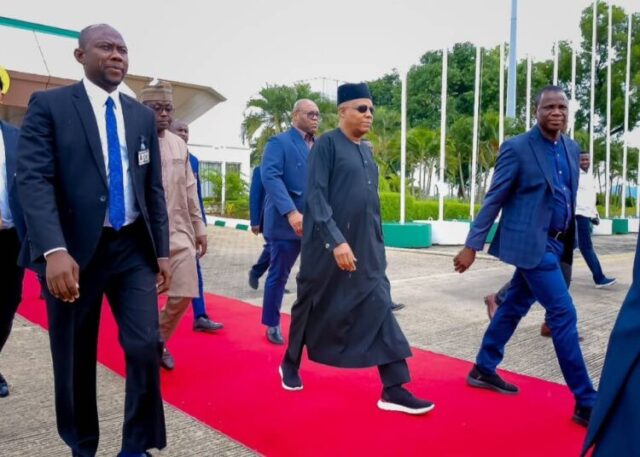
Vice President Shettima Heads To Switzerland For World Economic Forum

Vice President Kashim Shettima has departed Abuja on Sunday to represent Nigeria at the 2025 annual World Economic Forum (WEF) in Davos, Switzerland.

Shettima’s Senior Special Assistant on Media and Communication, Stanley Nkwocha, confirmed the development, stating that the Vice President would engage in a series of bilateral meetings with other global leaders and participate in several workshops and forums scheduled for the event.

The Vice President is expected to join world leaders, top business executives, and development partners to discuss the state of the global economy and potential solutions for its improvement.

Nkwocha further highlighted that Shettima’s participation would also focus on boosting investments in Africa’s frontier markets.

One of the key events Shettima will attend is a workshop titled “Roadmap to Co-create Investment Opportunities for Africa’s Frontier Markets,” organized by the African Development Bank in partnership with the WEF.

The workshop aims to foster investments in Africa to help create a prosperous, inclusive, and resilient continent.

An important agenda during Shettima’s visit will be the announcement of the Humanitarian and Resilience Investing Roadmap for Africa, which seeks to encourage partnerships between public and private sector leaders in mobilizing investments into Africa’s frontier markets.

Additionally, Shettima will be attending a dinner for heads of state and government leaders, alongside other dignitaries and Annual Meeting 2025 Crystal Awardees, at Kurpark Village, Eiger.

A highlight of Shettima’s schedule is his co-chairing of a session on “Turning Digital Trade into a Catalyst for Growth in Africa.”

The forum will focus on the role of the private sector in advancing the African Continental Free Trade Area (AfCFTA) Digital Trade Protocol, which was adopted by African Union heads of state in January 2024.

The Vice President is also slated to participate as a panellist in the “Global Risks 2025” stakeholder dialogue, where he will contribute to discussions on the volatile global risks posed by geopolitical, technological, and environmental challenges.

Shettima will be accompanied by Nigeria’s Minister of Industry, Trade and Investment, Dr. Jumoke Oduwole, and the Executive Secretary of the Nigerian Investment Promotion Commission, Aisha Rimi, among other government officials.

He will return to Abuja following the conclusion of his engagements in Davos.

Google search engine

Police Arrest Man For Stabbing In-Law To Death In Imo

The Imo State Police Command has detained 40-year-old Uchenna Okpara for allegedly stabbing his in-law, Uchenna Unakalamba, to death in Ubomiri, Mbaitoli Local Government Area of Imo State, following a disagreement between their children.

In a statement released on Sunday, Police Public Relations Officer Henry Okoye confirmed that the incident occurred on January 16, 2025, when a minor altercation between the children escalated into a violent confrontation.

Okpara is accused of using a broken bottle to fatally attack Unakalamba.

“The suspect, Uchenna Okpara, was arrested on January 16, 2025, by the anti-kidnapping unit for allegedly stabbing his in-law to death after a dispute involving their children turned violent,” Okoye said.

Police responded to a distress call, apprehended Okpara, and recovered the weapon used in the attack.

Unakalamba was later confirmed dead at the hospital, and his body was taken to the morgue.

The suspect is currently in police custody as investigations continue.

Okoye added that Okpara would be prosecuted after the investigation is concluded.

In a separate operation, Imo State Police also arrested a member of a notorious kidnapping syndicate, Ozioma Dike, on January 16, 2025.

Following credible intelligence, the anti-kidnapping unit raided the hideout of the syndicate in a forest near Agwa, Oguta Local Government Area.

The operation led to a gunfight, with Dike arrested while others fled into the bushes.

Authorities recovered a pump-action rifle with seven live rounds of ammunition, as well as an iPhone belonging to a victim kidnapped on January 8, 2025, in Ubomiri.

During questioning, Dike admitted to being part of a group responsible for numerous kidnappings across Ubomiri, Ogbaku, and Ohii communities in Mbaitoli.

Okoye assured the public that efforts to apprehend the remaining gang members are ongoing.

“The arrested suspect will be arraigned in court upon conclusion of investigations” he added

Google search engine

TikTok Restores Service In U.S After Temporary Outage, Hails Trump

TikTok resumed service in the United States on Sunday after a brief shutdown over the weekend, following the enactment of a law that bans the app on national security grounds.

The popular video-sharing platform credited President-elect Donald Trump for the reversal, even though the Biden administration had previously stated it would not enforce the ban.

The outage began late Saturday, coinciding with a deadline for TikTok’s Chinese parent company, ByteDance, to sell its U.S. operations to non-Chinese entities.

On Sunday, many users found themselves unable to access the app, prompting Trump to step in.

The president-elect pledged to delay the ban, promising an executive order to give time for a potential deal.

Trump also suggested that the U.S. should take a partial ownership stake in TikTok, proposing a 50% share in a joint venture.

He argued that this move could significantly increase the app’s value.

Trump’s comments, posted on his Truth Social platform, included a suggestion that the United States could turn TikTok into a lucrative asset, potentially worth “hundreds of billions of dollars, maybe trillions.”

Trump had previously sought to ban the app during his first term, but his new proposal sought a more cooperative solution.

In response to the developments, TikTok announced it was in the process of restoring its service.

In a statement shared on X, the app thanked Trump for providing clarity to its service providers, ensuring that they would not face penalties for continuing to provide the app to American users.

However, TikTok did not address Trump’s proposal for U.S. part-ownership.

The law, which mandates the removal of TikTok from app stores and requires Apple and Google to block new downloads, allows a 90-day delay on the ban if the White House can show progress toward a deal.

Yet, ByteDance has remained firm in its refusal to sell, and the Biden administration has indicated that it will leave enforcement to Trump.

TikTok’s influence has been immense, with millions of users creating viral videos that have catapulted ordinary people to fame.

However, concerns over the app’s ties to China and allegations of disinformation have raised security concerns, both in the U.S. and abroad.

In response to TikTok’s temporary shutdown, social media platforms like X were flooded with memes and reactions from users lamenting the loss of the app.

Some also poked fun at Trump’s past efforts to ban the platform, while others shared their fondness for TikTok.

The ban even became a topic of discussion at the Australian Open, where American tennis star Coco Gauff expressed her hope that the app would return.

Meanwhile, offers to purchase TikTok’s U.S. operations have surfaced.

Perplexity AI, a high-profile startup, proposed a merger with TikTok’s U.S. subsidiary, with an estimated price of at least $50 billion.

Additionally, former Los Angeles Dodgers owner Frank McCourt has also made an offer to acquire the platform’s U.S. operations.

As the situation evolves, it remains unclear whether the incoming administration will be able to lift the ban, particularly if ByteDance continues to refuse to sell.

Google search engine

Polytechnic Workers To Begin Warning Strike Over Career Progression Issues

The Senior Staff Association of Nigeria Polytechnics (SSANIP) has announced that it will embark on a three-day warning strike starting from Wednesday, January 22, 2025, in protest against the alleged plans by some stakeholders to deny non-teaching staff of polytechnics and similar institutions their rightful career progression.

In a letter addressed to the Minister of Education on January 14, SSANIP expressed concern over what it described as an ongoing effort to block its members from advancing to the peak of their careers under the CONTEDISS 15 pay scale as part of the ongoing review of the Polytechnic Schemes of Service.

The association has called on the federal government to intervene, urging the Minister to ensure that non-teaching staff are not sidelined or deprived of their due career progression, emphasizing that addressing their concerns will not negatively impact the career progression of teaching staff, as the two categories have distinct salary structures.

The letter, signed by SSANIP National Secretary, Comrade Nura Shehu Gaya, was also sent to various government bodies, including the Minister of Labour and Employment, the Head of Civil Service of the Federation, the Executive Secretary of the National Board for Technical Education (NBTE), the Executive Chairman of the National Salaries, Incomes and Wages Commission, and the Inspector General of Police, among others.

The notice, titled Notice of Three-Day Warning Strike, reads in part: “The Senior Staff Association of Nigeria Polytechnics (SSANIP) wishes to formally notify your esteemed office of our decision to embark on a three-day warning strike, scheduled to commence from midnight of Wednesday, January 22, 2025, through Friday, January 24, 2025.”

It continued: “This action has become necessary due to the ongoing plot by certain stakeholders to unjustly deprive Non-Teaching Staff of Polytechnics and Similar Institutions of their rightful career progression to the peak of their careers on CONTEDISS 15, as part of the redrafting of the Polytechnic Schemes of Service.”

SSANIP has consistently advocated for policies that promote equity and justice within the polytechnic system, calling for career progression policies that benefit both teaching and non-teaching staff.

Despite previous engagements with relevant authorities, the association lamented that little progress has been made on the matter.

SSANIP stated that the strike serves as a warning to highlight the seriousness of their grievances and to reinforce their commitment to ensuring non-teaching staff are not marginalized.

The association urged the government to take swift action to resolve the issue and prevent any further escalation, emphasizing its openness to dialogue and a peaceful resolution to avoid disrupting the polytechnic system.

Google search engine

Power Outage Hits Aba Ringfence Area After 31 Days Of Uninterrupted Supply

After experiencing 31 consecutive days of stable power, residents in the Aba Ringfence, which includes nine of the 17 local government areas (LGAs) in Abia State, were hit by a power outage this past weekend.

Ugo Opiegbe, the Managing Director of Aba Power, confirmed the interruption, stating, “We regret that we lost power supply from Heirs Energies, who are working in partnership with the Nigerian National Petroleum Company Limited (NNPCL). We sincerely apologize to our many customers who have been enjoying continuous power since December 17, making them the first in Nigeria to experience such consistent service in years.”

Opiegbe did not specify the cause of the disruption in the gas supply from Heirs Energies, which operates Oil Mining Licence (OLM) 17 in Owaza, Ukwa West LGA.

However, sources indicated that vandals targeting crude oil and petroleum products were responsible for damaging the Eastern Gas Network over the weekend.

These vandals often attack pipelines carrying both gas and oil, making it difficult to distinguish between them.

The frequency of attacks on critical infrastructure, including telecommunications, electricity, and petroleum facilities, has been increasing in Nigeria.

Recently, even the State House in Abuja was plunged into darkness after an attack on the transmission facilities supplying power to the Federal Capital Territory, with President Bola Tinubu among the victims.

Despite the gas supply interruption, Opiegbe assured that power was still available in parts of the Aba Ringfence area.

“We quickly switched to the Niger Delta Power Holding Company (NDPHC) to restore service. While the NDPHC supply is helping, it is limited, and not all areas are receiving power,” Opiegbe explained.

He assured customers that the company is working tirelessly to restore full power supply to all nine LGAs in the Aba Ringfence area, emphasizing that they remain committed to providing uninterrupted electricity service.

Google search engine

MOST COMMENTED

- Advertisement -
Google search engine