Home Blog Page 814

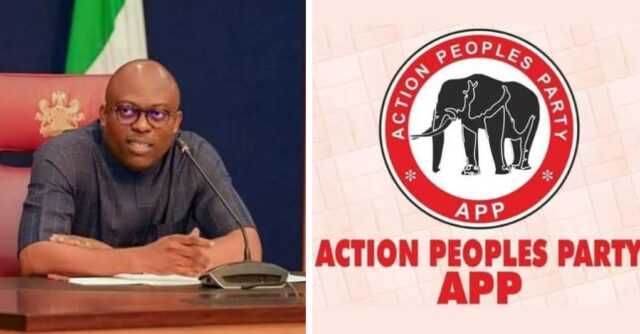
APP Hails Governor Fubara For Implementing N85,000 Minimum Wage

The National Chairman of the Action Peoples Party (APP), Chief Barr. Uche Nnadi, has lauded Governor Siminalayi Fubara of Rivers State for setting a remarkable precedent by implementing an N85,000 minimum wage for state workers.

In a statement released in Abuja, Nnadi praised Fubara as a genuine democrat and a visionary leader who prioritizes the welfare of the workforce.

He commended the governor for withstanding attempts by certain undemocratic elements to undermine the state’s resources for personal gain.

Nnadi highlighted that Governor Fubara’s decision to pay the highest minimum wage in the country is a clear indication of his commitment to the people.

“This move showcases that Governor Fubara has the right policies and strategies in place to positively impact the state’s future,” he said.

He further noted that Fubara’s actions demonstrate his determination to improve the living standards of Rivers residents, despite opposition from forces seeking to destabilize the state.

The APP chairman encouraged the people of Rivers State to continue supporting Governor Fubara in his mission to bring about lasting development.

He also emphasized that the APP is proud to stand behind the governor and will work tirelessly to help him achieve greater successes for the state.

Google search engine

OPC Calls For Return To Regional Government As National Assembly Reviews Constitution

The Oodua Peoples’ Congress (OPC) has once again called for Nigeria to revert to a regional system of government, urging the National Assembly Committee responsible for reviewing the 1999 Constitution to prioritize this reform.

In a statement released on Sunday, OPC expressed its strong support for the growing movement across Nigeria, led by various ethnic groups, advocating for a return to the 1960 constitution, which featured a regional structure.

The Yoruba socio-cultural organization emphasized that the current system was not conducive to the progress of the nation, and reiterated its endorsement of the recent proposal by a coalition of ethnic nationalities in Kaduna, which called for a restructuring of Nigeria into reorganized regions.

OPC believes that a return to regionalism is the key to unlocking the country’s potential and ensuring sustainable development.

According to OPC, regionalism would allow regions to become self-sufficient and retain control over resources generated within their territories.

The organization proposed that under a regional system, each region would retain 70% of its generated revenue, sending only 30% to the federal government.

This, OPC argued, would foster peace, accelerate development, and enable Nigeria to reach its full potential.

OPC pointed to examples of successful regional systems in other multi-ethnic nations, such as Senegal and Gambia.

Senegal, with a population of around 17 million, operates with 14 regions, while Gambia, with a population of 2.8 million, has six regions.

These countries, OPC argued, demonstrate that regional autonomy leads to socio-political cohesion, unity, and rapid development.

The group also criticized the military’s decision to abolish the regional system in 1966, replacing it with a unitary system of government, which OPC believes has hindered Nigeria’s progress ever since.

It reiterated that the original regional structure, established in 1960, was a model that suited the country’s diverse needs and should be restored for Nigeria to achieve meaningful development.

OPC spokesperson Barrister Yinka Oguntimehin emphasized that the current review of the constitution represents a historic opportunity for Nigeria to correct its course.

He urged the National Assembly Committee on the Review of the Constitution to act with urgency and commitment, ensuring that the wishes of Nigerians for a return to regionalism are respected.

He concluded by calling on the committee members to consider the lasting impact of their decisions on the nation’s future, urging them to prioritize regionalism as the most viable solution for Nigeria’s progress.

The OPC also reaffirmed its support for the idea of a United Region of Nigeria, an initiative that aims to unify the country’s regions under a common framework.

Google search engine

Nigerians In Urban Areas Turn To Firewood, Charcoal Amid Rising Cooking Gas Costs

As the price of cooking gas continues to soar, many Nigerians living in urban areas are reverting to using firewood and charcoal for cooking, finding them more affordable alternatives.

Charcoal and firewood, once primarily used in rural and semi-urban areas, had been largely replaced by cooking gas due to its convenience and efficiency.

However, with the escalating cost of cooking gas, many Nigerians are now turning back to these traditional fuels.

A recent survey shows that a portion of charcoal now costs between N500 and N1,000, while firewood is priced at about N700 per bundle of four sticks.

In comparison, a 3kg cylinder of cooking gas now costs around N4,000.

In response to the rising costs, some urban dwellers have even started sourcing firewood from building sites and local bushes. This practice, more common in rural areas, has become a cost-saving measure for many families.

Yekini Abdullahi, a vulcanizer, shared that he and his wife had been spending too much on cooking gas, which had become unsustainable in the current economic climate.

He explained, “Although charcoal is cheaper, the difference is not that much, so we decided to source firewood from nearby bushes and construction sites. So far, it has worked well for us, and we are saving money.”

Victoria Shodimu, a hairdresser, noted that she had lived in rural areas before and had returned to using firewood as a practical solution.

She explained that with the rising cost of cooking gas, she started collecting firewood from local bushes, and now uses a coal pot instead of a gas stove.

“It’s cheaper, and it works just as well for cooking meals like beans,” she said.

Oluchi Udechukwu shared similar experiences, saying she saves a lot by gathering firewood from construction sites.

“When I can’t find wood at construction sites, I head to nearby bushes. It’s not glamorous, but it’s necessary to survive in these tough times,” she said.

According to the National Bureau of Statistics’ recent Residential Energy Demand-Side Survey, about 39% of households acquire fuelwood by cutting or collecting it from trees, branches, and stems.

The report further revealed that 67.8% of households use fuelwood for various purposes, including domestic cooking, agriculture, and even cultural or religious practices.

As gas prices continue to climb, many Nigerians are finding that embracing firewood and charcoal is no longer just a matter of nostalgia, but a necessary survival strategy in the face of increasing hardship.

Google search engine

2027: Group Announces Plan To Launch New Political Party, Vows To Unseat Tinubu

A political group, Team New Nigeria (TNN), revealed on Sunday its intention to break away from the ruling All Progressives Congress (APC) and establish a new political party with the goal of unseating President Bola Ahmed Tinubu in the 2027 elections.

During the inauguration of a harmonization committee in Kano to oversee the party’s registration, TNN’s National President, Modibbo Yakubun Farakwai, explained that the decision to part ways with the APC was driven by what he described as the failure of Tinubu’s administration to meet the needs of Nigerians.

Farakwai disclosed that the group had already approached the Independent National Electoral Commission (INEC) to begin the registration process for their new party.

“We have submitted the name, logo, constitution, manifesto, and flag of our party to INEC, and we are now awaiting approval to formalize Team New Nigeria as a registered political party,” he said.

Reflecting on their past support for the APC, Farakwai expressed regret over the group’s involvement in helping the party secure victory in the 2015 elections.

“We were part of the 2015 arrangement to ensure APC’s victory. Today, we deeply regret that decision,” he said, criticizing the APC’s handling of key national issues such as security, poverty, unemployment, and the deteriorating state of infrastructure.

“The country is on the brink of collapse, and it’s time for a change.”

Farakwai also took aim at President Tinubu’s administration, stating that Nigeria is “broken,” with nothing functioning as it should.

He called for a shift away from the current political culture, advocating for a new system of governance based on true democracy and effective leadership.

In line with this vision, TNN has started organizing nationwide rallies to engage Nigerians about their plans for the future of the country.

“We are here to revive the hope that the APC destroyed in 2015. By 2027, we will take over the government and lead Nigeria to a future free from poverty and injustice,” Farakwai said, emphasizing the party’s large base of supporters, which includes over 26 million registered members.

The TNN leader also called on INEC to remain impartial in its role and highlighted the need for stronger measures to fight corruption.

“There must be severe punishment, including the death penalty, for leaders who steal public funds. This will ensure accountability and help set Nigeria on the right path,” he stated.


Google search engine

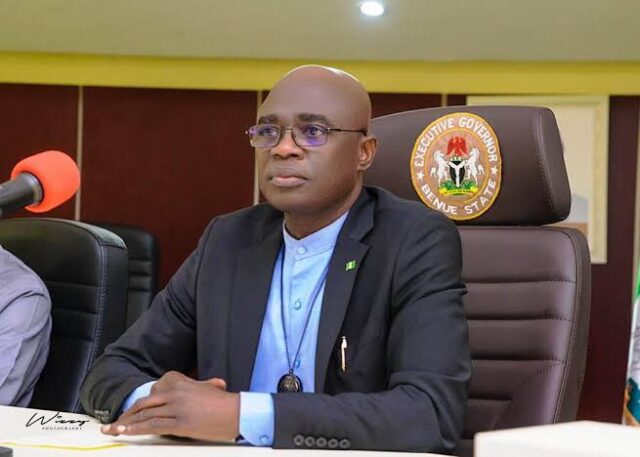
Gov. Alia Sacks Special Adviser On Local Government and Chieftaincy Affairs

Governor Hyacinth Alia of Benue State has removed Dr. Dennis Akura from his position as Special Adviser on Local Government and Chieftaincy Affairs, appointing Mr. Denen Aondoakaa as his successor, effective immediately.

In a statement released on Sunday, Tersoo Kula, the Governor’s Chief Press Secretary, announced that Dr. Akura has been reassigned to a new role as Special Adviser on Financial and Economic Strategy, Planning, and Development.

The statement read: “The Governor has reassigned Dr. Dennis Akura, formerly the Special Adviser on Local Government and Chieftaincy Affairs, to a new position as Special Adviser on Financial and Economic Strategy, Planning, and Development, effective immediately. Mr. Denen Aondoakaa, who previously served as the Senior Special Assistant to the Governor, has been appointed to take over the Bureau for Local Government and Chieftaincy Affairs.”

Mr. Aondoakaa, a former banker, steps into the role with a background in financial and strategic planning.

Google search engine

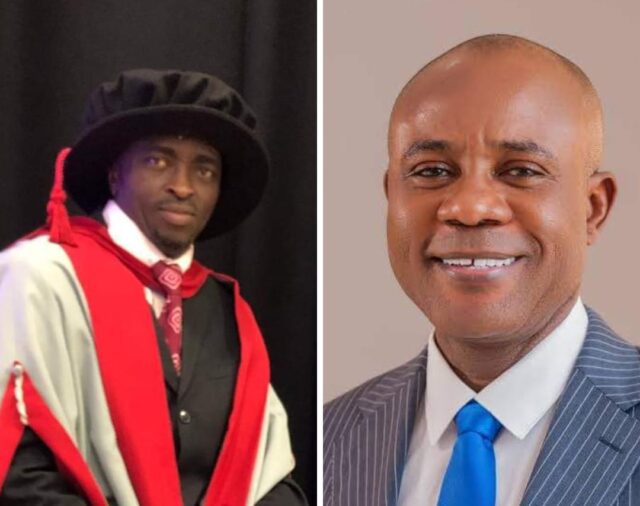
‘Beyond Enugu Air’ – Dr. Eneje Writes Governor Mbah

I commend the governor of Enugu State for his efforts to reshape the state, particularly in education and infrastructure. He has introduced plans like the Smart School initiative and the establishment of an industry producing construction products.

Notable achievements, such as the completion of the Enugu International Conference Centre, reflect his commitment. However, some areas need urgent attention, particularly in revitalizing state-owned industries like Adani Rice Farm and ENTRACO, which could contribute to employment and the state’s economy. While much has been done, there is still more work to be done, and this is where we must encourage further progress.

That being said, it’s crucial that the state moves forward wisely. The recent proposal to launch a state-owned airline, Enugu Air, is one that brings both excitement and concern.

It would be the first of its kind in Enugu, and the idea of an airline based at Akanu Ibiam International Airport seems promising. However, before we celebrate, we must assess the long-term viability and sustainability of such a project.

One key concern is the scale of operations. Enugu is not yet a major air traffic hub that would attract a high volume of tourists or business travelers. The state’s appeal to visitors lies more in its natural resources and cultural heritage than in the means of transportation used to reach it.

Moreover, the number of local aircraft maintenance companies in Nigeria is limited, and it’s unclear if Enugu has the necessary infrastructure, such as an approved hangar and trained engineers, to sustain the operation of an airline.

If the state struggles to maintain its road transport system, as seen with ENTRACO, can it realistically maintain aircraft?

The cost of maintaining an airline fleet is another critical issue. Aircraft are expensive to purchase, with even the smallest passenger aircraft costing between USD 3.9 million and USD 1.1 billion.

The high cost of maintenance, especially in a country with an unstable exchange rate, poses a significant financial risk.

Furthermore, there’s the question of whether future administrations will prioritize sustaining this airline, given that many airlines worldwide, including private jet operators, are grounded due to high operational costs.

Instead of focusing on Enugu Air, I propose that the state invest in a more sustainable transportation infrastructure, such as an electric light rail system.

Enugu has several untapped energy resources, including six viable waterfalls that could generate up to 6 MW of electricity. This energy could be used to power electric trains connecting major cities like Oji River, Awgu, Nsukka, Uzo-uwani, Agbani, Udi, and Enugu metropolis.

A pilot project connecting two cities could be the starting point, and as more renewable energy becomes available, the rail network could be expanded.

Unlike an airline, which offers limited scalability, an electric rail system has immense potential for growth. If the rail system faces setbacks, the existing infrastructure, particularly the power lines used for the trains, could be repurposed for electricity supply to households and industries.

Additionally, electric trains and trams are environmentally friendly, energy-efficient, and offer a reliable means of transportation for both commuters and goods. For example, fresh produce from Nsukka could quickly reach Agbani, improving the economy and quality of life for residents.

Enugu State has the potential to become a model for sustainable urban development in Africa. By prioritizing electric transportation, the state could attract more tourists, improve the standard of living, and reduce emissions.

The infrastructure for electric trains would also create a smart city where visitors can seamlessly transition from the airport to the city center via a tram, improving the overall tourist experience.

In my own experience, when I visited Akanu Ibiam airport in 2022 with four foreign visitors, we faced challenges such as a complete blackout at the airport, leaving us vulnerable to taxi operators who almost robbed us.

The lack of a city shuttle or electric transport options highlighted the shortcomings of the state’s infrastructure. Enugu’s future lies in projects that are not just flashy but sustainable, scalable, and beneficial to the local population.

In conclusion, I urge the governor to reconsider the Enugu Air project and focus on a more viable and sustainable option: the Enugu electric-operated light rail line.

This initiative could transform Enugu into a model city in Nigeria and inspire other states in the Southeast to follow suit. With courage and vision, Enugu has the potential to become a hub of sustainable development in Africa, much like cities such as Oran (Algeria), Casablanca (Morocco), and Nyanga (South Africa).

Let’s invest in a future that benefits the people of Enugu, creating lasting infrastructure that will serve the state for generations to come.

Thoughts of Dr. Ike Eneje, 
Ike Eneje is from Ngwo, a Canadian-Igbo engineer, energy economist, educator, and former IEEE Ambassador.

Google search engine

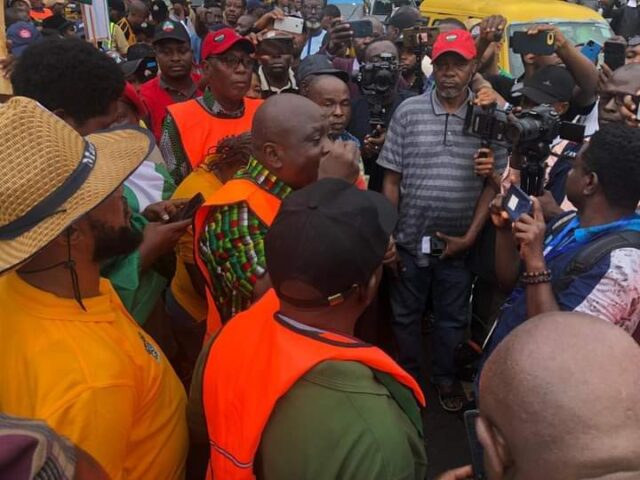
Labour Unions Begin Nationwide Strike Over Non-Implementation Of N70,000 Minimum Wage

Despite assurances from some state governments about progress on the N70,000 national minimum wage, the Nigeria Labour Congress (NLC) has initiated a nationwide industrial action to protest non-compliance with the new wage structure.

Amba Titus Audu, the Chairman of the NLC’s 2024 National Minimum Wage Implementation Committee, confirmed the strike in an interview with The Guardian.

He emphasized that the directive for the strike remained firm, urging states that have not yet implemented the new wage or reached a concrete agreement to begin industrial action immediately.

Audu challenged states claiming compliance to provide proof of payment, asserting that verbal commitments and agreements without action were inadequate.

Akeem Ambali, the NLC National Treasurer, expressed frustration with states making promises without formal agreements or financial provisions.

He warned that these states would face the full force of the strike if they failed to act.

“Empty promises and plans to begin payments in January 2025 are unacceptable,” Ambali stated, stressing that affiliate unions had been mobilized nationwide to ensure that no state would be allowed to escape accountability.

Benson Upah, the NLC’s Head of Protocol and Public Relations, reiterated that only full implementation of the N70,000 minimum wage would prevent the strike.

“Partial compliance or persuasion will not deter us. The minimum wage must be fully implemented,” Upah declared.

The strike follows a resolution from the NLC’s National Executive Council (NEC) and Central Working Committee (CWC) meeting held in Port Harcourt on November 8, 2024.

The NLC issued a directive to its state councils, urging immediate industrial action in states that had not implemented the new wage or reached an agreement to do so.

The NLC highlighted that several states, including Abia, Akwa Ibom, Cross River, Ebonyi, Ekiti, Enugu, Imo, Nasarawa, Kaduna, Katsina, Oyo, Sokoto, Yobe, and Zamfara, had yet to adopt the minimum wage, with workers in those states still receiving the old wage rates.

The NLC has warned that failure to comply would result in severe consequences for these states.

Reports suggest that some states have made announcements or promises regarding the minimum wage but have failed to implement them.

For example, Cross River announced the N70,000 minimum wage but has not initiated payment or negotiations, while Enugu declared an N80,000 minimum wage without agreeing on the necessary adjustments.

In the Federal Capital Territory (FCT), the NLC chapter directed workers across the six area councils to begin an indefinite strike due to non-compliance with the N70,000 minimum wage directive.

The FCT’s council chairman, Knabanyi Idalo, emphasized that the strike was in line with the NLC’s November 8 directive and would continue until full implementation was achieved.

Meanwhile, in Ebonyi State, the NLC has begun a one-week warning strike to protest the state’s alleged improper implementation of the new wage.

The state government had announced a N75,000 minimum wage for workers, but the NLC rejected it, stating that the wage increase lacked due process, including necessary consequential adjustments.

In Nasarawa State, the NLC has mobilized workers for a strike due to the government’s failure to sign a formal agreement on the N70,500 minimum wage, despite verbal assurances.

NLC Chairman Ismaila Okoh explained that the government had not finalized the payment terms, leaving workers frustrated and determined to push for full implementation.

Labour unions in Cross River also announced plans to start an indefinite strike over the state government’s failure to implement the new minimum wage.

Gregory Ulayi, the NLC chairman in the state, reiterated that unless the government took immediate action, the unions would proceed with industrial action.

In contrast, the NLC in Oyo State clarified that it would not join the nationwide strike, stating that the Oyo State government had already addressed the minimum wage issue satisfactorily.

TUC Oyo Chairman Bosun Olabiyi expressed confidence in the state government’s commitment to the new wage.

Similarly, the NLC in Abia State confirmed that workers would not participate in the strike, as the state government had already implemented the N70,000 minimum wage since October 2024.

Abia NLC Chairman, Ogbonnaya Okoro assured that workers’ grievances regarding salary adjustments were being addressed, and there were no grounds for industrial action.

The NLC in Ondo State also announced that it would not participate in the strike, as the state government had completed arrangements to pay the new minimum wage starting with November 2024 salaries.

However, Kaduna State Governor Uba Sani refuted the NLC’s claims that the state had not implemented the minimum wage.

A statement from the governor’s office confirmed that the lowest-paid civil servant in Kaduna received N72,000 in November, in line with the federal minimum wage law.

The state government urged the NLC to be patient regarding the implementation of consequential adjustments.

Google search engine

Zulum Warns TETFund, NASENI, NITDA May Be Scrapped If Tax Reform Bills Are Passed

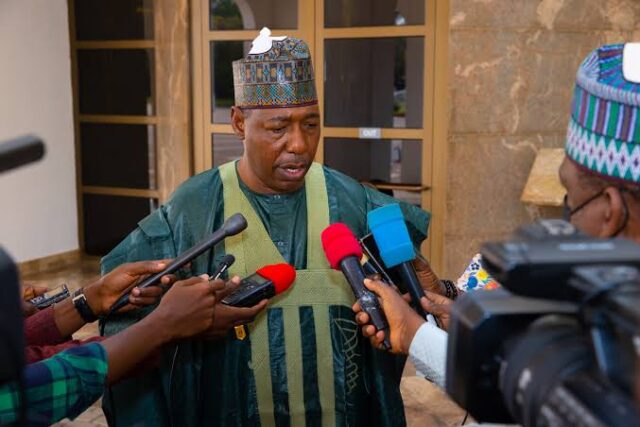
Borno State Governor, Prof. Babagana Zulum, has raised concerns that the Tertiary Education Trust Fund (TETFund), the National Agency for Science and Engineering Infrastructure (NASENI), and the National Information Technology Development Agency (NITDA) could be abolished if the four controversial Tax Reform Bills currently under review by the National Assembly are enacted into law.

Zulum made this statement during an appearance on Channels TV’s Sunday Politics program, aired on Sunday night.

He clarified that neither he nor any Northern governor was opposed to President Bola Tinubu’s administration, but stressed the need for more dialogue and consultation before passing the bills into law to avoid disadvantaging the states.

The four contentious bills are: the Joint Revenue Board of Nigeria (Establishment) Bill, 2024 -SB.583; the Nigeria Revenue Service (Establishment) Bill, 2024-SB.584; the Nigeria Tax Administration Bill, 2024-SB.585; and the Nigeria Tax Bill, 2024-SB.586.

Zulum expressed concerns about the implications of these bills, particularly regarding the proposed role of the Federal Inland Revenue Service (FIRS).

If passed, the bills would grant the FIRS exclusive power to handle tax collection across the country, a move Zulum questioned, given whether the agency is equipped with the necessary infrastructure to take on this responsibility.

Additionally, Zulum warned that if the bills are passed, only Lagos and Rivers states would benefit, leaving 34 other states at a disadvantage.

He urged the federal government to provide convincing data to support the proposed reforms, asserting, “Let them give us facts and figures, let them convince us.”

President Tinubu had submitted the four executive bills to the National Assembly in October, and on November 28, the Senate passed the bills’ second reading.

The House of Representatives is expected to debate the legislation on Tuesday.

Google search engine

SERAP Demands Disclosure Of Contractors Who ‘Stole’ N167bn From MDAs

The Socio-Economic Rights and Accountability Project (SERAP) has called on President Bola Tinubu to reveal the identities of companies and contractors who allegedly received over N167 billion in mobilization fees from 31 ministries, departments, and agencies (MDAs) without completing the corresponding projects.

In an open letter dated November 30, 2024, and signed by Kolawole Oluwadare, SERAP’s Deputy Director, the organization urged President Tinubu to instruct the Minister of Finance, Olawale Edun, and the Accountant-General of the Federation, Oluwatoyin Sakirat Madein, to identify the contractors and recover the misappropriated funds.

The civil society group also demanded transparency regarding the projects funded by the N167 billion, including details of the locations, the contractors involved, and the amount each contractor was paid.

SERAP cited the 2021 audited report from the Office of the Auditor-General of the Federation as the source of the information, highlighting that the funds were allocated for contracts and projects that were never executed.

Further, SERAP requested that the government disclose the names of the shareholders and owners of the companies that collected the funds without carrying out the projects.

The group also urged President Tinubu to instruct the Minister of Justice, Lateef Fagbemi, SAN, and relevant anti-corruption bodies to prosecute the companies and contractors responsible for the misappropriation.

According to SERAP, publishing the names of these contractors would serve as a deterrent to future corruption and encourage accountability.

The organization stressed that holding the companies accountable would help reduce public sector waste and fraud, improving the efficiency of government spending.

SERAP also highlighted the case of the Nigerian Bulk Electricity Trading Plc. (NBET), which reportedly paid N100 billion to contractors for projects that were never completed.

The letter pointed out that 30 other MDAs, including the Nigerian Correctional Service, the Federal Ministry of Youth and Sports Development, and the Federal University of Gusau, were also implicated in this scandal.

“These contractors and companies may also be complicit in grand corruption,” SERAP stated.

The organization concluded by urging the government to take action within seven days of receiving the letter. If no response is received, SERAP indicated it would resort to legal action to compel the government to act.

Failure to address the corruption allegations, SERAP warned, would allow companies and contractors to continue undermining public trust and obstructing the country’s development by misappropriating funds meant for essential services.

Google search engine

Only Lagos Will Benefit From Tinubu’s Tax Reform Bills – Governor Zulum

Borno State Governor, Babagana Zulum, has responded to concerns surrounding the controversial tax reform bills, stating that he is not opposed to President Bola Tinubu’s administration, but insists that only Lagos would significantly benefit if the bills are passed.

Speaking on Channels Television’s Politics Today on Sunday, Governor Zulum clarified his stance on the tax reform proposals currently under review in the House of Representatives.

He emphasized that while he has been a strong supporter of President Tinubu, the tax bills would only favor Lagos, leaving the remaining 35 states at a disadvantage.

“I am a strong member of the APC and have supported President Tinubu from 2019 to 2023. I was also the first governor to publicly call for power to shift to the South,” Zulum said.

“However, regarding these tax bills, if they pass as currently proposed, only Lagos will stand to gain.”

Zulum explained that during a recent National Executive Committee (NEC) meeting, he and other stakeholders had advised the Federal Government to pause the process and conduct further consultations.

Despite this, he said, their advice had been misrepresented by some, leading to misunderstandings about their intentions.

“I believe in consultation, which is central to democracy. We are asking for the right to be consulted. This is not an attack on the president but a call for a more thorough discussion,” he said.

In recent weeks, the tax reform bills have sparked tension between the Federal Government and the 36 state governors, with many demanding a delay to allow for more input.

Zulum had previously called on his colleagues and northern stakeholders to reject the bills, warning that they could harm the region’s economy.

Former Vice President Atiku Abubakar has also called for fairness and transparency in the review process.

Governor Zulum emphasized that his call to suspend the bills temporarily was not rooted in opposition to the president but in the desire to protect the interests of all Nigerians.

He pointed out that after reviewing the bills, it became clear that the reforms would disproportionately benefit Lagos, leaving other states, including the north, southeast, south-south, and even parts of the southwest, at a disadvantage.

“I am not an economist, but from our calculations, we believe only Lagos will benefit. Even Lagos State itself told us they would incur losses if the bills were implemented,” Zulum noted.

He questioned the urgency of passing the bills, given the potential negative impact on other regions.

“Why the rush? We need time for more consultations. This is a democratic process. We must thoroughly examine these bills before they become law,” Zulum said.

The governor concluded by reiterating that the call for more time is not about opposing the president but about ensuring the tax reform does not harm other parts of the country.

“We need to understand the details before proceeding,” he said, stressing that most of the revenue generated by the new tax system would likely go to Lagos.

Google search engine

MOST COMMENTED

- Advertisement -
Google search engine