Home Blog Page 851

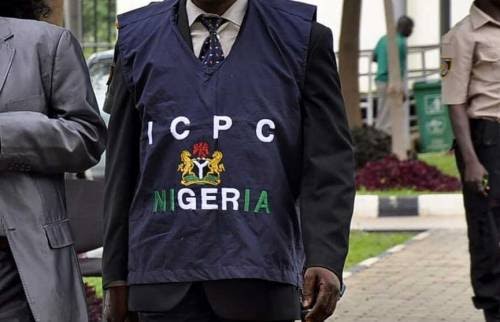
ICPC Intercepts N5.9bn Diverted By MDAs, Recovers N10bn COVID-19 Fund

Operatives of the Independent Corrupt Practices and Other Related Offences Commission (ICPC) have successfully intercepted N5.88 billion that was being diverted by several Ministries, Departments, and Agencies (MDAs).

In a separate operation, the agency recovered N10 billion intended for COVID-19 vaccine production and returned it to the national treasury.

Additionally, the ICPC remitted N10.99 billion in value-added tax (VAT) to the Federal Inland Revenue Service (FIRS).

The ICPC Chairman, Musa Aliyu, made these announcements during an end-of-year event at the commission’s headquarters in Abuja, on Tuesday.

Aliyu, marking his one-year tenure, also revealed that the commission had recovered $966,900.83 in foreign currency, which has been deposited into the ICPC’s account with the Central Bank of Nigeria.

The event, attended by various dignitaries including EFCC Chairman Ola Olukoyede and Sierra Leone’s Anti-corruption Commissioner Francis Kaifala, highlighted ICPC’s achievements in combating corruption.

Aliyu, a Senior Advocate of Nigeria, explained that the N5.88 billion diversion attempt was blocked as part of a broader effort involving a Systems Study and Review (SSR) for 323 MDAs.

This review was conducted using the commission’s Ethics and Integrity Compliance Scorecard (EICS).

In his speech, Commissioner Kaifala praised Nigeria’s efforts in the anti-corruption fight, stating that it has inspired his country to enhance its own legal frameworks.

The Director-General of the Bureau of Public Procurement (BPP), Adebowale Adedokun, also reaffirmed his commitment to upholding transparency and accountability within Nigeria’s procurement processes.

Google search engine

Abuja Indigenous Students Reject Renaming UniAbuja After Gowon

The Abuja Indigenous Student Association (AISA) has strongly opposed the proposal to rename the University of Abuja after former military leader Yakubu Gowon.

This comes after Muhammad Idris, the Minister of Information and National Orientation, announced the name change following a Federal Executive Council (FEC) meeting on Monday.

In a statement on Tuesday, AISA President Comrade Adamu Abdulbasit expressed deep concern about the potential consequences of renaming the university.

He argued that the University of Abuja has long been a symbol of pride for both the indigenous people of Abuja and the nation as a whole, and altering its name would erase its historical significance and cultural heritage.

Abdulbasit further stated that while acknowledging Gowon’s contributions, renaming the institution after a former head of state is not in the best interest of the university or the country.

He emphasized that the University of Abuja, as a federal institution, should retain a name that reflects its national identity.

The association has called on the National Assembly, the Ministry of Education, and other relevant authorities to reject the proposed name change and preserve the original name of the university.

The also appealed to Nigerians to support their campaign to protect the identity of the institution

Google search engine

South East Has Lost N17.4 Trillion Due To Lack of Sixth State – Chidoka

Osita Chidoka, former Minister of Aviation and Chancellor of the Athena Centre for Policy and Leadership, has disclosed that the South East region has incurred an estimated financial loss of N17.4 trillion over the past 29 years due to the absence of a sixth state in the region.

Chidoka explained that this significant loss affects federal allocations and local government revenues, which could have been used for the region’s development.

He made these remarks during an event hosted by the Otu Oka-Iwu (Association of Igbo Lawyers), as shared in a statement by his Special Assistant on Media, Ikechukwu Okafor.

The former minister emphasized that the figure, adjusted for inflation and currency devaluation, underscores the ongoing economic and political marginalization of the region.

He said, “The absence of a sixth state in the Southeast is not merely a political lapse but a direct financial setback. Over the last 29 years, the Southeast has lost over N17 trillion, which could have powered economic growth, boosted infrastructure, and enhanced political representation.”

Chidoka further urged South East leaders to unite and initiate the process of state creation, as outlined in Section 8(1) of the 1999 Constitution.

This process includes securing support from local government councils, state assemblies, and the National Assembly, with final approval through a referendum and votes from both chambers of the National Assembly.

“The time has come for the Southeast to formally request the creation of the sixth state. This is the only way to halt the financial and political losses we continue to endure,” Chidoka added.

He called on Southeast leaders to put aside internal divisions and collaborate on national issues to secure a better future for the region.

“Instead of lamenting over the absence of the sixth state, we must focus on what is needed to make it a reality. We must demand equitable representation, resources, and political power for our region,” he concluded.

Google search engine

18 Suspended Council Chairmen Write Edo Assembly, Seek Enforcement of High Court Ruling On Tenure Completion

Edo State Assembly has received a formal letter from the legal representatives of 18 suspended local government chairmen, urging the enforcement of a recent High Court order that affirms their right to complete their tenure.

The letter, addressed to Speaker Rt. Hon. Blessing Agbebaku, was sent by Ogaga Ovrawah (SAN) & Co., the legal team representing Hon. Newman Oghomwen Ugiagbe and the other 17 chairpersons. It references the Notice of Judgment in Suit No. B/257/2024, which challenges the dissolution of the local councils by the state government.

The legal team explained that the Edo State Governor had sought a resolution from the Assembly to dissolve the councils before their three-year term ends, a move they argue contradicts the Edo State Local Government Law, 2000.

They further contend that this action violates the principles outlined in the Nigerian Constitution.

In their letter, the legal representatives also reminded the Assembly of a previous correspondence sent on November 22, 2024, which included a judgment from the Edo State High Court.

The court had ruled that Section 10(1) of the Edo State Local Government Law, 2000, is inconsistent with Sections 7(1) and (4) of the Federal Constitution.

Additionally, the letter included a certified true copy of the Supreme Court’s ruling in the landmark case of Attorney General of the Federation v. Attorney General of Abia State and 35 Others, which the legal team believes is directly relevant to the matter at hand.

The legal representatives called on the Edo State House of Assembly to uphold the law and ensure that the tenure of the 18 elected local government chairmen is respected and protected.

Google search engine

Security Agencies Primary Threats To Media In Nigeria – Report

A recent report by the Media Rights Agenda (MRA) has identified law enforcement and security agencies such as the police, military, and intelligence services as the principal aggressors against the media in Nigeria, with these groups accounting for the majority of journalist attacks in 2024.

The comprehensive 137-page report, titled “Media Freedom Under Threat: The State of Media Freedom and Journalists’ Safety in Nigeria 2024”, revealed that in 2022, security agencies were responsible for 29 out of 64 recorded attacks on journalists, representing nearly 45% of the total.

The situation worsened in 2023, when these agencies were involved in 34 out of 77 incidents, making up around 44% of the attacks.

However, 2024 has seen a notable escalation, with security agencies being implicated in 45 of the 69 attacks between January and October, which accounts for approximately 65% of all recorded incidents.

John Gbadamosi, MRA’s Programme Officer, expressed concern about this troubling trend, stating, “It is ironic that those entrusted with upholding the law and safeguarding citizens including journalists are now the primary agents of repression against the media. The widespread culture of impunity, which allows past offenders to act without fear of consequences, has emboldened these perpetrators to act with ever-increasing boldness.”

The report detailed 21 cases of assault, 17 arbitrary arrests, three raids on journalists’ offices or homes, eight death threats, six kidnappings, five instances of obstruction, one journalist killed, and several other forms of attacks.

Beyond security forces, the report also cited government officials (responsible for four attacks), the judiciary (two incidents), criminal elements (seven attacks), and unknown assailants (four attacks) as contributors to the growing hostility against journalists.

In a more positive note, Gbadamosi highlighted that 2024 saw a breakthrough in reducing the influence of the National Broadcasting Commission (NBC).

The NBC had previously imposed heavy fines on broadcasters for alleged violations of the Nigeria Broadcasting Code.

However, due to court rulings in May 2023 and January 2024, which prohibited these fines, the NBC refrained from imposing any penalties during the year.

Additionally, the report celebrated a significant development with the launch of a court-ordered investigation into the death of Pelumi Onifade, a journalist with Gboah TV who died after being arrested by police during the 2020 #EndSARS protests.

The investigation, which followed a wrongful death lawsuit initiated by the MRA, marks an important step towards accountability in attacks against journalists in Nigeria.

Gbadamosi stressed that unless the Nigerian government takes concrete steps to protect media freedom, the cycle of violence and impunity against journalists will continue to weaken the country’s democracy and the public’s right to information.

Meanwhile, security agencies also contributed to discussions on journalists’ safety.

Kabiru Mohammed Sani, Deputy Director of the Directorate of State Security (DSS) in Plateau State, advised journalists to prioritize security awareness during their work.

At a training workshop organized by the Nigeria Union of Journalists (NUJ) in Jos, Sani emphasized that journalists should remain cautious and vigilant, particularly when encountering unusual situations that could compromise their safety.

Similarly, Nelson Nanlap, another DSS official, urged journalists to avoid spreading information that could cause public panic or jeopardize security operations.

He emphasized the importance of adhering to journalistic ethics and ensuring that all information is properly verified before reporting.

In another part of the country, Delta State Governor Sheriff Oborevwori called on government spokespersons, media appointees, and social media influencers to actively counter misinformation and propaganda.

Speaking at the 5th Delta State Communication Workshop in Asaba, Governor Oborevwori highlighted the importance of effective communication in promoting the state’s achievements and advancing the administration’s goals.

He encouraged participants to enhance their skills and adapt to the evolving media landscape, especially in the digital era.

Oborevwori reiterated his administration’s commitment to supporting President Bola Ahmed Tinubu’s Renewed Hope Agenda, aiming to improve the lives of Nigerians, including those in Delta State.

He also stressed the role of media professionals in promoting peace, stability, and responsible governance.

The event featured discussions on media engagement and communication strategies, with trainers like Prof. Abigail Ogwezzy-Ndisika from the University of Lagos emphasizing the need for clear and impactful communication in governance.

In conclusion, the report from the Media Rights Agenda paints a concerning picture of the state of press freedom in Nigeria, with security agencies at the forefront of attacks against journalists.

Despite some positive developments, the persistence of impunity poses significant challenges to media safety and democracy in the country.

Google search engine

Insecurity: Soludo Announces Amnesty For Repentant Criminals In Anambra

Anambra State Governor, Charles Soludo, has offered a chance for amnesty to individuals involved in criminal activities such as kidnapping, cultism, drug trafficking, armed robbery, car theft, and other forms of criminality in the state.

Governor Soludo made the announcement on Tuesday at a briefing with journalists at the Governor’s Lodge in Amawbia, where he addressed the state’s security situation ahead of the 2024 Christmas and New Year celebrations.

He emphasized that his administration is ready to grant amnesty to any criminal who voluntarily surrenders their weapons and repents.

He assured that individuals who choose to take advantage of the amnesty program will be rehabilitated and empowered to reintegrate as productive members of society.

Those interested in the amnesty are required to register with the office of the Governor’s Security Adviser, and the window for this opportunity will remain open until February 2025.

Governor Soludo reflected on the security challenges his administration inherited, revealing that at the beginning of his tenure, eight local government areas in the state were heavily controlled by criminal elements.

However, through coordinated efforts, including the establishment of a vigilance strike force working with federal security agencies, these areas were reclaimed.

Despite the progress, criminal activities, including kidnapping and killings, have resurfaced in some regions.

The governor identified four major security concerns currently affecting the state: kidnapping, armed robbery, cultism, and a growing drug epidemic.

He also mentioned the troubling resurgence of criminal idolatry, which provides a sense of protection for criminals.

To combat these issues, Governor Soludo announced the launch of a comprehensive security initiative called Operation Udo Ga Achi (meaning “Operation Peace Must Prevail”), which is set to roll out by the end of January 2025.

The plan includes the donation of 163 vehicles to security agencies, the installation of surveillance cameras in key areas, and the deployment of 20 vigilante personnel and forest guards in each community.

He also called for a shift in public perception, urging citizens to see security agents as allies, not enemies.

Governor Soludo called on traditional rulers, religious leaders, town union representatives, and civil society organizations to collaborate with the government in the fight against insecurity.

He also appealed to rural communities to stop providing support to criminals and urged residents to report criminal activities via the 5111 toll-free line.

The governor reassured citizens that efforts are underway to ensure a secure holiday season and expressed appreciation for the federal government and security commanders for their contributions to the state’s safety.

Google search engine

INEC Restores Ezeokenwa As APGA National Chairman Following Supreme Court Judgment

The Independent National Electoral Commission (INEC) has announced the reinstatement of Barr. Sly Ezeokenwa as the Chairman of the All Progressives Grand Alliance (APGA) in accordance with a recent Supreme Court ruling.

Sam Olumekun, the INEC National Commissioner and Chairman of the Information and Voter Education Committee, confirmed that the commission met on Tuesday, December 17, 2024, to discuss the issue.

He explained that the commission had received the Supreme Court’s judgment (Appeal No. SC/CV/824/2024 APGA & ANOR vs OYE & ORS), which was delivered on November 27, 2024, and recognized Ezeokenwa as the legitimate chairman of APGA.

In line with the court’s decision, INEC has restored Ezeokenwa’s name as the party chairman and updated its website to reflect the change.

Google search engine

Gov. Otti, Ministers Laud Tinubu As Abia Airport Construction Begins

Abia State Governor, Alex Otti, alongside key ministers, has lauded President Bola Tinubu for his support in the launch of the Abia International Airport project.

The flag-off ceremony took place at Nsulu in Isiala Ngwa North Local Government Area, with Minister of Aviation and Aerospace, Festus Keyamo, leading the proceedings.

Keyamo emphasized that the construction of the airport symbolizes President Tinubu’s commitment to connecting Abia to the world and enhancing Southeast industrialization.

The Minister praised Governor Otti for transforming the initial federal project from a mere airstrip into an international airport and for securing the necessary counterpart funds for the development.

He also assured local communities that they would receive priority for jobs once the airport becomes operational.

Minister of State for Labour and Employment, Nkeiruka Onyejeocha, further highlighted the federal government’s plans to launch a special youth program in January 2025 aimed at empowering Nigerian youths.

Governor Otti, in his remarks, commended President Tinubu for his strong interest in the South East’s development.

He stressed that the airport project is a critical part of his administration’s goal to extend growth beyond Aba and Umuahia, ultimately boosting the state’s economy and creating new business opportunities.

Additionally, Otti reassured the host communities that fair compensation would be provided for any land used in the project and revealed plans to revitalize the Nsulu Games Village.

Google search engine

Staff Shortage Hindering NAFDAC’s Functions, Says DG

The Director-General of the National Agency for Food and Drug Administration and Control (NAFDAC), Prof. Mojisola Adeyeye, has raised concerns about the agency’s ongoing staff shortage, which is affecting its ability to effectively carry out its regulatory responsibilities.

In an exclusive interview with the News Agency of Nigeria in Abuja, Adeyeye discussed the challenges faced by NAFDAC, particularly in its efforts to regulate substandard and counterfeit medicines.

While acknowledging that the Pharmaceutical Council of Nigeria (PCN) also plays a key role in regulating drug-selling establishments and practitioners, she pointed out that both NAFDAC and PCN are struggling with insufficient staff.

“The lack of personnel is a major barrier to NAFDAC and PCN’s ability to fully perform our duties, especially in reaching all areas of the country,” Adeyeye explained.

She called on the government to address the staffing issue, emphasizing that both agencies need more resources to meet their growing demands.

Adeyeye also made a comparison between Nigeria and Indonesia, noting that despite Indonesia’s larger population of 280 million, it has 20,000 staff at its regulatory agency.

In contrast, Nigeria, with a population of 220 million, only has about 2,000 staff at NAFDAC.

Regarding the recent labor union disputes at NAFDAC, the Director-General clarified that the unions’ demands for staff promotions based on the last promotion exam were beyond the agency’s control.

She explained that the Head of the Civil Service of the Federation (HOS) determines the number of promotions, not NAFDAC’s management.

“The Head of Service has the authority to decide on the number of promotions,” she stated, adding that after discussions with the unions and intervention from the presidency, the matter had been resolved.

Adeyeye reassured the public that NAFDAC had continued to prioritize the welfare of its staff by ensuring timely payments of salaries, allowances, and other benefits. She also highlighted improvements within the agency since her appointment, noting that the staff now feels supported by the management.

“Things have changed significantly in NAFDAC. The staff knows they have a management that is always on their side,” she concluded.

Google search engine

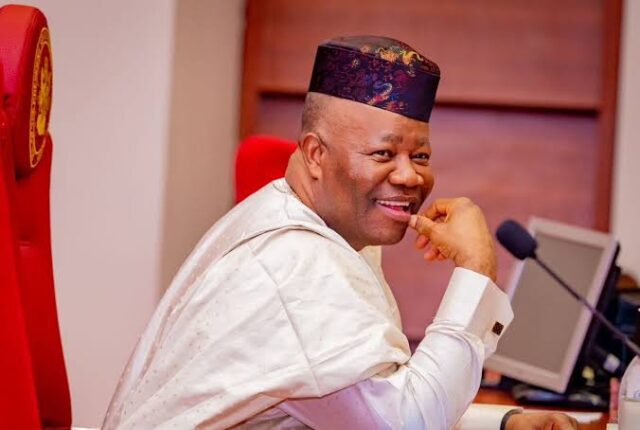
Akpabio Accuses Media Of Only Focusing On Negative News

Senator Godswill Akpabio, the President of the Senate, has taken aim at the media, accusing them of focusing only on bad news.

He lamented that positive developments, particularly in security, are often overlooked, with only negative stories being considered newsworthy.

Speaking during a debate on an urgent motion about the banditry and killings in Billiri Local Government Area of Gombe State, Akpabio highlighted how security agencies successfully thwart numerous criminal activities, but these victories rarely make headlines.

“Security agencies often intercept criminals before they commit their acts, but these successes are rarely reported. Only the bad news is highlighted,” he said.

Akpabio’s remarks came in response to a motion moved by Senator Anthony Siyako Yaro (PDP, Gombe South), who raised concerns about the ongoing security crisis in Gombe.

In his comments, Akpabio emphasized the need for collective responsibility in maintaining security.

“It is true that state governments play a vital role in security. The responsibility should not fall solely on the federal government; every Nigerian must contribute to peace and harmony,” he added.

Earlier, Senator Abdul Ningi (PDP, Bauchi Central) had questioned the role of state governors in ensuring security, noting that they receive substantial security votes to support law enforcement.

He stressed that, according to the constitution, governors are the chief security officers of their states and must take responsibility for the safety of citizens.

In the wake of rising insecurity, the Senate has urged the federal government to fund the establishment of modern ranches nationwide, believing this would improve safety and boost the productivity of both herders and local communities.

The Senate also called for clearer laws to regulate economic activities under the ECOWAS treaty and safeguard the rights and security of Nigerians.

The Senate also called on key security officials, including the Inspector General of Police, Kayode Egbetokun, and the Chief of Army Staff, Lt. Gen. Olufemi Oluyede, to investigate the recent attacks in Gombe, arrest the perpetrators, and ensure their prosecution.

Furthermore, the Senate called for the immediate formation of a joint police and military taskforce in Billiri to prevent further violence and requested that the Ministry of Humanitarian Affairs, NEMA, and the North East Development Commission provide relief materials to those affected by the attacks.

Senator Yaro, who introduced the motion, condemned the recent attacks in Billiri, particularly the brutal killings and destruction of property by suspected herders on December 11, 2024.

He urged for swift action to prevent further bloodshed.

Senator Seriake Dickson (PDP, Bayelsa West) supported the idea of creating government-funded modern ranches, which he believes would improve safety and economic opportunities for both herders and the wider community.

He called for a comprehensive approach to the ranching plan, taking into account the challenges faced by herders who travel long distances in search of grazing land.

Senator Adams Oshiomhole (APC, Edo North) reminded the Senate of a prior agreement to hold a national public hearing on security issues related to economic activities and movement.

He called for a balance of individual rights and collective security, especially within the ECOWAS framework.

Google search engine

MOST COMMENTED

- Advertisement -
Google search engine