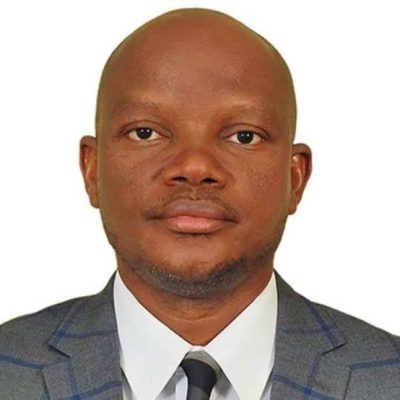

In an exclusive interview, Prof. Chris Piwuna, the newly elected President of the Academic Staff Union of Universities (ASUU), offers a sobering assessment of Nigeria’s education sector.
He highlights persistent issues including the unfulfilled 2009 agreement, threats of strike action, challenges with student loan policies, and other systemic problems plaguing universities.
Prof. Piwuna lamented the federal government’s continued disregard for the 2009 agreement signed with ASUU, which was intended to address funding and staff welfare.
“We are still on the 2009 agreement matter, and this is one of the key things that we believe will reverse the deteriorating state of affairs in our universities, particularly the welfare of our members.”
According to him, the agreement, which was supposed to be reviewed in 2012, has yet to be implemented.
He pointed to the government’s historical indifference as the root cause of the agreement’s neglect.
“Over the years, the government has shown a lack of interest in addressing the issues of universities and the welfare of their staff.”
“But you are making a leap from 2009 to 2025, and of course, it is heavy, but they pushed themselves to this point.”
He insisted the current administration must take responsibility.
“The person who wears the crown now is President Bola Tinubu, so he has to look at how to address the issues.”
Addressing ASUU’s recent strike threats, Piwuna noted that strikes remain a global tool of labor resistance—not unique to Nigeria.
“Strike is universal, not an ASUU tool. It is not a tool devised by the Nigeria Labour Congress… we cannot take strike off the table.”
He expressed frustration with the government’s tendency to ignore dialogue until industrial action is declared.
“All they understand is ‘ASUU is on strike.’ But we are drawing attention to the issues now.”
Piwuna also criticized the inconsistency in the management of universities, especially the arbitrary replacement of governing councils.
“The chairman of the council in one university is transferred to another university, as if we are in a barrack… No consistency!”
Referring to President Tinubu’s education promises, he said:
“What we have are spoken responses to our demands. What we have are short-term, immediate policies that will not solve the problems in any substantial manner.”
He stressed that real research and innovation require long-term investment, not quick fixes.
“If you want research that is creative and innovative, it would outlive two regimes of any government; that is 16 years.”
On the much-publicized NELFUND student loan initiative, Piwuna was unequivocal:
“You cannot give me a loan without jobs or any prospects of getting a job. You cannot give me a loan when I can’t even feed myself.”
He argued that the government should offer scholarships or grants, not loans, in the current economic climate.
“Even if they want to be realistic, they will realise that this type of loan is just something they fancy, but it is not rooted in any economic reality.”
The cancellation of the Bilateral Education Agreement (BEA) scheme was also condemned.
“Education is not local; it is international and universal… It is a reciprocal thing, and I think that is why they even entered into the bilateral agreement in the first place.”
He warned that such short-sighted decisions are often politically motivated, not rooted in national interest.
Despite ASUU’s warnings, he confirmed there’s been no outreach from the government:
“We have not heard from them yet… when we act based on the non-response from the government, people will start blaming us.”
Piwuna emphasized the need to return to the 2009 framework for sustainable funding:
“The government should go back to the 2009 agreement. We have a clear direction on how the funding of universities should be allowances
Commenting on alleged disparities in the disbursement of N50 billion for earned allowances, he clarified:
“We don’t have a problem with the government on the distribution because we have an understanding with them.”
He added that any concerns from other unions should be addressed to the government directly.
When asked about the breakaway Congress of University Academics (CONUA), Piwuna downplayed the split:
“We are all a family. We have a disagreement in our family and it will be resolved.”
The ASUU president blamed poor working conditions for the exodus of academics from Nigeria:
“Our members are leaving because of these very terrible conditions that we have in the system.”
“If the government wants to reduce brain drain, they know what to do.”
“The recent developments in JAMB have not been discussed by the union. Once we do that, you will hear from us.
Finally, on the rising issue of cultism, he linked it to broader economic and security issues:
“Cultism can be curbed if school authorities identify it early by identifying students who have problems, supporting them, and seeing how you can keep them clean, and keep those who are dangerous to society away.”