
In a dramatic escalation of regional tensions, Israel launched a sweeping air campaign against Iran on Friday, targeting nearly 100 sites including nuclear facilities, military command hubs, and strategic infrastructure.
The strikes killed high-ranking Iranian officials and prominent nuclear scientists, triggering threats of unlimited retaliation from Tehran.
Among those confirmed dead were Iran’s armed forces chief of staff, General Mohammad Bagheri, and the head of the Islamic Revolutionary Guard Corps (IRGC), Hossein Salami, two of the most powerful military figures in the country.
Reports also confirmed the deaths of at least six senior nuclear scientists.
The strikes, described as the most extensive Israeli operation in Iranian territory to date, reportedly involved over 200 fighter jets.
Israeli Prime Minister Benjamin Netanyahu announced the attack targeted the “heart of Iran’s nuclear enrichment program,” including the Natanz atomic facility.
“The operation will continue as long as necessary,” Netanyahu said, claiming intelligence indicated Iran was nearing the “point of no return” in its nuclear development.
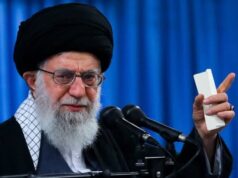
Iran’s Supreme Leader Ayatollah Ali Khamenei condemned the strikes and vowed a “bitter and painful” response.
The Iranian military declared there would be “no limits” in its retaliation, labeling the Israeli assault as a declaration of war.
Within hours, Iran responded by launching around 100 drones towards Israel.
Israeli air defenses reportedly intercepted them outside its borders.
Meanwhile, Jordanian airspace was also violated, prompting the Jordanian military to intercept multiple drones and missiles. Sirens sounded across Amman, heightening regional alert levels.
U.S President, Donald Trump, speaking to Fox News, confirmed he had advance knowledge of the Israeli operation but maintained that the U.S was not directly involved.
He reiterated Washington’s position that Tehran must not acquire nuclear weapons.
However, Iranian authorities accused the U.S of complicity, stating such a complex operation could not have been conducted “without the coordination and permission” of Washington.
Despite this, U.S officials, including Secretary of State Marco Rubio, warned Tehran against retaliating on American interests or military bases in the region.
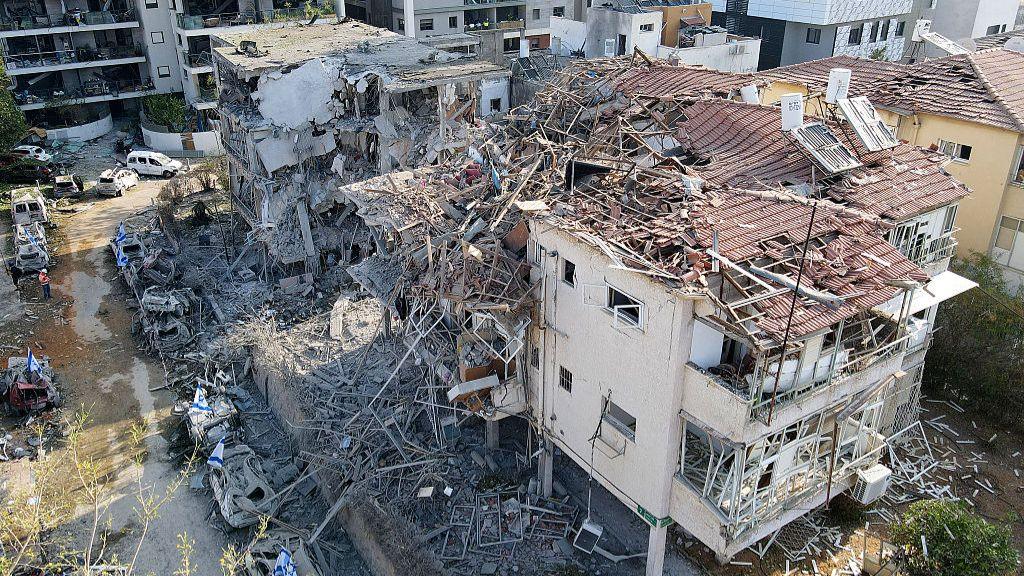
Images from AFP showed a massive hole in a high-rise residential building in Tehran, hit by one of the strikes. Iranian state media reported civilian casualties, including women and children.
In the aftermath, Tehran’s main airport halted all flights, and Iraq, Jordan, Lebanon, and Syria also suspended air traffic amid safety concerns. Gulf carriers cancelled routes into and out of Iran.
Israel declared a state of emergency and closed its airspace, preparing for further Iranian retaliation.
Markets reacted sharply: oil prices surged while global stocks dipped, underscoring fears of broader instability in the Middle East.
Just days before the strike, Trump had expressed optimism about progress in nuclear negotiations with Iran, even saying a new deal was “fairly close.”
However, he acknowledged that an Israeli strike could either derail or hasten talks.
“I don’t want them going in, because I think it would blow it,” he told Fox News.
“Might help it actually, but it also could blow it.”
The attack casts doubt over a planned sixth round of U.S, Iran negotiations scheduled to take place Sunday in Oman.
The International Atomic Energy Agency (IAEA) confirmed the Natanz site was hit and said it was in contact with Iranian officials and onsite inspectors to assess radiation safety.
Director-General Rafael Grossi assured that monitoring was ongoing.
Meanwhile, Israel called on the international community to act, especially following a recent IAEA resolution accusing Iran of non-compliance with nuclear safeguards.
Iran’s nuclear chief, Mohammad Eslami, dismissed the resolution as “extremist” and said Iran would establish a new uranium enrichment site in a secure location.
Iran continues enriching uranium to 60% purity, far exceeding the 3.67% limit set by the 2015 nuclear deal and approaching the 90% weapons-grade threshold.
This latest round of direct conflict comes against the backdrop of spiraling tensions since the October 7, 2023 Hamas attack on Israel, widely believed to have been supported by Tehran.
Since then, Israel has faced threats not only from Iran but also from its regional proxies, Hezbollah in Lebanon and the Houthi rebels in Yemen.