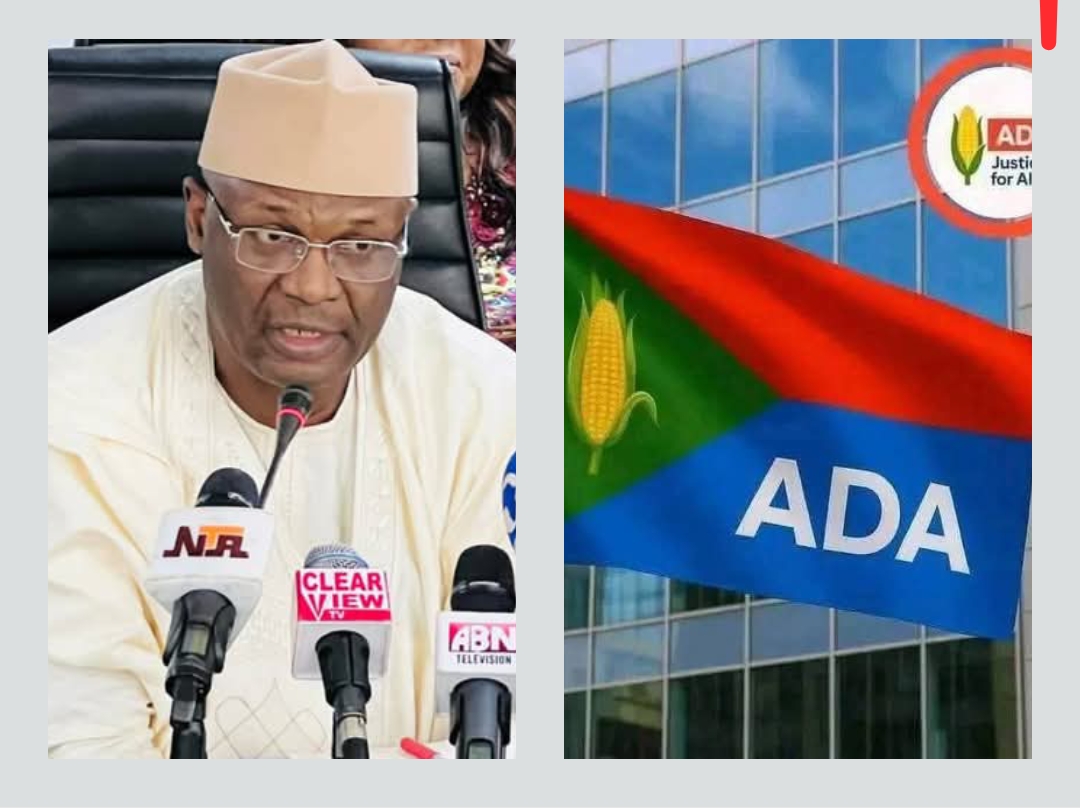

The Independent National Electoral Commission (INEC) has clarified that no association has formally applied for registration as a political party despite a growing list of over 100 groups expressing interest.
Speaking to The Nation, Sam Olumekun, INEC’s National Commissioner and Chairman of the Information and Voter Education Committee, emphasized that the Commission has only received letters of intent, which are not equivalent to formal applications.
“The truth is that we have so many letters of intent presently and none of them is an application yet,” Olumekun stated, stressing that any aspiring political group must first satisfy laid-down criteria before applying.
The clarification comes amid reports that the All Democratic Alliance (ADA), reportedly backed by a coalition involving former Vice President Atiku Abubakar, ex-Kaduna governor Nasir El-Rufai, and ex-Rivers governor Rotimi Amaechi, had filed for registration.
INEC documents obtained by The Nation outline the multi-stage process required to register a new political party, as mandated by the Electoral Act 2022 and the Commission’s own guidelines.
Key Steps to Political Party Registration
Associations must first submit a letter of intent, including the proposed name, acronym, and symbol, at least 12 months before a general election.
According to the guidelines:
“They must first meet the criteria before submitting a letter of intent.”
INEC then has 90 days to assess the proposed identifiers and issue a provisional approval. The name, symbol, and acronym will be reserved for 30 days, during which the group must pay an administrative fee to continue the process.
Upon payment, the group receives an Access Code to upload a completed Form EC 15A(1) along with documents including:
Constitution and manifesto
Proof of headquarters in the FCT
Membership register with contact details
Sworn affidavit confirming document authenticity
A physical copy of the form and documents must also be delivered to INEC.
The Commission then begins a prima facie evaluation and communicates the outcome within 60 days. If successful, the association moves to the next phase.
“Where the prima facie evaluation is successful, the association’s application shall be processed in line with these regulations and guidelines.”
However, should the documents be incomplete, inaccurate, or duplicated by the same individuals across multiple submissions, INEC will invalidate the application.
If the association passes the evaluation, INEC proceeds to verify its claims, including confirming that the national executive body reflects federal character, meaning it must include representatives from at least 24 states and the FCT.
Other requirements include:
A compliant constitution and manifesto
A name and acronym that do not conflict with existing parties or convey religious, ethnic, or sectional bias
Verification of the identity and origin of national executive members through documents like driver’s licenses, passports, or PVCs
“The names and addresses of the national officers of the association shall be verified when supported with the following documents: (a) Proof of identity of each member… (b) Indigene certificate… (c) Physical attendance… (d) Evidence of payment of the prescribed administrative fee…”
Moreover, the association must submit minutes of meetings where major decisions such as the adoption of name, symbol, and officers were made, and provide both hard and soft copies of its membership register.
If approved, INEC will issue a certificate of registration signed by its Chairman.
“The new political party shall be issued a signed and sealed certificate of registration through its National Chairman or National Secretary on a date set by the Commission.”
However, INEC reserves the right to reject the application if any requirement is unmet or fraudulent.
“Any false declaration shall result in non-registration of an association as a political party or the withdrawal of its certificate of registration by the commission.”
Furthermore, officials who knowingly submit false information will face legal action.
“An association’s national executive committee or any of its principal officers, who gives false or misleading information, commits an offence and shall be prosecuted by the commission in line with the provisions of the Electoral Act, 2022.”