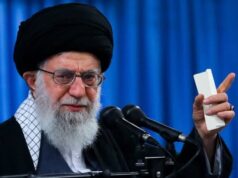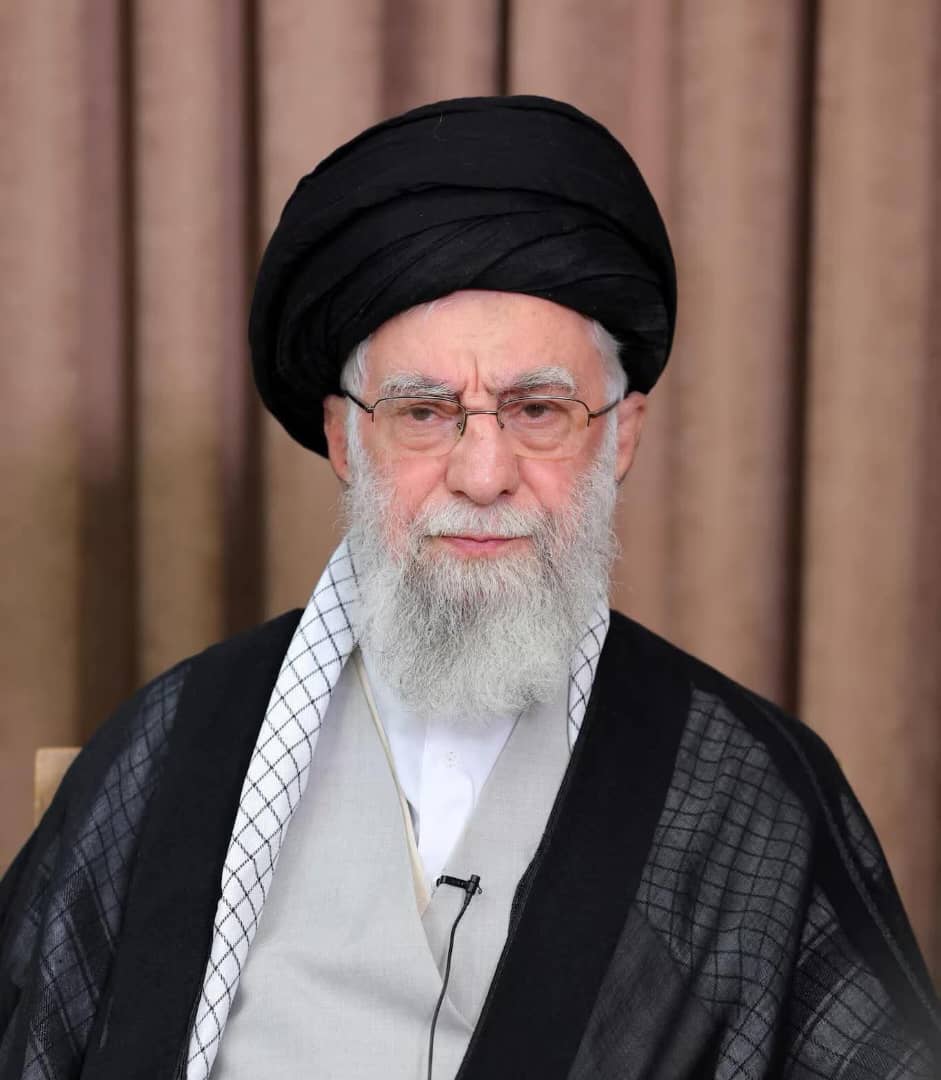

After nearly two weeks in hiding amid a brutal war with Israel, Iran’s Supreme Leader Ayatollah Ali Khamenei could soon reappear, but he will find a country profoundly changed.
The 86-year-old leader is believed to have retreated into a secret underground bunker, completely cut off from even senior government officials, over fears of a potential assassination by Israel.
His self-imposed isolation coincided with a devastating Israeli air campaign and a volatile regional conflict that has left Iran reeling.
Now, with a fragile ceasefire brokered by U.S. President Donald Trump and the Emir of Qatar in place, the possibility of his return to public life looms.
But even with President Trump reportedly urging Israel not to kill the Supreme Leader, Israeli Prime Minister Benjamin Netanyahu has not ruled it out entirely.
When Khamenei does resurface, if he does, he will confront the wreckage of a country that many Iranians believe he led into unnecessary war.
During the war, Israel established rapid control over much of Iran’s airspace and launched a series of precise strikes that dismantled key military and nuclear infrastructure.
Many senior figures in the Revolutionary Guard Corps and army were killed early on, with repeated bombings further degrading Iran’s already strained military capacity.
Notably, Iran’s nuclear facilities, developed over decades at the cost of hundreds of billions of dollars and severe international sanctions were heavily damaged.
The extent of the destruction remains unclear, but the airstrikes mark a severe setback for a program Iran long hoped would secure its power.
“What was it all for?” many Iranians are now asking.
For many inside Iran, the war has crystallized decades of frustration with Ayatollah Khamenei’s rule, which began in 1989.
Critics blame him for pushing an ideological agenda that prioritized the destruction of Israel over the well-being of Iran’s population.
His belief that nuclear capability would secure Iran’s global standing is now seen by many as a strategic miscalculation.
“It is difficult to estimate how much longer the Iranian regime can survive under such significant strain, but this looks like the beginning of the end,” said Professor Lina Khatib, a visiting scholar at Harvard University.
“Ali Khamenei is likely to become the Islamic Republic’s last ‘Supreme Leader’ in the full sense of the word.”
Amid the chaos, murmurs of dissent have emerged within Iran’s leadership.
According to reports from a semi-official news agency, influential religious scholars in Qom, traditionally separate from the political elite, have been urged by former regime figures to intervene in the nation’s leadership crisis.
“There will be a reckoning,” said Professor Ali Ansari, founding director of the Institute of Iranian Studies at the University of St Andrews.
“It’s quite clear that there are huge disagreements within the leadership, and there’s also huge unhappiness among ordinary people.”
During the war, ordinary Iranians exhibited remarkable acts of solidarity—opening homes to the displaced, lowering prices on essential goods, and supporting neighbors in need. But their support was for one another.
While many oppose the current leadership, the prospect of regime change imposed from outside also makes them wary.
Demonstrations across the country have reflected this tension, anti-Israel and anti-US sentiments, mixed with an equally strong desire to see Iran’s ruling elite held accountable.
Despite years of repression, Iran’s internal opposition remains fragmented.
Most political opponents are in jail or exile, and the exiled opposition has failed to organize a viable alternative leadership inside the country.
“It is unlikely that the Iranian regime will be toppled through domestic opposition,” said Prof. Khatib.
“The regime remains strong at home and will ramp up domestic oppression to crush dissent.”
In the two weeks since the war began, Iran has executed at least six people accused of spying for Israel and arrested hundreds more.
Fear is mounting among Iranians that a humiliated regime may turn its anger inward.
“What I fear more than the war itself is the revenge the regime will take on us,” one woman told BBC Persian.
“If the regime is unable to supply basic goods and services, then there will be growing anger and frustration,” warned Prof. Ansari.
“I see it as a staged process. I don’t see it as something that will take root until long after the bombing is over.”
Few believe the ceasefire will hold. Many expect that Israel, having achieved air superiority, may yet resume its offensive.
Despite the damage, Iran’s network of ballistic missile silos, many buried under mountains, reportedly remains mostly intact.
Israeli military leaders have estimated that Iran began the war with about 2,500 surface-to-surface missiles, around 1,500 of which are believed to remain.
This continued capability, combined with lingering nuclear ambitions, has raised alarm in Tel Aviv, Washington, and other world capitals.
Iran claims it has moved its 60% enriched uranium stockpile, enough for roughly nine nuclear bombs, to a secure location. Just before the war, it had also announced a new secret enrichment facility.
Meanwhile, the Iranian parliament has voted to reduce cooperation with the International Atomic Energy Agency (IAEA), and may soon consider exiting the Nuclear Non-Proliferation Treaty (NPT) altogether.
At 86 and in poor health, Ayatollah Khamenei may be seeing the final chapter of his leadership unfold.
Though his regime may have narrowly survived this latest crisis, his personal authority has been severely weakened.
There is growing speculation about who may succeed him.
Some suggest a transition to another senior cleric, while others envision a council-based leadership, possibly controlled by the remaining elite in the Revolutionary Guard, who have remained loyal to him.
Whatever the outcome, few believe Iran will ever return to what it was before the war.