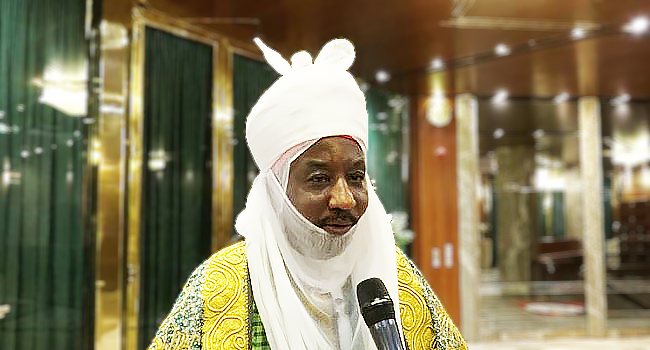

The Emir of Kano, HRH Muhammadu Sanusi II, has painted a grim picture of Nigeria’s current state, declaring that virtually every sector of the country is in distress.
Represented by labour and human rights activist Auwalu Yakasai (Danmalikin Kano) at the 51st regular National Executive Council (NEC) meeting and training workshop of the Senior Staff Association of Nigerian Universities (SSANU), held at Aliko Dangote University of Science and Technology, Wudil, the monarch voiced deep concern about the nation’s economic and social decline.
“Every other sphere of human endeavour in Nigeria is now being battered. The economy, social life, education and health are all going down,” the Emir said.
“Even the labour movement is under a dwindling fortune.”
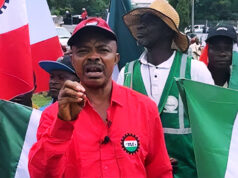
He lamented that the Nigerian labour movement, once a vibrant voice for the people, has lost much of its influence during what he described as one of the most challenging periods in its history.
Sanusi cited rising fuel prices, inflation, and economic hardship as symptoms of a broader national crisis, stating that the level of suffering among citizens is unprecedented.
He recalled a time when labour unions boldly resisted “anti-people policies” and actively defended the interests of workers.
Meanwhile, the broader economic context for Nigeria and several other African nations remains troubling.
A Business Insider Africa report, citing Forbes currency data as of June 23, 2025, ranks Nigeria among the ten African countries with the weakest currencies relative to the US dollar.
The Nigerian naira is currently trading at ₦1,553.68 to $1, reflecting recent depreciation despite efforts toward stabilization.
Other nations on the list include São Tomé and Príncipe (22,281.80/$), Sierra Leone (20,969.50/$), and Guinea (8,657.48/$).
The report attributes currency weakness across these countries to persistent inflation, economic instability, and over-reliance on imports.
In Nigeria’s case, the weakened naira continues to drive up import costs, fuel inflation, and reduce household purchasing power, compounding the hardship described by the Emir.