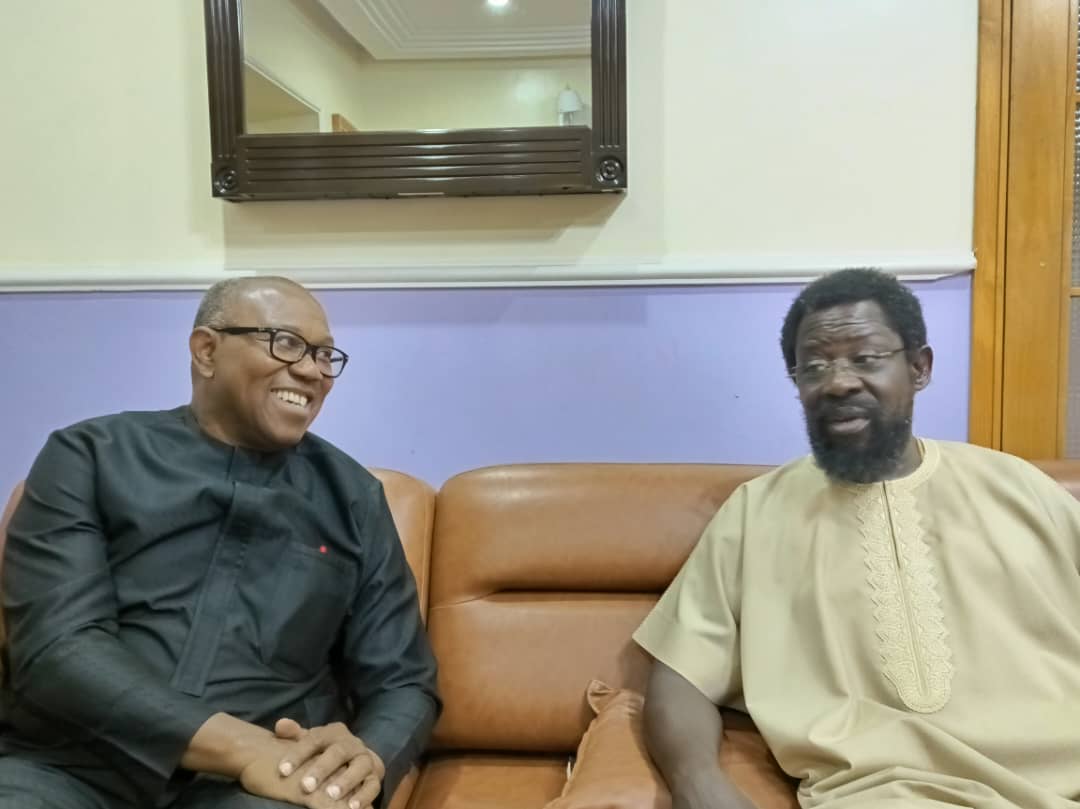

Human rights lawyer and civil rights advocate Dele Farotimi has stressed that any coalition of opposition parties aiming for political success in the 2027 elections will be pointless unless meaningful electoral reforms are pursued and demanded by the Nigerian people.
Farotimi made the assertion while speaking on Channels TV’s State of the Nation programme, where he underscored the urgent need for a transparent and accountable electoral process in Nigeria.
“Every coalition of opposition will work in vain, if the people fail to demand electoral reforms. The system is rigged ab initio,” Farotimi declared.
Expressing doubt over the current administration’s willingness to initiate such reforms, Farotimi questioned the sincerity of the Bola Ahmed Tinubu-led APC government, which he accused of benefiting from electoral malpractice.
“I think it will be not only simplistic but exceedingly foolish when you want to expect that All Progressives Congress (APC) government of Bola Ahmed Tinubu will be interested in an electoral reform that would ensure transparency in the electoral process. This is a government that is beneficial of an electoral hijack,” he stated.
The activist’s concerns were also grounded in his personal experience during the 2023 election cycle.
He recounted his role in overseeing part of the election process in Lagos State, raising serious allegations against the Independent National Electoral Commission (INEC).
“I was charged with the duty of collecting Form EC8A from INEC in Lagos State, and I can say without equivocation that the then INEC commissioner in Lagos State could not produce a single Form EC8A because the entire result in Lagos State was a fraud,” he alleged.
Farotimi emphasized that Nigerian citizens must not remain passive but should be bold in making demands for electoral accountability and justice, even through peaceful demonstrations if necessary.
“Power is not served; you grab it, snatch it, and you run with it. But it is the right of citizens to expect to be given the power to vote and decide who rules them,” he said.
He further stressed the importance of citizens’ voices being not only heard but respected in shaping the country’s democratic future.
“We should be making that demand very clearly,” Farotimi emphasised.
According to him, electoral reform is not merely a political issue but a civic necessity that demands the attention of all citizens, civil society, and government alike.
“The Nigerian people are the victims of gross abuse of power and process,” he concluded, reaffirming their right to demand a fair and credible electoral system.