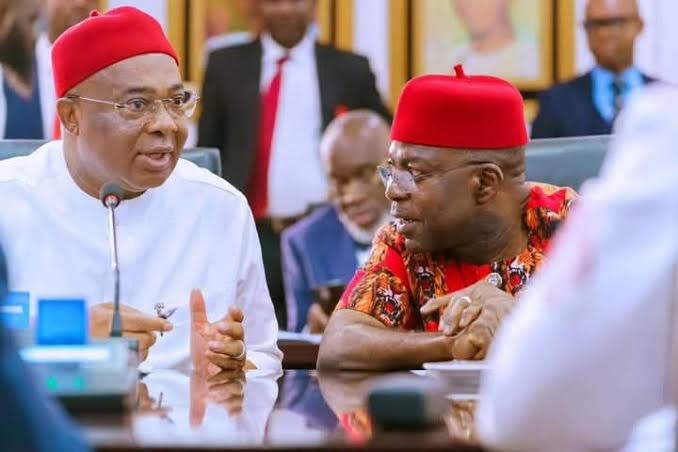

Two Southeast governors have taken opposing stances on the creation of additional states within the region, part of the ongoing constitutional review process.
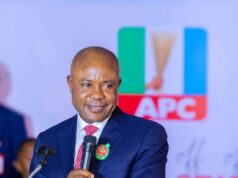
At a public hearing in Owerri on Saturday, Imo State Governor Hope Uzodimma advocated for the creation of at least two new states in the Southeast, framing it as a means to address what he described as “structural imbalance and political marginalisation of the Igbo people.”
“Every other zone has six or more states,” Uzodimma said.
“This imbalance has led to under-representation in critical national institutions, from the National Assembly to the Federal Executive Council. It has shrunk our voice and abridged our inclusivity.”
He proposed the establishment of “Anim State,” citing its potential to produce oil and expand local government representation.
He also suggested amending indigeneity laws to include those “born in a state or those who have resided there for over 10 years.”
“How else did Mallam Umaru Altine become the Mayor of Enugu in 1952, if not because he was accepted as an indigene?” he asked.
Uzodimma further urged the introduction of a rotational presidency across all six geopolitical zones, asserting:
“This is not about tokenism but national stability. If Nigerians know the presidency will rotate across zones, it will remove the fear of domination and deepen national inclusion.”
In contrast, Abia State Governor Alex Otti, speaking through his deputy Ikechukwu Emetu, voiced concerns about both the financial and administrative burden of creating more states.
“While I acknowledge the concerns of marginalised groups, I worry about the additional burden on Nigeria’s limited resources,” Otti said.
“Unless we identify independent sources of revenue, I do not share the optimism of those proposing new states.”
He cautioned that creating new states could overinflate government bureaucracy, and instead championed a people-centered governance model. Otti also strongly advocated for state policing, emphasizing the need for transparent standards.
“The federal policing structure has proved inadequate. Our people continue to suffer avoidable vulnerabilities,” he reasoned.
Deputy Speaker and Constitution Review Committee Chairman, Benjamin Kalu, praised the hearing as part of a historic effort to reshape Nigeria’s constitutional framework.
“The 2025 constitutional review process is the most comprehensive in our nation’s history,” Kalu commented.
“Our mandate is to ensure that every Nigerian is fairly represented and protected under the law.”