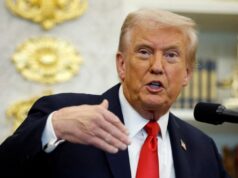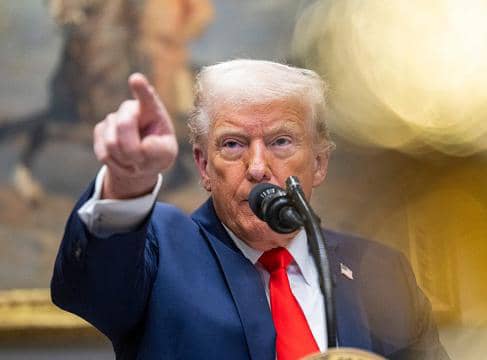

U.S President, Donald Trump, has suggested that a meeting with Russian President Vladimir Putin could take place “very soon,” following what he described as “highly productive” diplomatic talks between his special envoy and the Kremlin in Moscow.
Speaking to reporters at the White House on Wednesday, Trump hinted at the possibility of engaging both Putin and Ukrainian President Volodymyr Zelensky in separate or joint discussions to help bring an end to the war in Ukraine.
“There’s a good chance that there will be a meeting very soon,” Trump said when asked about upcoming talks with the Russian and Ukrainian leaders.
Though he gave no specific location for the potential summit, reports by The New York Times and CNN, citing sources close to the matter, indicated that Trump could meet with Putin as early as next week.
A subsequent three-way summit involving Trump, Putin, and Zelensky was also being considered, according to the reports.
If the meeting materializes, it would mark the first US – Russia presidential summit since June 2021, when then-President Joe Biden met Putin in Geneva.
The possibility of the meeting was also discussed during a phone call between Trump and Zelensky.
A senior Kyiv source said the call included NATO Secretary-General Mark Rutte, and leaders of Britain, Germany and Finland.
“It seems that Russia is now more inclined to agree to a ceasefire; the pressure on them is working. But the main thing is that they do not deceive us or the United States in the details,” Zelensky said later Wednesday.
Trump’s outreach followed earlier talks in Moscow between his envoy Steve Witkoff and top Russian officials.
The Kremlin described those talks as “productive,” coming just days before Trump’s deadline to impose new sanctions on Russia if no progress is made toward ending the war.
“Great progress was made !” Trump posted on his Truth Social platform, adding that he had briefed several European allies.
“Everyone agrees this War must come to a close, and we will work towards that in the days and weeks to come.”
However, a senior U.S official later confirmed that “secondary sanctions” are still set to take effect within two days if Russia fails to move toward a ceasefire.
U.S Secretary of State, Marco Rubio said Witkoff returned from Moscow with a ceasefire proposal, which will now be reviewed in consultation with Kyiv and European partners. But he cautioned against setting expectations too high.
“There’s a lot of work ahead,” Rubio said, warning the Trump-Putin meeting might still be “weeks maybe” away.
Meanwhile, Putin’s foreign policy aide Yuri Ushakov described the discussions with Witkoff as a “quite useful and constructive conversation.”
Ushakov added that both sides exchanged “signals” about their negotiating positions, though he did not go into detail.
Zelensky confirmed that he had spoken with Trump and European leaders but did not name them individually.
In recent weeks, Trump has expressed frustration over Putin’s continued military campaign in Ukraine.
While the White House has not detailed specific measures, Trump told reporters that more “secondary sanctions” are being prepared, targeting Russia’s trade partners, potentially including China.
He also announced higher tariffs on Indian goods, criticizing India’s continued importation of Russian oil.
The Kremlin responded on Tuesday, without naming Trump directly, denouncing tariff threats against its trade partners as “illegitimate.”
Russia’s war in Ukraine, which began in February 2022, has resulted in tens of thousands of deaths, widespread destruction, and the displacement of millions.
Moscow is demanding that Ukraine give up more territory and cut ties with the U.S and European Union in exchange for peace, conditions Kyiv has firmly rejected.
Last week, Zelensky urged Western allies to consider pushing for “regime change” in Moscow, calling for a full ceasefire without conditions.
Adding to the tension, Trump revealed that he had ordered two U.S nuclear submarines to reposition following a sharp exchange with former Russian President Dmitry Medvedev on social media.
In response, the Kremlin said it was ending a moratorium on nuclear-capable intermediate-range missiles, hinting at possible deployments near NATO territory in response to what it claims are U.S missile placements close to Russian borders.