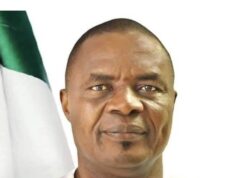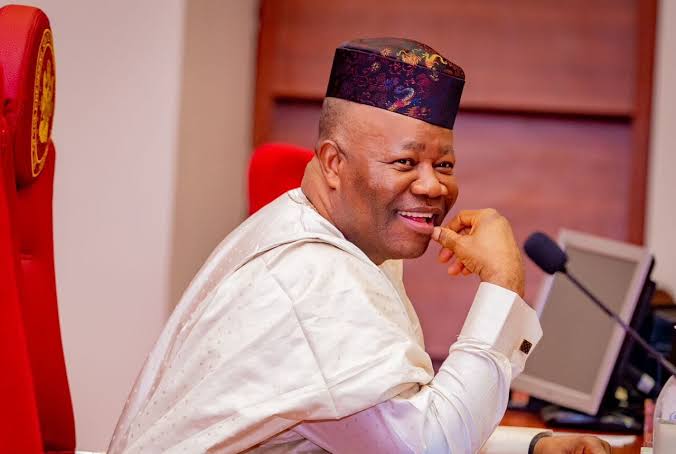

Godswill Akpabio, President of the Senate
A comprehensive investigation by Daily Trust has revealed that the combined monthly emoluments of Nigeria’s 109 senators, estimated at ₦2.354 billion including salaries and office running costs, are enough to cover the monthly net salaries of 4,708 university professors across the country.
This stark disparity comes at a time when Nigerian academics are grappling with declining incomes, worsening economic conditions and a crisis of morale in the country’s tertiary institutions.
Senator Kawu Sumaila (Kano South) sparked public outrage in August 2024 when he disclosed on BBC Hausa that, while senators officially earn less than ₦1 million in salaries, each senator receives ₦21.6 million monthly, including “office running costs.”
“Each senator is paid ₦21 million every month for running costs. My take-home pay after deductions is less than ₦1 million,” Sumaila said.
In contrast, a full professor in a Nigerian university receives an average gross salary of ₦700,000, which is reduced to around ₦500,000 after taxes and deductions, according to Dr Niyi Sunmonu, national president of the Congress of University Academics (CONUA).
“That ₦21.6 million is equivalent to the monthly salaries of 43 senior professors,” Sunmonu noted.
The situation has driven many lecturers into alternative sources of income.
A recent viral video showed Professor Nasir Hassan-Wagini of Umaru Musa Yar’adua University, Katsina, selling vegetables at a local market to supplement his income.
Professors told newsmen they were taking up adjunct positions across multiple universities and starting small businesses to survive.
Some lamented they could no longer afford basic needs such as quality education for their children, decent healthcare, or transportation.
“We can’t even replace faulty cars with our salaries. A ₦10–₦15 million car loan over 30 months is out of reach,” said Sunmonu.
In the 1960s, Nigerian professors were among the most respected and well-compensated public servants, just below judges and the prime minister. Today, many barely survive.
“Professors used to receive running costs like politicians because they were expected to have drivers, clerks, and home staff,” Sunmonu recalled.
“Now, many can’t afford transport to campus five days a week.”
Prof. Balarabe Abdullahi of Ahmadu Bello University (ABU), Zaria, said he and his colleagues were now weeping behind closed doors.
“I know professors who couldn’t cook a proper meal for their families for three days,” he said in Hausa during a recent interview.
“We are custodians of knowledge but living in poverty.”
According to the Academic Staff Union of Universities (ASUU), the situation is becoming deadly.
In February 2024, 46 lecturers in the Abuja Zone were reported to have died from stress-related conditions linked to economic hardship.
“Our members are dying due to herculean work conditions, emotional stress, and the inability to afford quality healthcare,” said Salahu Mohammed, ASUU Abuja Zonal Coordinator.
In one tragic case, Prof. Abubakar Roko of Usman Danfodiyo University, Sokoto, died despite a crowdfunding campaign that raised ₦13 million for his medical bills.
The governor of Kano State, Abba Kabir Yusuf, contributed ₦5 million.
Following a wage increase by the federal government in 2023, professors received a 35% raise, while junior academics got 25%. Still, the numbers remain bleak:
Graduate Assistants: ₦135,000–₦160,000 monthly
Full Professors: Still less than ₦500,000, with no additional allowances
Prof. Samuel Agu of Abia State University said his salary dropped from ₦460,000 to ₦390,000 after new state-imposed taxes. Even after the wage review, he only earns about ₦490,000 monthly—with no extras.
Despite being among Africa’s five biggest economies, Nigeria ranks at the bottom when it comes to compensating university professors.
Here’s how Nigeria compares:
Country Annual Professor Salary (Approx. in ₦)
South Africa ₦71.4 million (plus bonuses)
Morocco ₦50.8 million
Kenya ₦33.6 million
Cameroon ₦23.6 million
Gambia ₦5.6 million
Niger Republic ₦15.7 million
Nigeria ₦6 million (or less)
Hassan Soweto, National Coordinator of the Education Rights Campaign, said the imbalance is “illogical.”
“A society that values development shouldn’t pay politicians more than teachers. It sends the wrong signal to students and discourages bright minds from pursuing academia.”
He called on the federal government to urgently restructure national pay scales to restore dignity to the academic profession.
ASUU President Prof. Chris Piwuna said the federal government has failed to implement the 2009 agreement on university autonomy, funding, and earned allowances.
“Even the wage awards of 25–35% are now owed for over 12 months,” Piwuna told DevReporting.
“Graduate assistants now earn ₦135,000–₦160,000, and professors earn less than ₦500,000. We’ve reached the breaking point. The honeymoon with the government is over.”
Prof. Yakubu Ochefu, former Secretary-General of the Committee of Vice-Chancellors, called for a national conference to reassess Nigeria’s tertiary education funding.
“The salary gap between a graduate assistant and an entry-level CBN staff tells you everything. We need holistic reform,” he said.
As Nigeria struggles with economic challenges and brain drain, the gulf between the political class and the academic elite is widening.
Without urgent reforms, experts warn, Nigeria risks an intellectual drought and a collapse in the quality of higher education.
For now, the numbers speak for themselves: the cost of maintaining one Nigerian senator could fund 43 professors. The entire Senate? Nearly 5,000 professors, the backbone of the nation’s knowledge economy.