
The Academic Staff Union of Universities (ASUU) is on the brink of a nationwide strike, potentially affecting over 150 public universities and about 2 million students. This follows the federal government’s denial of signing any formal agreement with the union, a claim ASUU strongly disputes.
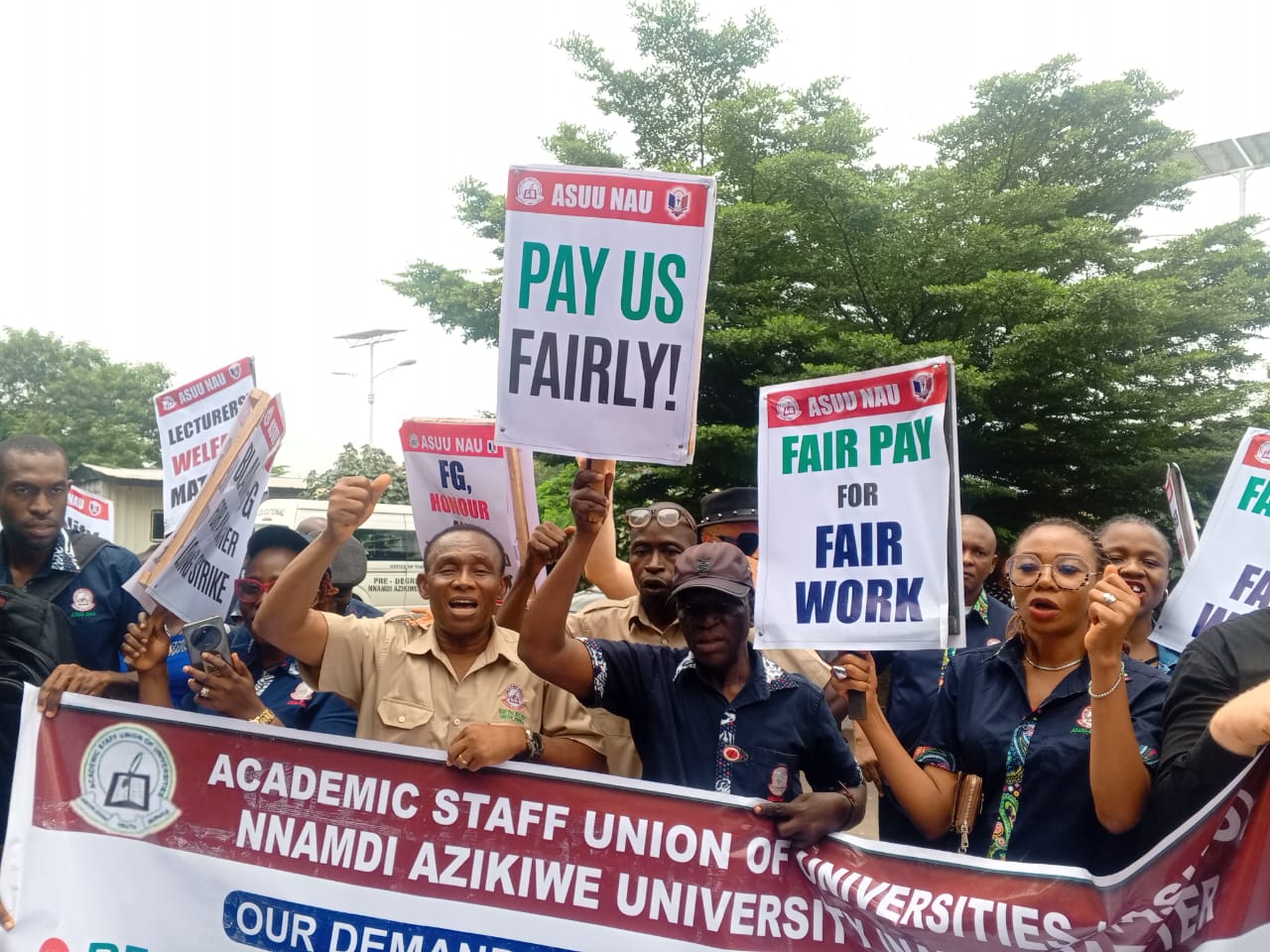
ASUU chapters across the country have held protests, demanding the federal government honour the renegotiated 2009 agreement. They argue that failure to do so could lead to another shutdown of the academic system.
Key unresolved issues include non-signing of the renegotiated 2009 agreement, withheld salaries for three and a half months, unpaid promotion arrears and revitalisation funds, poor retirement benefits and poor working conditions, renaming of the University of Maiduguri, failure to remit third-party deductions and non-implementation of staff salary reviews.
Kano Zone Coordinator, Mr. Abdulkadir Muhammad, called on the government to act swiftly to avoid further crisis.
He also cited insecurity, poverty, and high living costs as broader concerns affecting lecturers and the education system.
Minister of Education, Dr. Tunji Alausa, insisted no binding agreement had been signed with ASUU, clarifying that what the union referred to were merely draft proposals under review.
“We want agreements that are actionable and sustainable, not empty promises,” said Alausa.
He revealed that a technical committee, led by the education ministry’s Permanent Secretary, is refining the drafts for final negotiations.
The Tinubu-led administration, he assured, is committed to finding a long-term solution.
ASUU President, Prof. Chris Piwuna, criticized the government’s denial, citing poor record-keeping and inconsistent communication.
“The 2009 agreement was signed and used for academic allowances and university governance. To now deny its existence is disingenuous,” he said.
Piwuna also clarified that while no strike date has been fixed, ASUU branches are monitoring the situation closely.
Students across universities have expressed fear over another possible disruption. Many say their academic progress has already been affected by past strikes and can’t afford more delays.
“We’re already behind schedule. Another strike will only worsen things,” said Chisom Ofodile, a student at the University of Jos.
Veteran journalist Mahmud Jega compared the current situation to a similar standoff in 1993, when the government called an agreement with ASUU “valid but not binding.”
“After 32 years, it seems we’re right back where we started,” he wrote.