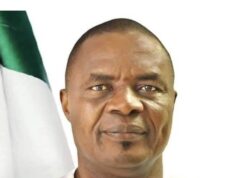

Education Minister
In a sweeping overhaul of Nigeria’s basic and secondary education system, the Federal Government has unveiled new curricula set to take effect from the 2025/2026 academic session.
The updated framework is aimed at reducing subject overload and promoting deeper, more practical learning for students across the country.
Speaking at the official launch in Abuja, the Minister of State for Education, Prof. Suwaiba Sai’d Ahmad, who represented the Minister of Education, Dr. Maruf Tunji Alausa, said the curriculum review was the product of extensive collaboration among several key agencies, including the Nigerian Educational Research and Development Council (NERDC), Universal Basic Education Commission (UBEC), National Senior Secondary Education Commission (NSSEC) and National Board for Technical Education (NBTE).
“We have streamlined the number of subjects and refined the content to give learners more breathing space, more time to absorb, and more relevance to the realities they’ll face in the real world,” Prof. Ahmad said.
Under the new arrangement, Primary 1 to 3 pupils will study 9 to 10 subjects, primary 4 to 6 pupils will handle 10 to 12 subjects, junior Secondary School students will take between 12 and 14 subjects.
Senior Secondary students will offer 8 to 9 subjects while Technical school students will study 9 to 11 subjects.
The Ministry explained that the goal is to ease the pressure of excessive content, which has long been a concern for educators, students, and parents alike.
The revised approach will also ensure that students gain not just theoretical knowledge, but skills and competencies aligned with today’s economy.
A statement issued by Folasade Boriowo, Director of Press and Public Relations at the ministry, emphasized that the reforms mark a significant step toward aligning Nigeria’s education system with international best practices, particularly in an era increasingly shaped by technology, innovation, and changing workforce demands.
The government also reassured stakeholders that strict monitoring and evaluation mechanisms will be put in place to ensure the effective implementation of the new curricula across public and private schools.
The rollout comes as part of broader education reforms championed by the Tinubu administration, with renewed focus on technical and vocational training, digital literacy, and inclusive learning environments.