
Burkina Faso has officially passed a new law criminalising homosexuality, marking a significant shift in its legal stance on LGBTQ+ rights.
The country’s transitional, unelected parliament approved the legislation on Monday, following a draft family code earlier adopted by the cabinet.
Justice Minister Edasso Rodrigue Bayala, speaking on state television, explained the implications of the new law.
“The law provides for a prison sentence of between two and five years as well as fines,” he said.
Bayala also stated that foreign nationals found guilty under the law would face deportation.
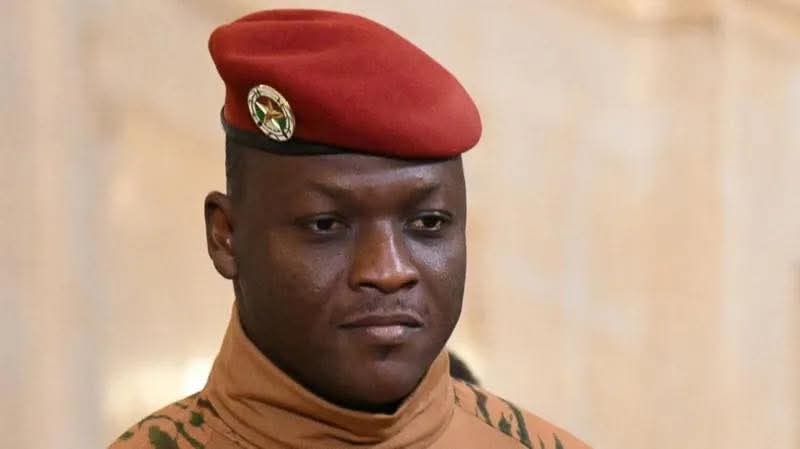
The legislation now awaits the formal signature of the country’s military leader, Captain Ibrahim Traoré, who seized power in 2022 after ousting Lt. Col. Paul-Henri Damiba. Traoré’s approval will make the law fully effective.
Before this change, Burkina Faso was among the few African countries that allowed same-sex relationships.
Unlike former British colonies that inherited anti-gay laws, Burkina Faso, once a French colony, did not have such laws at independence in 1960.
However, the nation remains deeply conservative and religious, with less than 10% of the population identifying as non-religious.
The move aligns Burkina Faso with similar legislation in neighbouring countries. Mali, also under military rule, criminalised homosexuality last year.
Nigeria has long enforced a strict ban, while Ghana passed a controversial anti-LGBTQ+ bill that was never signed into law.
Uganda has implemented some of the harshest measures, including life sentences for consensual same-sex acts and the death penalty for “aggravated homosexuality.”
International human rights organisations have criticised the growing wave of anti-LGBTQ+ laws across Africa.
The World Bank previously suspended loans to Uganda over similar legislation, although the ban was later lifted.