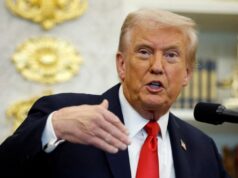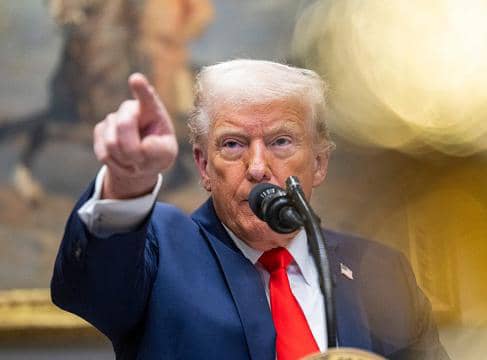

U.S President Donald Trump on Friday signed a sweeping executive order aimed at penalizing countries that unjustly imprison American citizens abroad.
The new policy would allow Washington to formally blacklist nations involved in what it describes as “wrongful detention” of U.S nationals, introducing travel bans, sanctions, and other restrictions.
The measure establishes a new category known as “state sponsors of wrongful detention,” modeled after the U.S designation for state sponsors of terrorism.
“With this EO you are signing today, you are drawing a line in the sand that US citizens will not be used as bargaining chips,” said Trump adviser Sebastian Gorka during a press briefing at the White House.
While no countries were named immediately, senior officials indicated that China, Iran, and Afghanistan are being considered for the list, citing what they called persistent “hostage diplomacy.”
Countries placed on the blacklist by the U.S. State Department will face economic sanctions, export restrictions, and travel bans for officials involved in wrongful detentions.
In a rare move, the United States may also prohibit its own citizens from traveling to these countries, a step currently enforced only for North Korea, following the high-profile case of American student Otto Warmbier in 2016.
Warmbier was arrested in North Korea and later returned to the U.S in a vegetative state.
He died shortly after his release, sparking bipartisan outrage.
The executive order will also allow the U.S. to blacklist non-state actors, such as militant groups, if they control territory and are found to be wrongfully detaining Americans.
The administration says the new rules are designed to streamline the process of responding to hostage situations and allow quicker, more forceful actions, bypassing what officials described as “burdensome” bureaucratic procedures.
“The new executive order would make it easier to take action without going through a ‘burdensome’ process,” a senior official explained.
The U.S government, across both Republican and Democratic administrations, has made securing the release of detained Americans a top foreign policy priority.
Under Trump, officials say 72 Americans have been freed through diplomatic negotiations, including high-profile prisoner swaps in Russia and other nations.
Under former President Joe Biden, several Americans held in China were released after the U.S eased its travel warnings for that country, which had been affecting its business and diplomatic ties.
Countries may be removed from the new blacklist if the U.S determines they have changed course and are no longer engaging in wrongful detentions.