
Nepal’s political leadership and military are scrambling to fill a leadership void after violent anti-corruption protests forced the resignation of Prime Minister KP Sharma Oli and left parliament in ruins.
The unrest, led primarily by youth protesters under the “Gen Z” banner, escalated earlier this week into the worst violence since the country’s civil war ended in 2006.
At least 51 people were killed, including 21 demonstrators, as rallies turned into riots following a controversial social media ban.
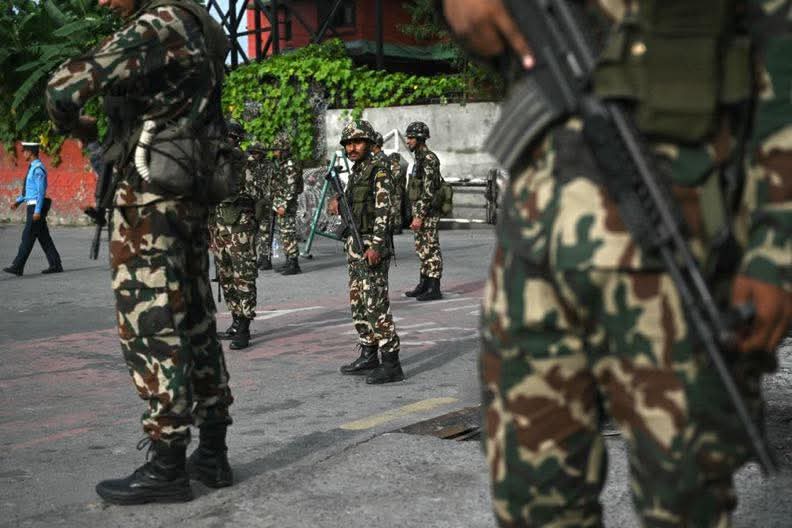
By Wednesday, the military had reasserted control over Kathmandu’s streets, imposing a curfew and launching talks with key political figures and protest representatives to stabilize the country.
Among the frontrunners for interim leadership is Sushila Karki, 73, Nepal’s first female Chief Justice.
Discussions on a potential transitional government are ongoing, with President Ramchandra Paudel, army chief General Ashok Raj Sigdel, and protest leaders including Sudan Gurung involved.
“A meeting is set for this afternoon with the president, the army chief, former Chief Justice Sushila Karki, our representative Sudan Gurung, and a legal expert,” protester Nimesh Shrestha told AFP.
Gurung stated their main demand is the immediate dissolution of parliament. Karki, however, urged dialogue and noted that the legislative body remains constitutionally valid.
President Paudel addressed the nation Thursday, promising a swift and peaceful resolution: “A solution to the problem is being sought, as soon as possible.”
Calm returned to Kathmandu by Friday, with army patrols enforcing curfew measures. Citizens cautiously emerged to restock essential supplies during temporary curfew breaks.
“I stayed indoors with my family—I was scared,” said local resident Naveen Kumar Das.
Fuel stations, shops, and tea stalls were crowded as residents took advantage of relaxed restrictions. “We finally came out because it’s a bit calmer,” said Laxmi Thapa, 32.
The protests triggered a wave of chaos: protesters set fire to parliament, government buildings, and a Hilton Hotel, and over 12,500 inmates escaped from prisons across the country.
Police say more than 100 stolen firearms have since been recovered.
The unrest reflects broader frustrations in Nepal, particularly among youth facing widespread unemployment and limited economic opportunity.
Around 20% of young people aged 15–24 are jobless, and over 40% of the population is between 16 and 40 years old.
James Karki, 24, one of the demonstrators, expressed hope despite the turmoil.
“We started this movement to make a better Nepal. And I’m optimistic that the army will hear us out.”