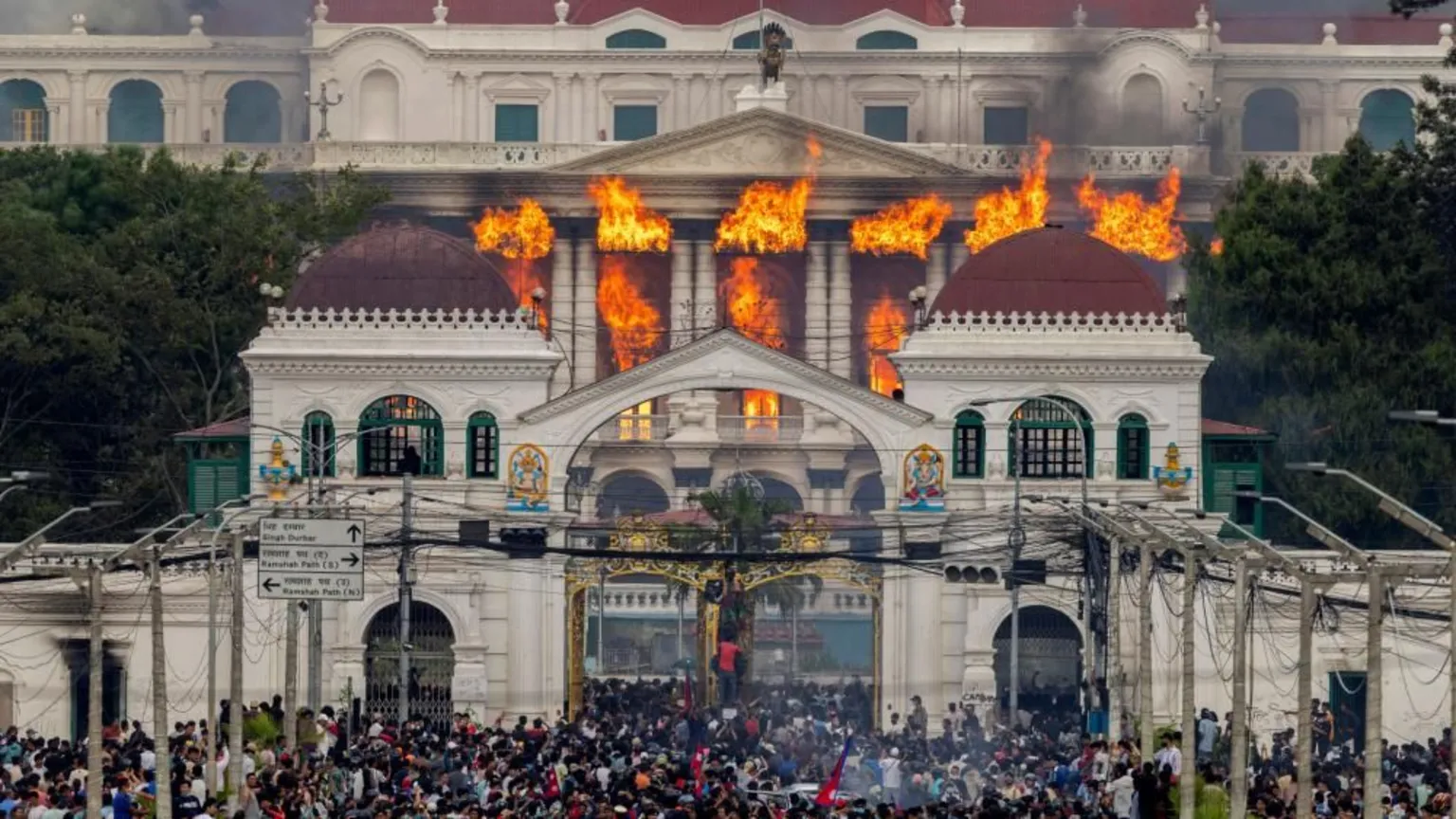

Amid the recent youth-led uprising in Nepal that led to the resignation of the country’s prime minister, conversations around replicating such protests have surfaced in Nigeria, drawing both support and criticism.
The Nepal protests, driven by Gen Z anger over corruption and government restrictions on social media, culminated in the torching of government buildings including the Supreme Court and Parliament after a deadly police crackdown that killed at least 19 people.
The uprising ultimately forced the prime minister to step down.
Inspired by these events, some Nigerian youths and activists have taken to social media, particularly X (formerly Twitter), calling for similar demonstrations against perceived elite misrule in Nigeria.
“In 2020, we had #EndSARS. In 2024, it was #EndBadGovernance. It’s 2025. Will Nigerian youths learn from Nepal?” asked Juwon Sanyaolu, leader of the Take-It-Back Movement.
Other users echoed the sentiment. @Ubtrix wrote: “It’s high time protests go to the right place — Aso Rock Villa. That’s the venue if Nigerians truly want to spark change like Nepal.”
However, these calls have triggered a strong response from government supporters, who caution against violent uprisings and warn of the consequences of instability.
Former presidential aide Reno Omokri argued that comparisons to Nepal were misguided:
“Even the Nepali people are already regretting the destruction. We reject the lawlessness, looting, and chaos mischaracterised as a protest. If you must protest, #StartFromYourStateOfOrigin, not Lagos.”
Comedian and actor Seyi Law also weighed in, warning that revolutions can lead to unintended consequences:
“They’re celebrating Nepal now, but won’t talk about the looting, rape, and destruction that followed. Rebuilding will be a nightmare. Learn from Libya.”
The hashtag #StartFromYourStateOfOrigin began trending on X, amplified by several pro-government accounts. Bushari Adewale, Vice President of Nigeria Youth Advocate, also used the hashtag to caution against targeting Lagos.
Some civil society organisations acknowledged the frustrations behind the calls for protest but urged caution.
Enefa Georgewill, Chair of the Rivers Civil Society Organisations, blamed the Nigerian government for failing to address public concerns post-#EndSARS, noting that alleged police abuses persist under different units.
“The government should learn from Nepal and retrace its steps before the situation worsens.”
Debo Adeniran, President of the Committee for the Defence of Human Rights, however, stressed that the context in Nepal differs from Nigeria.
“Nepal’s revolt was mainly due to economic hardship and systemic failures. While Nigeria is also battling tough conditions, protests must remain peaceful and strategic.”
He noted that some government initiatives especially youth-focused schemes could mitigate social unrest if effectively implemented.
Speaking during a press briefing in Lagos, Reverend Yomi Kasali, General Overseer of the Foundation of Truth Assembly, warned that Nigeria is not immune to the kind of revolution seen in Nepal.
“If this kind of unrest reaches Nigeria, many innocent people could suffer. The perception that all wealthy people are corrupt could lead to dangerous consequences. No country is immune to revolution.”
He urged churches and religious institutions to increase their support for the poor and play a more active role in nation-building.
“We need to bridge the widening gap between the rich and the poor. Churches must be part of the solution.”