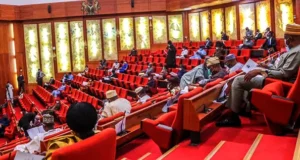
As the six-month state of emergency imposed on Rivers State by President Bola Tinubu in March 2025 draws to a close on Thursday, September 18, all eyes are on Governor Siminalayi Fubara, his deputy Ngozi Ordu and members of the Rivers State House of Assembly (RSHA) all of whom are expected to return to office.
This pending return marks a significant turning point, not only for Fubara but for the political future of Rivers State.
The controversial suspension of the state’s elected leadership and the imposition of emergency rule, ostensibly to avert a breakdown of law and order, remains deeply contested.
Critics argue that no clear evidence of such unrest existed at the time, and many in Rivers and beyond viewed the move as excessive and politically motivated.
As the state prepares for this transition, the path ahead for Governor Fubara is anything but straightforward.
Fubara’s return will be fraught with challenges, particularly due to the entrenched influence of his political predecessor and rival, Nyesom Wike.
Despite a publicized truce between the two, Wike’s grip on Rivers politics remains firm, strengthened further by his party’s control of the recent local government elections on August 30, 2025.
In this new reality, Fubara reenters office with diminished political leverage, surrounded by lawmakers and powerbrokers aligned with Wike.
His authority as governor may be constitutionally intact, but the political machinery around him is not in his favour.
In light of these dynamics, two schools of thought have emerged on what Fubara should do:
1. Play Along for Peace:
One view suggests Fubara should accept his limited authority and work within the political structure dominated by Wike’s allies.
This approach, advocates argue, would ensure peace and stability in the state, aligning with Fubara’s longstanding calls for unity.
2. Assert His Authority:
A more assertive perspective holds that Fubara must reclaim his leadership by standing firm on constitutional grounds.
Abdicating or playing a passive role, this group warns, could render his governorship meaningless and further weaken the democratic process in Rivers.
Each option carries significant risks and consequences for Fubara’s career, for governance in the state and for the broader principle of democratic integrity.
While these political debates rage on, the ultimate question remains: What is best for the people of Rivers State?
Governance should never be reduced to a tug-of-war between political heavyweights.
The office of governor exists not for personal power plays but for delivering service, ensuring development, and upholding the constitution.
Unfortunately, Nigeria’s political culture often elevates personalities over the rule of law, substituting legal processes with so-called “political solutions” that weaken institutions and breed further crises.
If Fubara is to succeed and be remembered positively, he must resist becoming a ceremonial figurehead.
Instead, he should embrace the full weight and responsibilities of his office, grounded in the constitutional provisions that legitimize his leadership.
This may mean confronting uncomfortable truths and making bold decisions, but it is also the path that will earn him the respect of Rivers people and secure his place in history.