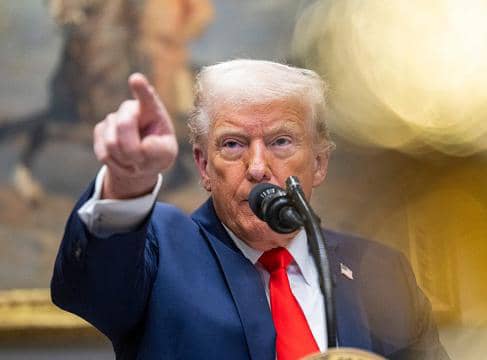

Hamas on Friday expressed willingness to begin immediate negotiations on releasing Israeli hostages and ending the nearly two-year-long Gaza war, following the announcement of a 20-point peace plan by U.S. President Donald Trump.
The plan was unveiled on Monday at the White House, where Trump appeared alongside Israeli Prime Minister Benjamin Netanyahu, who offered cautious support for the proposal.
According to the White House, the initiative outlines a roadmap for a permanent ceasefire, hostage exchange, humanitarian relief, and the eventual reconstruction and governance of Gaza.
Below are the key points of the plan as released by the White House:
Demilitarized Gaza: Gaza will become a deradicalized, terror-free zone that poses no threat to its neighbors.
Reconstruction Effort: The territory will be redeveloped to benefit the people of Gaza, who have “suffered more than enough.”
Immediate Ceasefire: Once both sides accept the proposal, hostilities will end, and Israeli forces will withdraw to an agreed line to allow for hostage exchanges. All military operations will be frozen during this phase.
Hostage Release: Within 72 hours of Israel’s acceptance, all Israeli hostages, living and deceased, will be returned.
Prisoner Swap: Israel will free 250 life-sentence prisoners and 1,700 Gazans detained since October 7, 2023, including all women and children. For every deceased Israeli hostage returned, Israel will release the remains of 15 Gazans.
Amnesty for Hamas Members: Hamas members who renounce violence and surrender their weapons will receive amnesty, while those wishing to leave Gaza will be granted safe passage to host countries.
Humanitarian Aid: Full-scale humanitarian assistance will resume immediately, focusing on restoring water, electricity, healthcare, and infrastructure.
Aid Delivery Oversight: Distribution will be handled independently through the United Nations, the Red Crescent, and other neutral organizations, following existing January 2025 aid mechanisms.
Transitional Government: Gaza will be administered by a temporary technocratic Palestinian committee supervised by an international “Board of Peace” chaired by President Trump, with other global figures including former UK Prime Minister Tony Blair.
The board will oversee governance and redevelopment until the reformed Palestinian Authority can reassume control.
Economic Redevelopment: A Trump-led economic initiative will attract global investors and urban development experts to rebuild Gaza’s economy and infrastructure.
Special Economic Zone: A designated area with preferential trade and tariff policies will be created to boost investment.
Freedom of Movement: No resident will be forced to leave Gaza; those who wish to depart or return may do so freely.
Demilitarization: Hamas and other factions will play no role in Gaza’s governance. All weapons, tunnels, and military infrastructure will be destroyed under international monitoring and a buy-back program.
Regional Guarantees: Neighboring Arab states will help ensure compliance and maintain regional stability.
International Stabilization Force: A temporary multinational force will deploy to Gaza to train local police and secure borders in collaboration with Egypt, Jordan and Israel.
Israeli Withdrawal: Israel will not occupy or annex Gaza. Its forces will withdraw in stages as security milestones are achieved.
Implementation in Phases: If Hamas delays or rejects the plan, reconstruction and aid operations will proceed in secured “terror-free” zones.
Interfaith Dialogue: Religious leaders will launch a dialogue initiative promoting peace, tolerance, and coexistence between Israelis and Palestinians.
Path to Statehood: Once Gaza is rebuilt and the Palestinian Authority’s reforms are completed, conditions will be ripe for discussions on Palestinian self-determination and eventual statehood.
Permanent Dialogue: The U.S. will facilitate continued talks between Israel and the Palestinians to establish a lasting framework for peace and prosperity.
The White House described the plan as “a bold and practical pathway to lasting peace,” while regional reactions remain cautious. Hamas’s initial response, expressing readiness for talks, marks a potentially significant shift after years of bloodshed.