
Burkina Faso’s military-led government has firmly rejected a proposal from the United States to accept deported migrants under a controversial immigration policy pushed by President Donald Trump.
In a televised address on Thursday, Foreign Minister Karamoko Jean-Marie Traore denounced the idea as “indecent” and incompatible with the country’s values, making Burkina Faso one of the few African nations to publicly refuse cooperation with the US deportation scheme.
“This proposal runs completely contrary to the principle of dignity,” Traore said, emphasizing that Burkina Faso would not serve as a dumping ground for migrants who have no ties to the country.
The rejection is seen as a direct rebuke of the Trump administration’s strategy to deport individuals, including asylum seekers, to so-called “third countries,” regardless of any prior connection to those nations.
While Eswatini, Ghana, Rwanda, and South Sudan have accepted US deportees in recent months, Burkina Faso has taken a different stance, consistent with its current government’s anti-Western orientation.
In what appears to be a retaliatory move, the US Embassy in Ouagadougou has suspended most visa services for Burkinabe citizens, announcing that all consular matters will now be handled through the embassy in Lome, Togo.
This development has raised eyebrows in Burkina Faso, with Foreign Minister Traore questioning Washington’s motives.
“Is this pressure? Is this blackmail? Whatever it is, Burkina Faso is not a place of expulsion, it is a destination of dignity,” he stated.
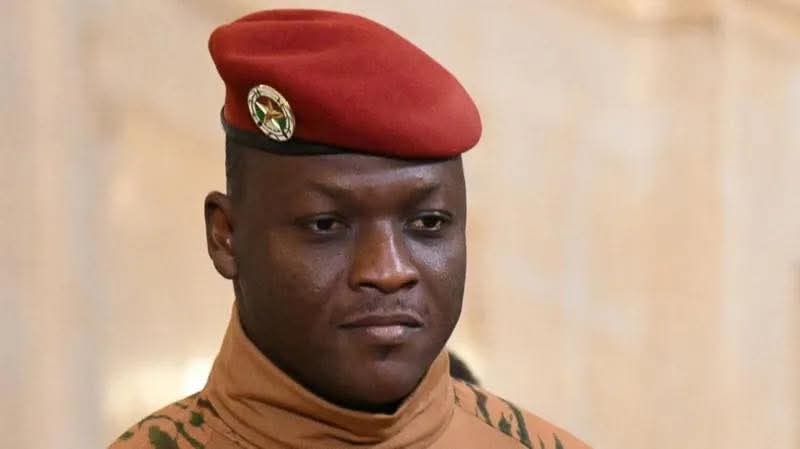
Since coming to power in a military coup in September 2022, Captain Ibrahim Traoré has distanced the West African country from traditional Western allies, especially France, and pivoted toward closer ties with Russia.
Positioning himself as a Pan-African, anti-imperialist leader, Traoré’s administration has increasingly clashed with Western policies, particularly on military cooperation, aid, and migration.
Burkina Faso’s rejection of the US deportation deal marks another chapter in the country’s evolving foreign policy under the junta, which appears determined to chart an independent course in regional and global affairs.