
Voting has concluded in Cameroon’s presidential election, where 92-year-old incumbent Paul Biya, the world’s oldest sitting president, is seeking an eighth term after 43 years in power.
Biya, who assumed office in 1982, faces 11 challengers this time, including some of his former allies. His most prominent rival is Issa Tchiroma Bakary, 79, a former employment minister who resigned from government earlier this year after over two decades of service under Biya.
Bakary’s candidacy has gained momentum, especially following the disqualification of prominent opposition leader Maurice Kamto by the Constitutional Council, a move widely condemned by rights groups such as Human Rights Watch, who say it casts doubt on the integrity of the electoral process.
Reports indicate that Bakary has received strong support, particularly in his home region of Garoua, where he was warmly welcomed by thousands of supporters during campaign rallies.
In contrast, Biya’s rare campaign appearance in Maroua, the capital of the strategic Far North region, attracted a modest turnout.
Despite his advanced age, Biya appeared publicly for the first time in months just days before the vote.
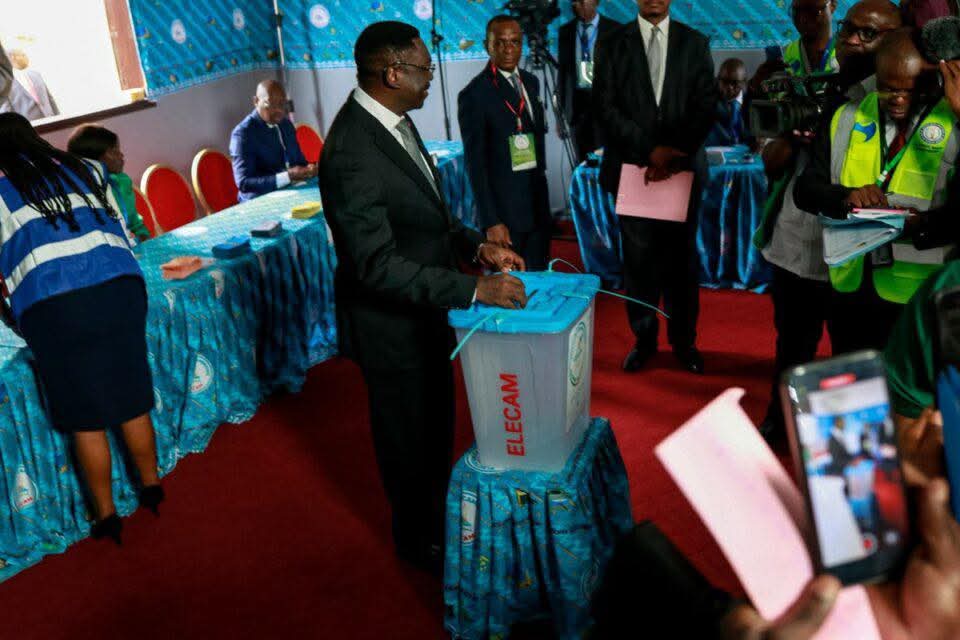
He cast his ballot in Yaoundé, telling reporters, “Let’s wait until the results are in before making any statements.”
This election is a single-round vote, with the candidate receiving the most votes declared the winner.
Of Cameroon’s 8 million registered voters, many have known no other leader besides Biya, who has won every presidential election since 1990 with landslide margins.
“Things have to change,” said Cheukam Ginette, a 34-year-old first-time voter in Yaoundé.
“Life is hard, healthcare is poor, the roads are terrible. That’s why I voted for the opposition. I don’t have much confidence in the process, but I still hope.”
According to political analyst Stephane Akoa, the campaign has been unusually energetic, raising the possibility of surprises.
However, he cautions that the ruling establishment has the tools to steer outcomes in its favor.
“Young people want change,” Akoa said, “but not enough to risk mass protest like we’ve seen in other African or Asian countries.”
Beyond the political contest, the country continues to grapple with serious socioeconomic issues.
The World Bank estimates that 40% of Cameroonians live below the poverty line, and urban unemployment hovers at 35%. Complaints about poor infrastructure, lack of clean water, inadequate healthcare, and low-quality education dominate public discourse, mostly online.
Despite these frustrations, widespread street protests remain unlikely for now.
Over 55,000 domestic and international observers, including those from the African Union, were accredited to monitor the elections.
The Constitutional Council is expected to announce the official results by October 26.
Meanwhile, some digital platforms have announced plans to tally votes independently, raising concerns within the government about misinformation and attempts to influence public sentiment.
The vote also takes place against the backdrop of a long-running separatist conflict in the Anglophone regions of Cameroon, which began in 2016.
Turnout in those areas was reportedly low, as was the case in the 2018 election.
As the nation awaits results, uncertainty hangs over whether this election will mark a shift in leadership or extend Biya’s decades-long rule.