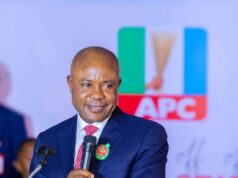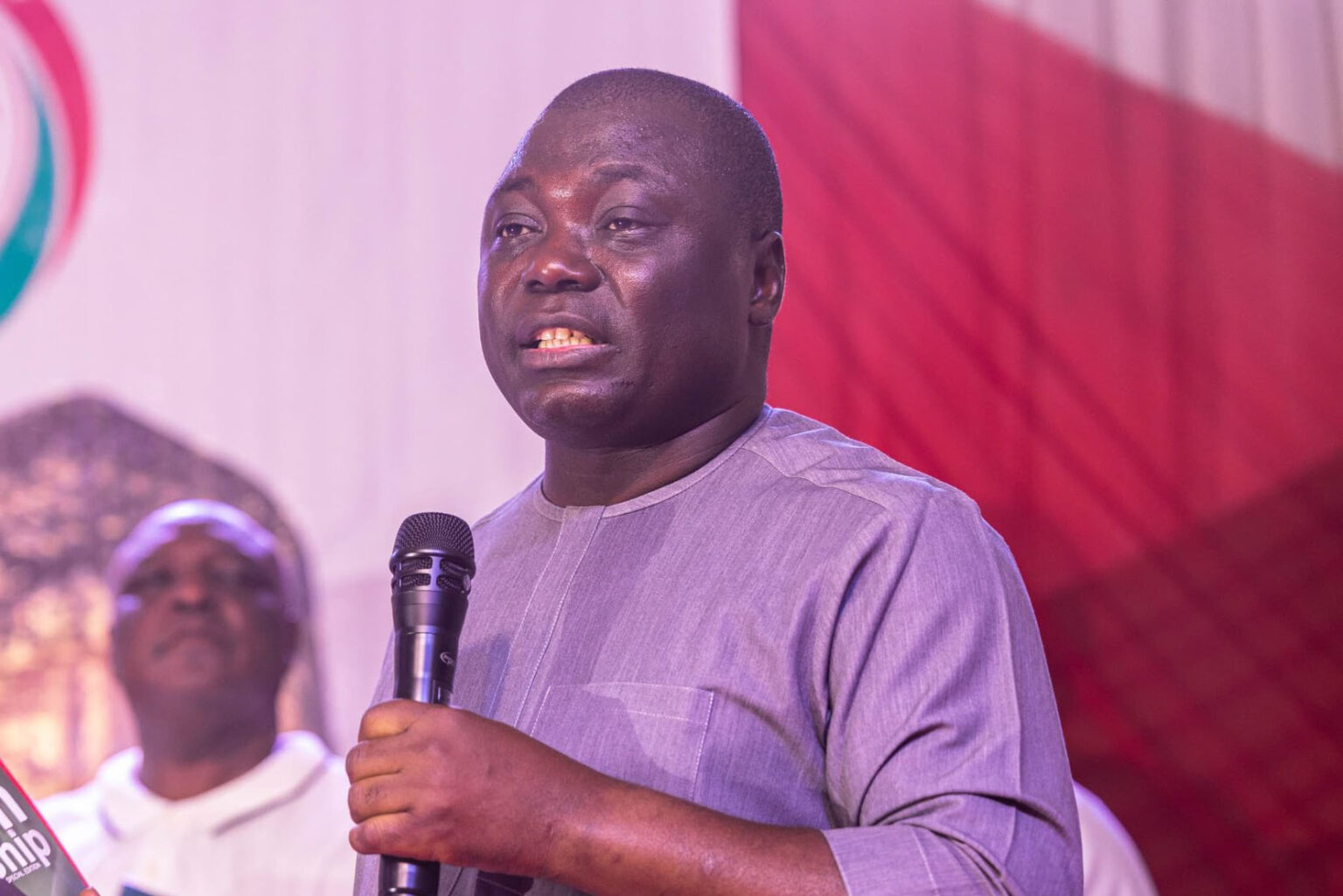

Barring any last-minute change, Taraba State Governor Agbu Kefas is on the verge of defecting from the Peoples Democratic Party (PDP) to the ruling All Progressives Congress (APC), a move that could make him the first opposition governor from northern Nigeria to switch allegiance under the Tinubu administration.
This development follows Enugu State Governor Peter Mbah’s formal defection to the APC earlier this week, with most of his political allies and structures crossing over with him.
Sources close to Governor Kefas say a committee led by former Senator Dahiru Bako has begun statewide consultations to gauge public sentiment.
Bako confirmed that the governor is seeking public input before making any political decisions.
“He won’t move without the people’s blessing. These consultations are proof,” Bako said.
Meanwhile, rallies supporting Kefas’ defection have already taken place in Jalingo, with youth groups urging him to join the APC.
Party leaders in Taraba have signaled their readiness to welcome him, but the possible shift is also stirring tension among APC aspirants concerned about losing influence or party tickets in the 2027 elections.
Efforts to reach Kefas’ advisers were unsuccessful, while the PDP state chairman dismissed the rally as an APC-organised event and refused to comment further.
Kefas’ rumored defection is part of a growing trend. Earlier in the year, Governors Umo Eno (Akwa Ibom) and Sheriff Oborevwori (Delta) also left the PDP for the APC, further eroding the PDP’s presence in the South South and South East.
Now, only Bayelsa and Rivers remain under PDP control in the South South. In Bayelsa, Governor Douye Diri, currently entangled in a party leadership tussle with a faction loyal to FCT Minister Nyesom Wike, is reportedly weighing his options.
In Rivers, Governor Siminalayi Fubara, recently reinstated, is also rumored to be considering a shift to the APC.
In the South East, the APC now controls three out of five states; Imo, Ebonyi and Enugu.
The remaining states, Anambra (APGA-led) and Abia (Labour Party), have shown strong support for President Bola Tinubu.
Senator Adolphus Wabara, Chairman of the PDP’s Board of Trustees, described the defections as part of the APC’s strategy to establish a one-party state, warning that it could “erode Nigeria’s democratic gains.”
“These defections aren’t about ideology. They’re driven by fear, pressure, and political survival. This is not democracy, it’s manipulation,” Wabara said.
The African Democratic Congress (ADC) echoed similar concerns.
Its spokesperson, Bolaji Abdullahi, accused the APC of coercing governors and warned of a coordinated effort to undermine the opposition.
“Those switching sides aren’t convinced of APC’s vision; they’re desperate and afraid,” Abdullahi stated.
Despite the wave of defections, the Obidient Movement, a youth-driven support group aligned with the Labour Party, remained unfazed.
“It shows our leaders care more about power than people. This only fuels Nigerians’ desire for real change,” said Dr. Yunusa Tanko, the group’s national coordinator.
Labour Party spokesperson Obiora Ifoh added that the party is currently focused on healing internal rifts and strengthening its structure ahead of 2027.
At a reception event in Enugu, Vice President Kashim Shettima, who represented President Tinubu, hailed the defections as an endorsement of the APC’s inclusive vision.
“These moves expose cracks in the opposition, but show the APC’s growing strength and unity,” he said.
APC National Chairman Prof. Nentawe Yilwatda also praised Governor Mbah’s achievements and welcomed him “into the family of progressives.”
Political experts believe the defections highlight the fragile ideological foundation of Nigeria’s major parties.
Prof. Hassan Saliu, President of the Nigerian Political Science Association, said:
“Nigerian politics is about self-preservation, not ideology. Politicians go where the power lies, not where values align.”
Similarly, Prof. Gbade Ojo warned that Nigeria is moving toward a de facto one-party state, which could undermine democratic accountability.
“The PDP is losing its grip due to internal disunity and lack of discipline. It’s not APC’s strength but PDP’s weakness fueling this wave,” he added.
The APC now holds a two-thirds majority in the Senate, following the defection of Senator Samaila Kaila (Bauchi North) from the PDP. This brings the APC’s Senate seats to 73 out of 109.
In the House of Representatives, the APC now has 236 members, just four short of the two-thirds threshold, after three PDP lawmakers from Kaduna State defected to the ruling party.
Despite the surge, Minority Leader Kingsley Chinda challenged the legitimacy of these moves, urging the Speaker to declare the defectors’ seats vacant in line with constitutional provisions.