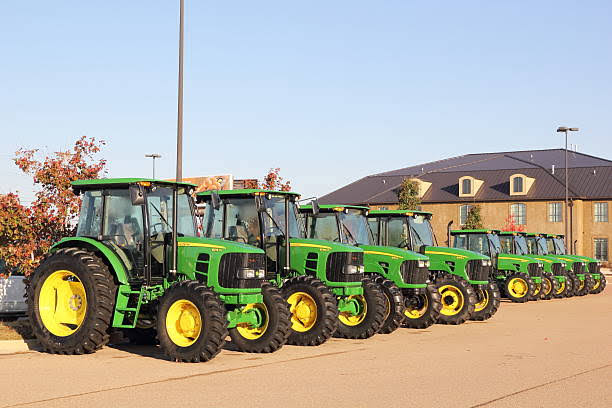

Over three months after President Bola Tinubu flagged off a N50 billion agricultural mechanisation scheme, thousands of tractors and equipment meant to boost food production are still gathering dust at the National Agricultural Seed Council (NASC) in Abuja.
Despite the fanfare at the launch, which featured 2,000 tractors, disc ploughs, harrows, seed drills, trailers and other implements imported from Belarus, the Federal Ministry of Agriculture has yet to distribute the equipment.
The reason? Delays in receiving a presidential directive on the sharing formula.
A ministry official, speaking anonymously, said: “Nothing is moving yet. We’re still awaiting clear instructions from the Presidency on how to distribute the machines.”
This delay, sources say, highlights persistent bureaucratic bottlenecks that continue to hinder Nigeria’s agricultural transformation agenda.
The equipment, which includes over 9,000 units of farm machinery, was expected to support large-scale mechanised farming, reduce labour costs, and create employment opportunities.
At current market value, the 2,000 tractors alone are estimated to cost about N30 billion.
President Tinubu had positioned the initiative as a key pillar of his Renewed Hope Agenda, declaring during the launch that the project would “make agriculture attractive to youths” and boost food security.
However, farmers now fear the machinery may miss the current planting season entirely, a critical blow in a country struggling with rising food prices and insecurity.
Daniel Okafor, Vice President of the All Farmers Association of Nigeria (AFAN), said farmers remain in the dark.
“We appreciated the gesture, but since the launch, there’s been silence. We’re still waiting,” he said.
The Minister of Agriculture, Abubakar Kyari, had earlier announced three models for equipment deployment: outright sale, leasing options, and tractor service centres for rural communities. But implementation has stalled.
Experts are sounding the alarm. Prof. Simon Tuange, an agricultural engineering specialist from Joseph Sarwuan Tarka University, warned that agricultural activities are time-bound: “If land preparation isn’t done at the right time, the equipment risks sitting idle until the next season.”
He also criticised the lack of a post-deployment maintenance plan.
“We can’t keep importing equipment without building local workshops for servicing. That’s why many of our machines end up abandoned.”