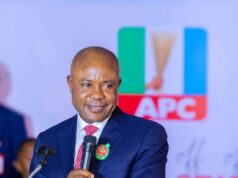

Senior Advocate of Nigeria and former President of the Nigerian Bar Association, Wole Olanipekun, has called on the National Assembly to halt all ongoing efforts to amend the 1999 Constitution, urging instead for a complete overhaul through a national referendum.
Speaking on Monday at the 13th Convocation Lecture of Afe Babalola University, Ado Ekiti (ABUAD), Olanipekun argued that the current constitution, imposed by the military in 1999, no longer serves the needs of a modern Nigeria.
His lecture was titled “Nigeria Yesterday, Today and Tomorrow: Imperative of a Sober and Definitive Recalibration.”
“The National Assembly should suspend any further amendment of the 1999 Constitution,” he said.
“What Nigeria needs is not another round of patchwork, but a homegrown constitution that reflects the will and uniqueness of its people.”
Olanipekun insisted that the current constitution has lost its legitimacy and relevance, describing it as a “military albatross” that was never subjected to public input or consent.
He advocated for a new, negotiated constitution that would lay the foundation for a truly democratic and inclusive society.
He recommended a transitional phase from now until 2031, during which Nigeria could consolidate previous constitutional reform efforts, such as reports from past national conferences, and prepare a new document through wide consultation and consensus.
“Elections should still hold during the transition period,” he explained, “but with the clear understanding that by May 29, 2031, Nigeria must begin operating under a new constitution.”
Highlighting Section 14(2)(a) of the 1999 Constitution, which states that sovereignty belongs to the people, Olanipekun argued that only a national referendum can legitimately determine the country’s political and constitutional future.
He emphasized that a referendum should decide key issues such as the structure of the National Assembly (whether full or part-time), their tenure and remuneration, and whether the current federal arrangement should be retained or reconfigured.
“The National Assembly cannot organize this referendum. You cannot be a judge in your own case,” he said.
“The federating units must take the lead in determining the process and framework.”
Beyond constitutional issues, Olanipekun also criticized Nigeria’s political culture, particularly the frequent defections between parties.
He called for greater commitment to political ideology and principles, urging parties to be more than just vehicles for power.
He praised President Bola Tinubu for his consistency in remaining with one political party through years of opposition, saying Tinubu’s loyalty should be a model for others.
“Membership in a political party should not be a picnic. It must be based on commitment to ideology, policies, and programmes,” he noted.
Olanipekun warned against the continued creation of new states, arguing it only weakens the federating units and strengthens an already overbearing central government.
“The more states are created, the more the centre becomes powerful, while the units lose autonomy,” he said.
“It’s time for states to take the lead in restructuring and stabilising Nigeria.”
In his remarks, the founder and Chancellor of ABUAD, Aare Afe Babalola (SAN), commended Olanipekun for delivering a “thorough and well-researched” lecture, aligning it with his own long-standing call for a new constitution to address Nigeria’s systemic challenges.