
In recent days, speculation about a potential military coup in Nigeria has made headlines and gone viral on social media.
The rumours suggested that middle-ranking military officers were plotting to overthrow President Bola Tinubu, citing this as the reason the government cancelled the Independence Day parade on October 1.
However, the Defence Headquarters swiftly dismissed these claims.
In a public statement, the military explained that the parade was cancelled to allow the president attend “a strategic bilateral meeting” and to enable the armed forces to maintain focus on internal security threats like terrorism and banditry.
The statement also addressed the alleged arrest of 16 military officers, clarifying that they were part of a routine internal investigation to maintain professionalism within the ranks, not part of any coup attempt.
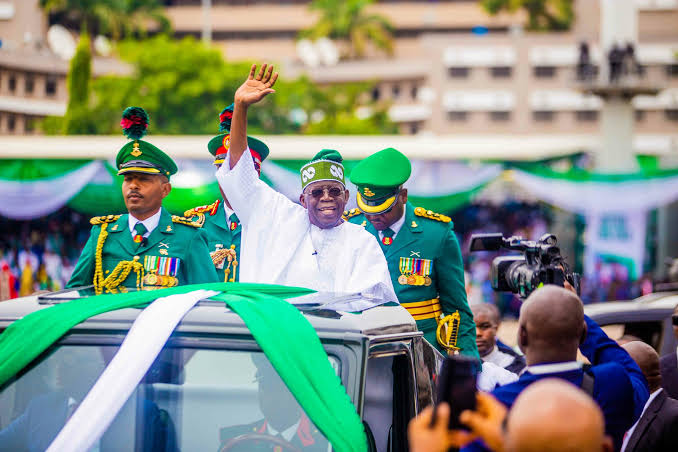
Contrary to the speculation, President Tinubu was actively engaged in public duties during the lead-up to Independence Day.
He attended the coronation of the Olubadan of Ibadan on September 26, commissioned projects in Imo State on September 30 and returned to Lagos to deliver a national address on October 1.
These public appearances directly contradict the idea that he was avoiding public events out of fear of a coup.
While Nigeria’s coup rumour was ultimately false, the global political climate offers insight into why such speculation finds fertile ground.
Recent data from the Varieties of Democracy Project reveals that autocracies now outnumber democracies worldwide, with 91 autocratic regimes compared to 88 democracies.
Even more telling: nearly 72% of the global population now lives under autocratic governments, the highest percentage since 1978.
This means that interest in authoritarian alternatives is not a uniquely Nigerian problem, it’s part of a broader global trend.
A quick analysis of Google Trends shows that Nigerians began searching about coups on October 1, the same day the parade was cancelled.
Queries like “first coup in Nigeria” and “military coup in Nigeria” spiked, particularly in Kaduna and Edo States.
Interest in coup-related topics surged again between October 6 and 13, following news of the military takeover in Madagascar.
Interestingly, interest in the coup topic even overtook public attention around Joash Amupitan, the newly-appointed INEC Chairman, despite his appointment being a major national story.
I lived through Nigeria’s military regimes in the 1990s. I remember the fear, the silence and the deep instability they brought.
So I have no nostalgia for military rule. But that’s my lived experience, not that of most Nigerians.
With a median age of 18, over 60% of Nigerians have only known democracy.
They didn’t live through coups. So when the economy worsens, insecurity spreads and governance fails to deliver, it’s not hard for some to begin romanticizing military alternatives.
What these rumours really reveal is a trust gap. Many citizens no longer believe that democracy is working for them.
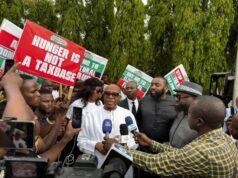
Hunger, joblessness, insecurity, and rising inequality are making people ask: “Can anything be worse than this?”
Until the government begins to restore trust, by delivering security, jobs, and justice, rumours like this will keep resurfacing.
Nigeria doesn’t just need to dismiss coup rumours; it needs to prove that democracy works. Not just for the elite, but for the everyday citizen struggling to survive.
The military may be staying in the barracks, but the deeper question is: Do Nigerians still believe in democracy? Unless government action begins to match public needs, every rumour of a coup will echo louder than the last.
Rumours fade. But the reasons behind them remain, until they are addressed head-on.