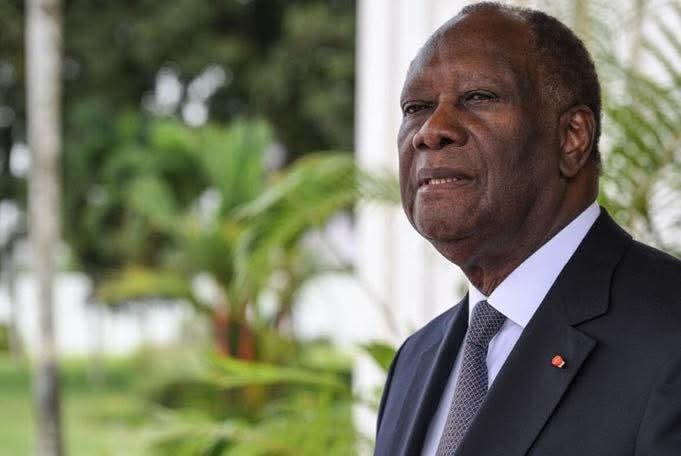

Ivorians head to the polls today in a presidential election widely expected to hand incumbent President Alassane Ouattara a fourth term, following the exclusion of several major opposition figures.
Ouattara, 83, has led the world’s top cocoa producer since 2011, overseeing a decade of economic growth that has strengthened Ivory Coast’s role as a West African powerhouse.
His party, the Rally of Houphouëtists for Democracy and Peace (RHDP), is seeking a clear victory in the first round to avoid a runoff.
Nearly nine million registered voters are casting their ballots between 8 a.m. and 6 pm local time, choosing from five candidates.
However, analysts predict little suspense in the outcome.
“It’s hard to imagine any surprises, given that the main opposition leaders have been sidelined,” said Gilles Yabi, founder of the West African think tank Wathi, in an interview with AFP.
Two of Ouattara’s most prominent rivals, former president Laurent Gbagbo and ex-Credit Suisse CEO Tidjane Thiam, were barred from contesting the election.
Gbagbo was disqualified due to a criminal conviction, while Thiam was ruled ineligible after acquiring French nationality.
Their respective parties have condemned the electoral process as unfair and urged supporters to protest.
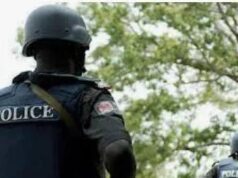
In recent days, at least four people, including a police officer, have died in sporadic unrest, and an electoral commission office was set ablaze earlier this week.
Authorities have banned public demonstrations, sentencing dozens to prison for “disturbing public order.”
Roughly 44,000 security personnel have been deployed nationwide to prevent further violence, particularly in opposition strongholds in the south and west.
A night-time curfew remains in effect across the Yamoussoukro region.
During his final campaign rally on Thursday, Ouattara urged citizens to remain vigilant and peaceful.
“I ask you to monitor your neighborhoods closely. We must protect Ivory Coast,” he said.
The head of the Independent Electoral Commission, Ibrahime Kuibiert Coulibaly, acknowledged tensions but expressed hope that “there will be more fear than harm.”
Former president Gbagbo, meanwhile, denounced the vote as a “civilian coup d’état”, accusing the government of staging an “electoral robbery.”
He offered no clear guidance to his supporters on whether to participate in the election.
Voter participation is likely to vary sharply by region.
Analysts expect strong turnout in the pro-Ouattara north but apathy in southern and western areas loyal to Gbagbo and Thiam.
The remaining four contenders, Jean-Louis Billon, Simone Ehivet Gbagbo, Ahoua Don Mello and Henriette Lagou, lack major party backing, limiting their reach.
Billon, a 60-year-old former trade minister, seeks to revive the once-dominant Democratic Party.
Former first lady Simone Gbagbo, 76, aims to consolidate her ex-husband’s political base, while Mello, a leftist engineer with pro-Russian leanings and Lagou, a centrist who garnered less than one percent in 2015, round out the field.
Ouattara first assumed power after the 2010-2011 post-election crisis that left over 3,000 people dead.
His administration touts a record of economic stability and security gains, despite sporadic jihadist attacks along northern borders.
Critics, however, say that the benefits of growth have been uneven, with rising living costs squeezing many Ivorians.
More than 1,200 election observers, including 251 from ECOWAS and the African Union, are monitoring Saturday’s vote. Official results are expected early next week.