
Tanzania remained under a nationwide communications blackout on Thursday following a day of violent unrest during the country’s general elections, with unconfirmed reports indicating that dozens may have been killed.
According to reports, President Samia Suluhu Hassan, who sought to consolidate her position in the virtually uncontested polls, faced widespread unrest after opposition figures were either jailed or disqualified from contesting.
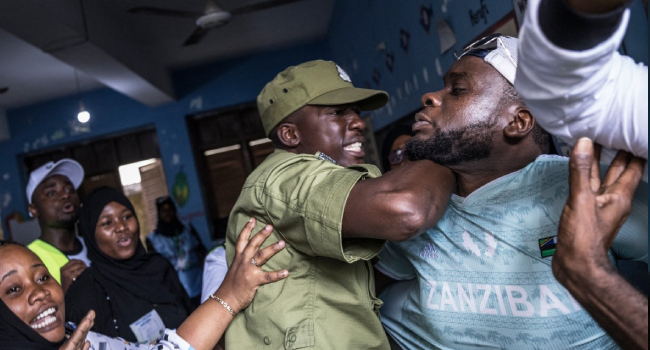
Election day on Wednesday descended into chaos as protesters clashed with police across several parts of the country.
An AFP correspondent reported seeing a police station set ablaze in Dar es Salaam, while other witnesses described polling stations being attacked and posters of the president torn down.
A diplomatic source told AFP that at least 30 people were feared dead, though the number could not be independently verified due to an internet blackout and restricted international communication.
Nearly all foreign journalists had been barred from entering the country for the election, further limiting information flow.
The Tanzanian government has not issued any statement on the situation, and local media, under tight state control, have not updated their reports since early Wednesday.
Schools and public offices were closed nationwide, while civil servants were told to work from home, AFP reported.
Gunfire was still being heard in parts of Dar es Salaam as of Thursday morning.
Rights groups had earlier warned of a “wave of terror” in the lead-up to the polls, citing abductions and intimidation of activists and opposition supporters.
A foreign diplomat described the current situation as “unprecedented,” saying it was unclear how events would unfold.
On the semi-autonomous island of Zanzibar, the atmosphere was relatively calm, although ferry services to the mainland were suspended, leaving many travelers stranded.
At Julius Nyerere International Airport, stranded tourists were seen sleeping on the floor as cash and card systems failed due to the blackout.
“I’ve never experienced anything like this,” one France-bound passenger told AFP, explaining that travelers had run out of money and were unable to contact their embassies.
Much of the anger online before the blackout had been directed at President Hassan’s son, Abdul, who reportedly headed an “informal task force” of security agencies overseeing election operations.
The unit has been accused of orchestrating abductions of critics and activists, including a popular influencer known as Niffer, who was detained for allegedly encouraging protests.
Since assuming office in 2021 following the death of former President John Magufuli, Hassan, Tanzania’s first female leader, has faced internal resistance from elements loyal to her predecessor.
Although initially praised for easing restrictions on the opposition and media, rights groups say she has since presided over a renewed crackdown marked by disappearances, torture, and extrajudicial killings of government critics.
Her main challenger, Tundu Lissu, is currently on trial for treason, facing a potential death sentence, while his party, Chadema, remains banned.
Another opposition hopeful, Luhaga Mpina of ACT-Wazalendo, was disqualified on technical grounds, leaving Hassan’s Chama Cha Mapinduzi (CCM) party virtually unopposed.
Amnesty International has described the situation as “deeply disturbing”, warning that the risk of further escalation remains high and urging the authorities to exercise restraint.