By Deacon Malachy Chuma Ochie, Ph.D
I read with keen interest the recent article by Rev. Fr. Lawrence Eze titled “Laundering the Tax Image of Enugu Government” in response to an earlier article published by Dr. Justice Chidi.
Rev. Fr. Eze’s piece was an emotive piece, driven, I assume, by a deep concern for the welfare of Enugu citizens.
However, while the Reverend Father’s compassion is undeniable, his arguments rest more on perceptions rather than on verifiable facts.
The result is a passionate but skewed interpretation of Governor Peter Mbah’s tax reforms, which deserve a more objective and contextual understanding.
The first thing to be said is that taxation, by its nature, is never a pleasant subject. No society welcomes taxes with open arms.
Yet, taxation remains the life-blood of every government that genuinely intends to deliver services, develop infrastructure, and uplift its citizens.
The real issue, therefore, is not whether taxes should exist, but whether they are fair, transparent, and properly utilized.
That is precisely where the Mbah administration has charted a new and commendable course.
Before the present government took office, Enugu State’s tax ecosystem was chaotic.
It was characterized by multiple taxation, inefficiency, and the reign of touts and middlemen who extorted traders, artisans, and transporters in the name of revenue collection.
Many citizens were forced to pay levies that never entered government coffers.
The Mbah administration confronted this anomaly by introducing a digital tax system that unified and automated all payment processes. The goal was not to increase taxes but to clean up the system, eliminate leakages, and bring sanity to revenue administration.
It is important to clarify that Governor Mbah has not introduced any new tax regime. What he has done is to enforce existing tax laws more efficiently through digitalization.
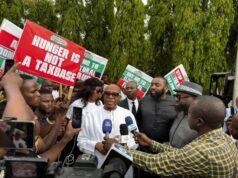
The narrative of “new and suffocating taxes” is therefore misleading. The much-talked-about “₦8 million housing tax” is not a general levy on landlords or struggling homeowners as alleged. It applies only to specific high-value developments within designated urban zones and serves as a form of development charge.
In fact, the governor personally directed a 50% downward review of the charge in response to public concerns.
This demonstrates sensitivity to citizens’ needs, not insensitivity.
Fr. Eze’s portrayal of a government bent on squeezing the poor through taxation also misses the broader economic context. Nigeria is going through a difficult macroeconomic phase following subsidy removal and exchange rate liberalization.
These are federal policies whose ripple effects have been felt in all states, Enugu inclusive. To attribute every instance of hardship to state taxes is to misunderstand basic economics.
Inflation, high transport fares, and declining purchasing power are national challenges, not Enugu-specific outcomes of taxation.
Ironically, it is through tax revenue that the Enugu government is able to mitigate some of these federal-induced pains.
The recent upward review of the minimum wage to ₦70,000, the digital skills empowerment for youths, the palliative interventions for transporters and SMEs; all of these initiatives are being funded through internally generated revenue. Without a disciplined tax framework, none of these people-oriented measures would be sustainable.
The notion that government should continually provide services without collecting taxes is economically unrealistic.
What the Mbah administration is building is a culture of fiscal responsibility where every citizen contributes fairly to the development of the state.
It is also a model that promotes equity, where the wealthy pay more and the less privileged are protected.
Market women, for instance, who were once harassed by touts and fake tax agents, now pay their levies directly to the state’s account through digital platforms, often at reduced rates. Property taxes are progressive, not punitive. They target high-value estates and commercial structures, not low-income homes.
Rev. Eze’s critique of the “smart” infrastructure projects such as the Smart Schools and Smart Parks also calls for perspective. These are not vanity projects, as he suggests.
They are part of a deliberate modernization agenda that seeks to position Enugu as a 21st-century economy driven by innovation, technology, and efficiency.
The Smart Schools are designed to transform education by integrating digital learning, science, and vocational training, thereby preparing Enugu’s children for the knowledge economy.
The Smart Parks aim to revolutionize transport infrastructure, enhance urban aesthetics, and create long-term revenue streams for the state.
The argument that such projects do not immediately put food on the table misses the developmental logic of capital investment.
No modern economy grows by handouts alone; it grows through infrastructure that stimulates productivity, attracts investors, and creates jobs.
In fact, the engagement of credible private partners in the Smart Schools project reflects a global best practice in public-private partnerships (PPP).
It is also unfair to dismiss Dr. Justice Chidi’s explanations as “image laundering.” Public enlightenment is an essential component of democratic governance.
Citizens have a right to know how their taxes are used, and government has a duty to explain. There is nothing wrong with articulate advocates explaining reforms and countering misinformation. It becomes worrisome only when such discourse is met with cynicism rather than constructive engagement.
Governor Mbah’s fiscal reforms are anchored on transparency, accountability, and inclusiveness. Enugu State now publishes quarterly budget performance reports, conducts citizen budget sessions, and operates an open access portal for revenue data.
These are not the hallmarks of an opaque administration. Indeed, BudgIT’s 2024 Subnational Transparency Index ranked Enugu among the top five most transparent states in Nigeria. This level of openness should inspire confidence, not suspicion.
At the heart of Mbah’s fiscal vision is economic independence. The governor’s ambition is to grow Enugu’s internally generated revenue to a point where the state can fund its development without over-dependence on federal allocations.
This is what drives the reforms that some have mistaken for insensitivity. The hard truth is that without expanding the tax base and ensuring fiscal discipline, no state can deliver sustainable infrastructure or social welfare.
In assessing any government’s fiscal policy, one must look beyond the noise of the moment to the long-term benefits.
What Governor Mbah is doing is laying the foundation for a financially resilient Enugu State; one capable of building its own future. The pain of reform is temporary; the prosperity it produces is lasting.
Rev. Fr. Eze’s concerns for the poor are noble and shared by many. But the solution is not to halt reforms or demonize taxation.
The solution lies in ensuring that taxes are fair, well-managed, and used for the people’s benefit. That, indeed, is what the Mbah administration is doing.
To call these efforts “image laundering” is to miss the real picture. The real story of Enugu today is that of a government finally bringing order to fiscal chaos, replacing arbitrariness with transparency, and investing the people’s money back into the people’s lives.
It is a story of a state moving from consumption to production, from dependency to sustainability.
Governor Peter Mbah’s tax reforms are not anti-people; they are pro-development. They represent a bold attempt to align Enugu with the fiscal realities of the 21st century.
Those who see only hardship should look again and see the foundation of future prosperity being laid.