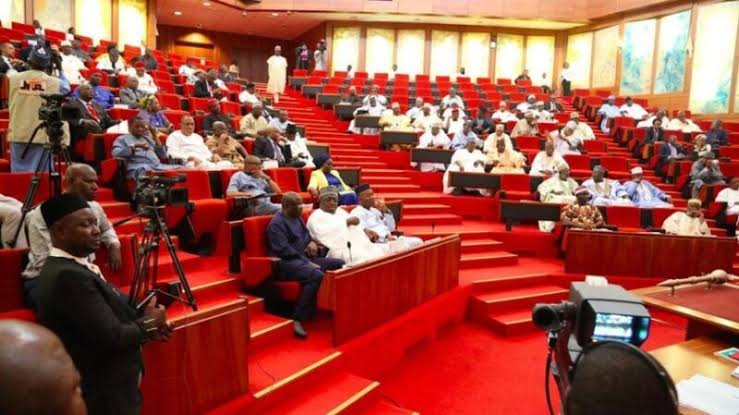

Nigeria’s Senate has approved a landmark bill imposing up to 14 years imprisonment on lecturers and educators convicted of sexually harassing students in tertiary institutions, a decisive move aimed at tackling one of academia’s most persistent abuses of power.
The Sexual Harassment of Students (Prevention and Prohibition) Bill, 2025, sponsored by Senate Leader Opeyemi Bamidele (APC, Ekiti Central), passed on Wednesday after a heated plenary session.
The bill seeks to end what Bamidele described as a “deep-rooted culture of coercion and silence” that has long undermined trust in Nigeria’s higher education system.
According to Bamidele, the legislation was crafted to “protect students from all forms of sexual misconduct and abuse within academic environments while upholding respect for human dignity and professional ethics.”
He added that the law is designed to preserve the integrity of the teacher-student relationship, one based on mentorship, not manipulation.
Under the new Act, Convicted offenders will face a minimum of 5 years and up to 14 years in prison, with no option of a fine and Lesser offences attract 2 to 5 years’ imprisonment, also without a fine.
The law criminalizes demanding or pressuring a student for sex, making unwelcome sexual advances, Creating a hostile learning environment, Unwanted touching, kissing, or hugging, sending sexually explicit messages or images, Making sexually suggestive jokes or comments and aiding or encouraging another person to commit harassment.
Importantly, consent from a student cannot be used as a defence, except where both parties are legally married.
The Act also empowers students or their representatives, including parents, guardians, or lawyers, to file written complaints directly to the Nigerian Police, the Attorney-General, or their institution’s Independent Sexual Harassment Prohibition Committee.
Each tertiary institution must establish such a committee, which will be responsible for receiving and investigating complaints.
However, once a case reaches court, the internal committee must step aside to prevent overlapping jurisdictions.
During deliberation, Senator Adams Oshiomhole (APC, Edo North) supported the bill’s intent but argued it should extend beyond campuses to workplaces and public offices.
“There is no justification for limiting this to schools,” he said. “Sexual harassment is widespread, in offices, factories, and even politics. This protection should apply to all Nigerians.”
Deputy Senate President Barau Jibrin (APC, Kano North), who presided over the session, explained that the bill originated from the House of Representatives, and significant amendments at this stage were not allowed.
He also noted that other existing laws already cover workplace harassment, while this legislation targets the education sector, where the issue has become particularly rampant.
For decades, Nigerian universities and colleges have battled “sex-for-grades” scandals, often with little accountability.
Analysts view this bill’s passage as a major step toward restoring ethics and transparency in academia.
“This law gives voice to the voiceless,” one female senator remarked after the vote. “No student should ever be forced to choose between their dignity and their degree.”
With Senate concurrence completed, the bill now awaits presidential assent to become law, a move expected to set a new moral and legal benchmark for higher education across Nigeria.