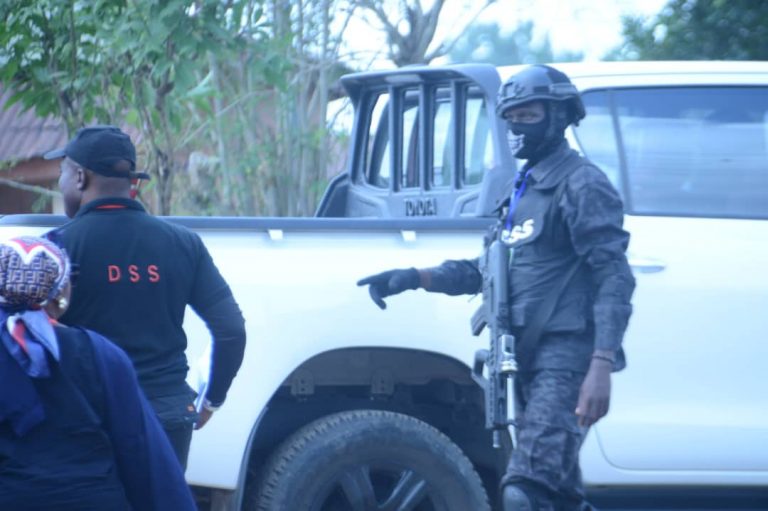

As Anambra State heads to the polls tomorrow to elect a new governor, anxiety and uncertainty grip the state amid heavy security presence, fears of vote buying, and doubts over the credibility of the process.
The election, which will be the first major test for the new Chairman of the Independent National Electoral Commission (INEC), Prof. Joash Ojo Amupitan, comes at a critical time when public confidence in Nigeria’s electoral system remains fragile.
Observers say the poll will not only test INEC’s logistical efficiency and neutrality but also reveal whether Amupitan can distinguish his leadership from that of his predecessor, Prof. Mahmood Yakubu, whose tenure was dogged by complaints of late deployment of materials, malfunctioning BVAS devices, and result transmission failures during the 2023 general elections.
About 60,000 security operatives drawn from the Police, Civil Defence, Army, Navy, and Air Force have been deployed across 5,720 polling units to safeguard voters and electoral materials.
The Commissioner of Police for the election, Abayomi Shogunle, said the massive deployment was meant to guarantee safety and not intimidate voters.
“We want to assure residents that the election will be peaceful, transparent, and free of intimidation. Every eligible voter should come out and exercise their right,” Shogunle said.
However, the exclusion of the state-owned security outfit, Agunechemba, has sparked controversy. Opposition parties accused the Anambra government of using the group to influence past polls.
The International Society for Civil Liberties and Rule of Law (Intersociety) cautioned against the excessive militarisation of the election, warning that the deployment of armed forces and armoured vehicles could discourage voter turnout.
The group’s chairman, Emeka Umeagbalasi, said past “shows of force” had created fear among citizens, turning polling environments into “war zones.”
INEC has announced that 98.8 per cent of registered voters in the state have collected their Permanent Voter Cards (PVCs).
Speaking in Abuja, Amupitan described the figure as one of the most impressive in recent elections, noting that it followed an extension of the collection deadline from October 29 to November 2 across the state’s 326 wards.
“This is a significant achievement. It reflects the enthusiasm of Anambra voters and the Commission’s effort to ensure no one is disenfranchised,” Amupitan said.
He disclosed that the Commission had deployed 6,879 BVAS devices, 24,000 ad hoc staff, and 83 boats to facilitate smooth logistics across the state, including riverine areas.
INEC, he added, had also made special arrangements for voters in Ihiala Local Council, where polling would take place under tight security due to threats of violence.
“Anyone attempting violence, vote-buying, or intimidation will face lawful consequences. Security will protect voters, and INEC is ready to deliver a credible election,” Amupitan assured.
Despite INEC’s assurances, concerns persist over possible irregularities and voter apathy. The CLEEN Foundation listed Ayamelum, Awka South, Onitsha North, Orumba South, and Ekwusigo as high-risk areas due to their history of political violence.
Similarly, the Civil Liberties Organisation (CLO) lamented low voter education and confidence in the process.
CLO chairman, Vincent Ezekwueme, appealed to citizens to participate actively, saying, “Do not assume your vote will not count. INEC has pledged transparency, and we must all play our part.”
With 16 candidates in the race and 2.8 million registered voters, the outcome of tomorrow’s election is expected to have far-reaching implications for Nigeria’s 2027 general elections.
Analysts say it will test the strength of the ruling All Progressives Grand Alliance (APGA) against the Labour Party (LP) and Peoples Democratic Party (PDP), both of which have intensified grassroots campaigns.
Former ADC National Chairman, Ralph Nwosu, warned security agencies and INEC to act responsibly, saying, “The world is watching. Whatever happens in Anambra will shape Nigeria’s democratic reputation.”
While optimism remains that the Amupitan-led INEC can restore credibility, sceptics like Wale Okunniyi of the National Consultative Front doubt significant improvement under the existing electoral framework.
“The same laws and systems that failed in 2023 remain in place. Without reform, little will change,” he said.
INEC’s Resident Electoral Commissioner, Dr. Queen Elizabeth Agwu, confirmed that sensitive materials, including BVAS and result sheets, had been distributed to all Registration Area Centres (RACs) under joint supervision by security agencies and party agents.
She urged voters to come out en masse, assuring them of a peaceful and transparent process.
“Your votes will count. The process is secure, and INEC is fully prepared to conduct a credible election,” Agwu said.