
The federal government said Monday that it is actively engaging Washington through diplomatic channels to de-escalate tensions following threats of U.S military action over the alleged persecution of Christians in Nigeria.
Minister of Information and National Orientation, Mohammed Idris, told Sky News’ The World with Yalda Hakim that communication lines with U.S authorities had been opened and were helping American officials understand Nigeria’s complex social and religious landscape.
“We are talking to them, and they are beginning to see the situation more clearly,” Idris said, adding that much of the circulating information could not withstand proper scrutiny.
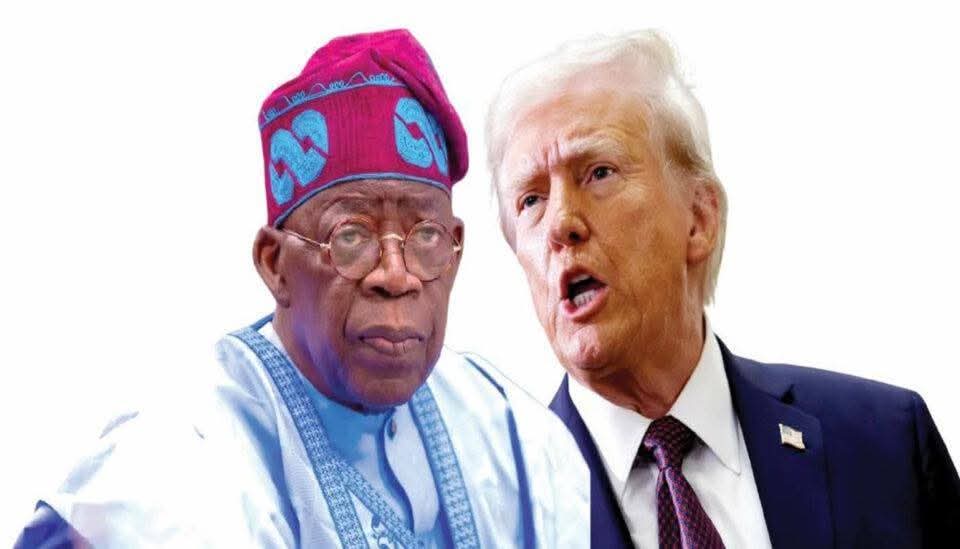
The warning from former U.S. President Donald Trump, posted on 31 October on Truth Social, accused Nigerian authorities of allowing Islamist extremists and Fulani herdsmen to kill thousands of Christians annually.
Trump reinstated Nigeria on the U.S list of Countries of Particular Concern (CPC) for alleged religious freedom violations, instructed the Pentagon to consider military options, and froze aid pending review.
The U.S. State Department confirmed the CPC designation on 1 November, citing mass persecution in northern and central Nigeria.
Abuja, however, rejected the genocide narrative, insisting that recent violence is driven by resource conflicts and criminality rather than religion.
Idris emphasized that Nigeria remains a constitutionally secular and multi-faith state.
“Nigeria guarantees freedom of religion under its constitution. Conflicts in the Middle Belt are not religious wars,” Idris said.
He also claimed that some U.S. concerns were influenced by lobbying linked to separatist groups, particularly the Indigenous People of Biafra (IPOB), which Nigeria classifies as a terrorist organization.
The federal government’s conciliatory stance follows weeks of escalating rhetoric between Abuja and Washington.
On 4 November, presidential adviser Bayo Onanuga accused U.S Senator Ted Cruz of sponsoring misinformation after he co-sponsored a resolution urging investigations into the killings of Christians in Nigeria.
President Bola Tinubu has called for continued dialogue with the United States.
“The description of Nigeria as intolerant is inaccurate. We will continue to work with the United States to resolve these concerns through diplomatic and political means,” he said.
The dispute has drawn international attention. China urged Washington to avoid interference in Nigeria’s internal affairs, while Russia warned against neo-colonial adventurism.
Chad temporarily closed its northern border with Nigeria, citing fears of regional instability.
Religious and communal violence remains a serious concern.
According to the National Human Rights Commission, at least 2,000 people were killed in communal clashes and insurgent attacks between January and September 2025.
The Nigerian Air Force continues operations against Islamist groups in the northeast, while local vigilante groups have struggled to contain reprisals between farmers and herders.
Despite the tensions, Nigeria remains a key counter-terrorism partner for the U.S in West Africa, receiving approximately $500 million annually in military and humanitarian assistance, and is considered vital for regional stability in the Sahel.