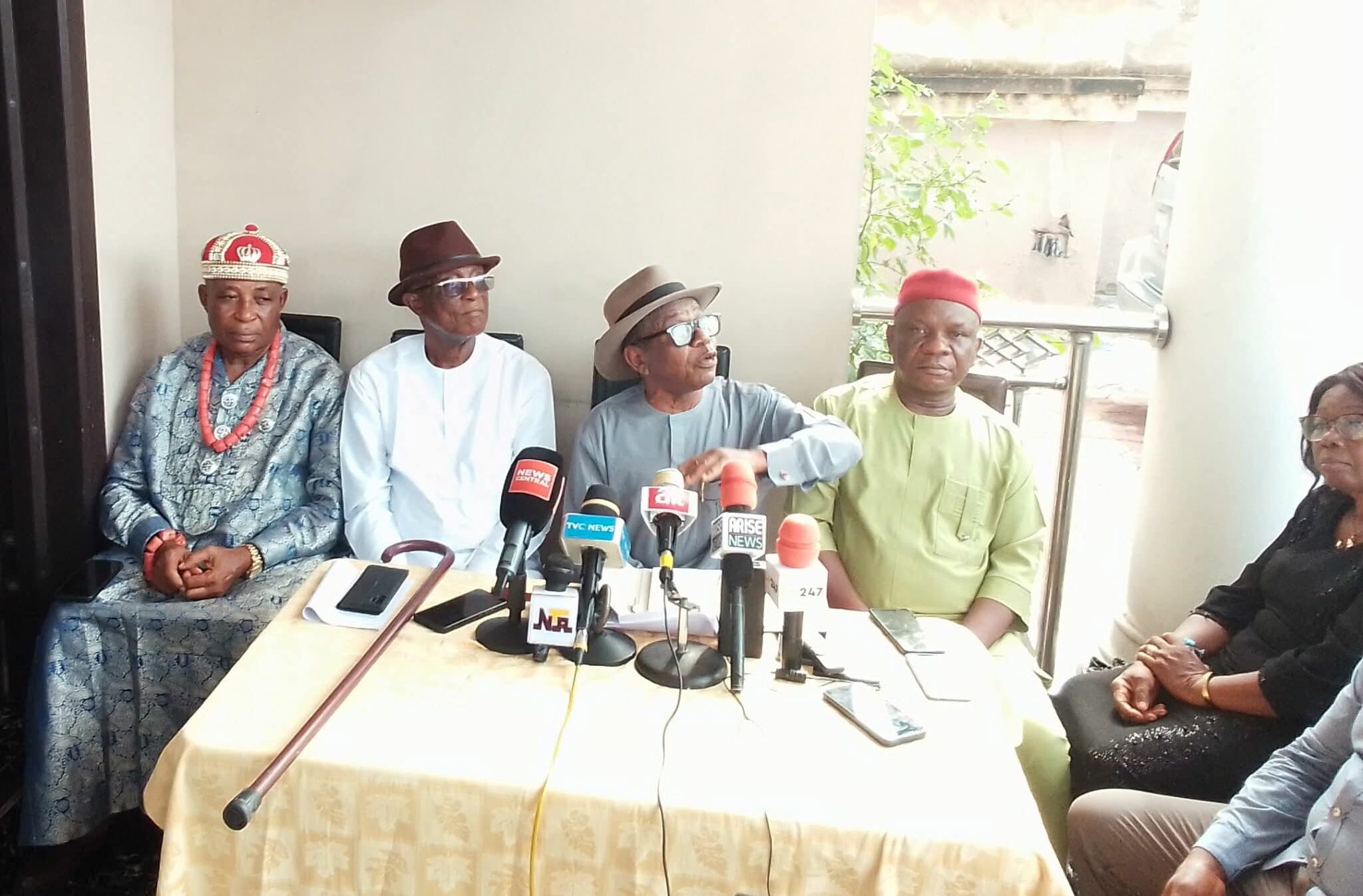

With the National Assembly’s recent approval for the establishment of a sixth state in the South-East, the Aba State Movement has intensified its campaign for the proposed new state to be officially recognised as Aba State.
Speaking to journalists in Aba on Wednesday, the group’s spokesperson, Chief Theo Nkire, reiterated the position of the movement’s leadership, headed by Eze Love Nwogu.
Nkire insisted that Aba is the natural and rightful choice for the new state, describing it as “the pride of Eastern Nigeria.”
He recalled that the Joint Committee of the Senate and the House of Representatives met two weeks earlier in Lagos and recommended the creation of an additional state for the South-East, which currently consists of Abia, Anambra, Ebonyi, Enugu, and Imo.
According to him, the proposal for Aba State stands out because of its long history and clearly defined structure.
The envisioned state would include nine local government areas: Aba North, Aba South, Isiala Ngwa North, Isiala Ngwa South, Obingwa, Osisioma Ngwa, Ugwunagbo, Ukwa East and Ukwa West.
Nkire argued that the size of the proposed state should not be an obstacle, noting that states like Kebbi, Bayelsa and Ebonyi were created with even fewer local governments.
He stressed that the movement’s request dates back over seven decades, beginning with a demand made in 1952 and later presented to the Willink Commission in 1957.
He maintained that Aba has met all constitutional criteria under Section 8 of the Nigerian Constitution for state creation.
Nkire further reminded the press that both chambers of the National Assembly approved a referendum for Aba State in June 1983, though it was never implemented, even as many states approved at the time have since been created.
He also referenced the 2014 National Conference, which recommended the creation of 19 new states nationwide, including Aba as one of four proposed for the South-East.
Nkire pointed out that Ohanaeze Ndigbo has twice thrown its weight behind the Aba State project, first in 2015 under a committee chaired by Chief Emmanuel Iwanyanwu, and again in 2018 under a panel led by Professor Chigozie.
Highlighting its economic potential, Nkire described Aba as a hub of commerce, manufacturing, agriculture, energy resources and skilled labour.
“Aba is known as the Japan of Africa because of its indigenous technology,” he said, adding that the region historically served as the palm oil belt of Eastern Nigeria.
He emphasised that communities in the proposed state, largely the Ukwa and Ngwa groups, have remained united for more than 70 years, with no boundary disputes or withdrawals from any village.
“The area demanding Aba State has remained one cohesive bloc. No village has opted out, and the cultural ties between the Ukwa and Ngwa people remain strong,” he noted.
The movement urged the National Assembly to formally designate Aba as the sixth South-East state, insisting that no other proposal matches its historical consistency, economic strength, and cultural unity.