President Bola Ahmed Tinubu is expected to soon sign a landmark bill establishing the Nigeria Police Force Pension Board, a development that will remove police personnel from the Contributory Pension Scheme (CPS) under the Pension Reform Act and grant them a pension structure similar to that of the military and DSS.
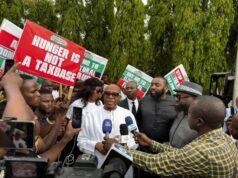
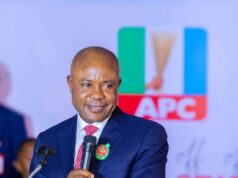
The Chairman of the House of Representatives Committee on Police Affairs, Hon. Abubakar Makki Yalleman, disclosed this on Wednesday in response to the ongoing protest by retired police officers at the National Assembly.
Yalleman confirmed that the House had concluded all legislative processes on the bill and forwarded it to the Senate for concurrence.
“We have interacted with the retirees several times. All their concerns were considered. The bill passed all its readings and was transmitted to the Senate on October 28,” he stated.
“By next week, God willing, the bill will be forwarded to the President for assent. Their agitation has been fully addressed.”
He urged protesting retirees to vacate the National Assembly gate, insisting that legislative work on their demands had been completed.
Similarly, the Chairman of the House Committee on Police Pensions, Hon. Husaini Mohammed Jallo, described the legislation as a major breakthrough for police personnel who have long demanded a dedicated pension board.
“The police want out of the contributory pension scheme to run their own board like the military and DSS. That is exactly what this bill provides,” Jallo said.
He added that the Inspector General of Police, the Director General of Pension, and other stakeholders were already working on a seamless transition process.
The bill, HB 979, Nigeria Police Pension Board (Establishment) Bill, seeks to amend Section 5(1)(a) of the Pension Reform Act to exempt police personnel from the CPS.
It establishes a standalone Police Pension Board empowered to manage pensions, gratuities, and benefit payments.
Key provisions include:.
Minimum Pension: Retired police officers will earn not less than 85% of their total emoluments as pension (Section 17).
Injury Benefits: Where additional pension is granted for injury, combined benefits shall not exceed 100% of pensionable emoluments.
Funding: Pensions and gratuities will be paid from the Consolidated Revenue Fund (Section 14).
Retirement Criteria: Full benefits apply after 35 years of service or at age 60, while voluntary retirement is allowed after 10 years.
Death-in-Service Provision: If a retiree dies within five years of retirement, their next of kin will continue to receive the same pension until the five-year period lapses (Section 19).
Protection of Benefits: Pensions remain non-transferable, non-assignable, and protected from seizure except for debts owed to the Federal Government or by court order (Section 21).
With the House having completed its work, the bill now awaits Senate concurrence before being transmitted to the President.
Yalleman expressed confidence that President Tinubu would sign the bill without delay.
“Very soon, this matter will be concluded. There is no controversy. The Senate will pass it, and it will go to Mr. President for assent,” he assured.