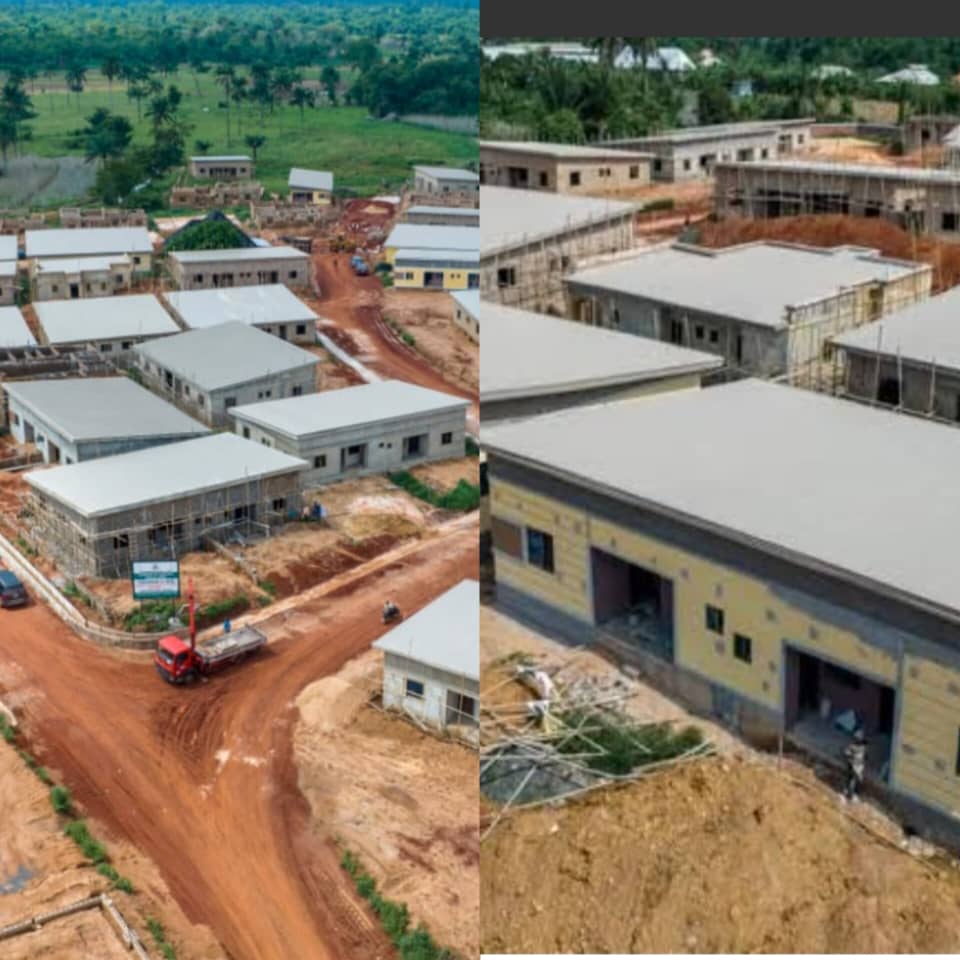

Governor Peter Ndubuisi Mbah’s promise to deliver 15,000 housing units for civil servants by 2026 stands as one of the most socially meaningful commitments of his administration.
In a nation where affordable housing has remained out of reach for millions, this singular initiative has the potential to reshape not only the physical landscape of Enugu State but also its social and economic fabric.
At its core, the scheme is an act of magnanimity and an intentional intervention aimed at easing the cost of shelter, which is one of the heaviest burdens borne by workers and low-income families.
For years, Enugu City has witnessed a steady rise in rent prices, driven largely by limited housing supply compared to the expanding population.
This has pushed many poor and middle-class families to the outskirts, away from their workplaces, opportunities, and the social life of the city.
By injecting 15,000 new housing units into the system, Mbah is effectively tackling the problem at its root, supply.
When housing supply expands significantly, the ripple effect is unmistakable.
Rent prices naturally begin to decline. More available homes mean landlords can no longer arbitrarily hike prices because tenants now have choices.
The city becomes more competitive, fairer, and more accessible.
For the poor and indigent who have long been priced out of central Enugu, this development could very well be their ticket back into the urban space, restoring their dignity, reducing their transportation costs, and giving their children better access to schools, healthcare, and opportunities.
But beyond the economic benefits, Governor Mbah’s housing programme speaks to a deeper philosophy of governance, a governance that sees, cares, and responds.
Providing affordable homes for civil servants is not merely an infrastructural achievement; it is an expression of compassion and social responsibility.
Mbah understands that poverty is not just the absence of money; it is also the absence of stability.
A family that has secure housing can plan, work, and dream.
A worker who sleeps in a safe environment will wake up more motivated and productive. A child living in a comfortable home is far more likely to thrive.
This is why the 15,000-unit scheme is not just a government project; it is a social equaliser.
Through this initiative, the governor demonstrates a genuine sensitivity to the plight of the less privileged.
He is not beautifying Enugu at the expense of the poor. He is lifting the poor so they too can enjoy the emerging beauty of the Coal City.
Housing is not a luxury, it is a right, and Mbah’s approach aligns with that conviction.
The overall impact on society will be transformative.
Job creation during construction, improved urban planning, healthier communities, and a reduction in slum expansion are just a few of the long-term benefits.
As the city grows, it will grow with its people, not at their expense.
In conclusion, as Enugu marches toward its rebirth, the general public must rally behind Governor Mbah’s efforts.
Reviving the glory of the Coal City is not the responsibility of government alone, but it is a collective mission. With initiatives like these, it is clear that beauty can be restored without suffocating the poor.
The people of Enugu should, therefore, support and encourage this vision, a vision that seeks to build not just structures but lives, dignity, and hope.
Indeed, Tomorrow is Here