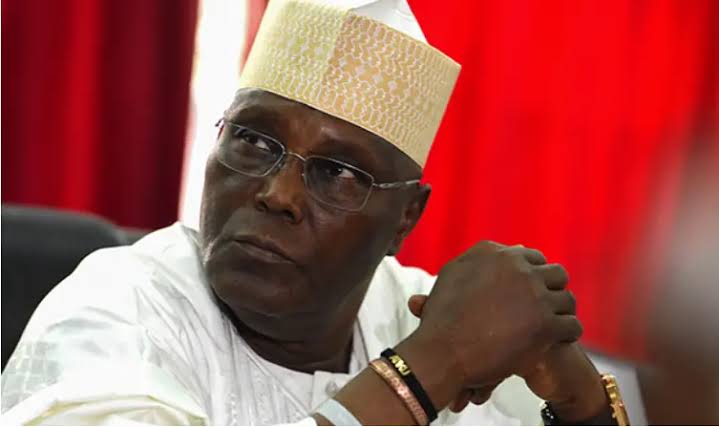

When former Vice President Atiku Abubakar arrived in Jalingo on Tuesday, the city felt charged with anticipation.
What was officially the commissioning of the African Democratic Congress (ADC) state secretariat quickly took on the tone of a significant political repositioning for the seasoned politician.
Supporters from Adamawa, Bauchi, Kano and several other states accompanied him, reinforcing the sense that Atiku’s visit was more than a ceremonial engagement.
Many interpreted his appearance as the opening scene of a new political journey, one that might mark his departure from familiar platforms and alliances.
For decades, Atiku has been a major force within the Peoples Democratic Party (PDP), contesting for the presidency multiple times. But in Taraba, he projected himself under a different banner.
Though he stopped short of officially cutting ties with the PDP, his declaration that the ADC is the “only platform” capable of rescuing Nigeria signaled a dramatic shift in alignment.
Addressing the crowd, Atiku spoke with urgency and disappointment, accusing the ruling All Progressives Congress (APC) of worsening the nation’s economic and security woes.
“The present government deceived you and plunged the country into lack of peace, hunger, poverty, and joblessness,” he said, describing Nigeria as a nation in distress.
He presented the ADC as a credible vehicle for a national reset, one capable of steering the country out of its political stagnation and economic hardship.
But his message wasn’t limited to criticism. Atiku emphasized the necessity of civic participation, urging Nigerians to obtain their Permanent Voter Cards (PVCs) ahead of the 2027 elections.
“Without your voter cards, your determination to change leadership in 2027 will be in vain,” he warned, highlighting the practical steps required for political transformation.
His remarks resonated with many citizens frustrated by years of unfulfilled promises yet still hopeful for a leader and a platform capable of delivering change.
Taraba’s ADC chairman, Hassan Adamu, reinforced Atiku’s message with bold optimism.
He asserted that the 2027 elections would usher in a political rebirth.
“In 2027, a new government will be formed, and we will deliver Taraba to ADC and Atiku,” he declared confidently.
The event also featured the inauguration of the state transition committee, chaired by Senator Abubakar Tutare, with Barrister Haruna Kwetishe as secretary, a move that underscored the ADC’s intention to strengthen its internal structures ahead of the election cycle.
Although it remains uncertain whether Atiku’s engagement with the ADC marks a permanent political shift or a strategic partnership, one thing is undeniable: amid growing public frustration, Nigerians are increasingly open to alternatives.
Atiku’s message tapped into this national mood, portraying the ADC as the platform for renewal.
For now, Jalingo has become the stage for what could be Atiku Abubakar’s next major political chapter, one centered on a promise to rescue Nigeria and lead it toward a new political horizon.
The real test will come as 2027 approaches and the ADC seeks to convert enthusiasm into electoral strength.