
Cities, like people, are remembered not only for what they were but for what they dared to become. Most renowned cities of the world today didn’t just happen. No. They are pure products of vision, audacity, and timing.
Enugu, once defined by coal and colonial rail lines is now negotiating a new identity; identity shaped not by what lies beneath the soil, but by what rises from imagination, planning, and governance that refuses to be trapped in the present.
To speak of Enugu Smart City is not merely to speak of buildings, roads, or digital gadgets.
It is to speak of a philosophy of leadership—a belief that governance must outrun today’s problems and arrive early at tomorrow’s possibilities. It is governance that understands that the future does not wait for permissions.
Across the world, cities that dared to think ahead rewrote their destinies. Dubai was once little more than sand, sea, and trading posts. It did not stumble into greatness by accident.
It was deliberately imagined. Leaders there asked uncomfortable questions long before others did: What happens when oil fades? What kind of city attracts the world? How do you govern a future before it arrives? And so Dubai was drawn first in vision, then on paper, and finally in steel, glass, and data.
Roads came with purpose, technology with intent, governance with coordination. The city did not grow; it was designed.
Singapore followed a similar path. So did Seoul and many other cities of the world where entire cities were planned before the first family moved in. These places teach one lesson clearly: great cities are not accidents; they are decisions carefully taken.
Today, Enugu is making such a decision.
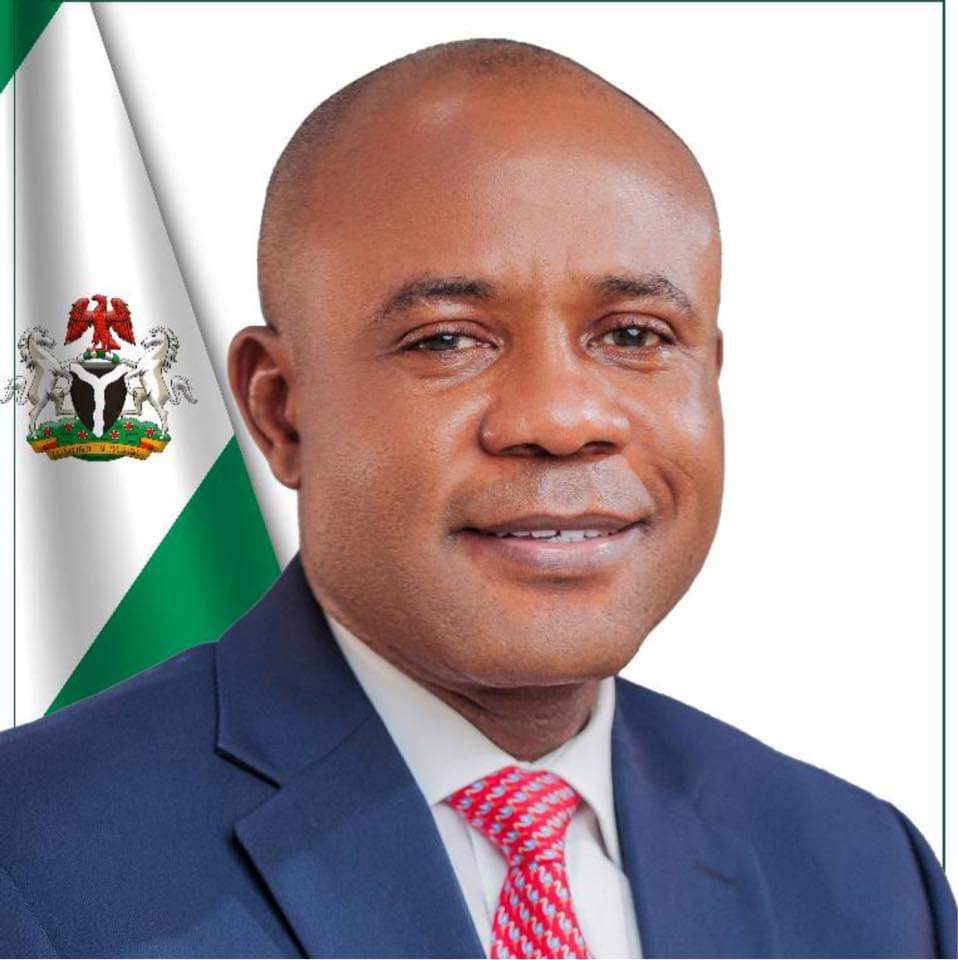
Governor Mbah appears to understand a truth many leaders miss: that leadership, in most cases, is not about managing decay, but about orchestrating renewal.
It is this same gap in knowledge that has led some people into questioning the need for smart green schools when the governor would have easily renovated the existing school blocks.
The governor understands the difference between repairing a house and designing a home.
His approach to governance does not wait for crisis before acting. It anticipates pressures that come with modernity, urban congestion, youth unemployment, digital disruption, and tries to provide answers for them ahead of time.
The idea of a Smart City, as embraced by Enugu, is not the shallow idea of installing cameras and calling it modern.
It is a deeper rethinking of how a city breathes, learns, and secures itself. It is the understanding that a city is a living organism and that intelligence must flow through it like blood.
The New Enugu City project focuses on creating a modern, tech-driven urban center with features like 24/7 dedicated power, central sewage, high-speed internet, piped gas, and integrated transport (monorail, CNG buses).
Key zones include an innovation hub (Innovation Park) and commercial/corporate areas (Vitality Bay), with plans for artificial lakes, green spaces, smart schools, advanced healthcare, and a world-class conference center, aiming to equal global cities by offering a “plug-and-play” environment.
This city is not being squeezed out of old mistakes. It is being laid out afresh: roads aligned with logic, utilities buried with foresight, digital infrastructure embedded from the start. Water, power, data, transport, and waste management are all planned as part of a single conversation, not as scattered interventions.
Again, what makes Enugu’s smart city vision compelling is not just the physical blueprint but the human intention behind it.
A city can not be smart if its people are left behind. Governor Mbah understands that the idea of intelligence begins in classrooms before it appears in control rooms. This provides the justification for the smart green schools project in Enugu.
These are schools where children are to be introduced early to digital tools, creative thinking, and problem-solving.
Where energy comes from the sun, not generators. Where learning is not frozen in the past, but aligned with the future. Where children are prepared for life in a smart city—the Enugu Smart City.
Of course, the road ahead is not without shadows. Smart cities demand maintenance, discipline, and constant learning. But progress has never been the absence of challenge; it has always been the courage to face it early.
In this sense, Enugu’s smart city project is less about competing with Dubai but an expression of the understanding that governance, when bold, can translate abstract ideas into concrete realities.