
Thousands of terrified residents from Borgu and Agwara local councils in Niger State have fled across the border into the Benin Republic, following renewed attacks by terrorists, worsening Nigeria’s growing security and humanitarian crisis, which has already displaced more than 3.7 million citizens internally.
The latest strike occurred barely 24 hours after Niger and Kwara State Governors, Mohammed Umaru Bago and Abdulrahman Abdulrazaq, met in Minna to assess security in border towns.
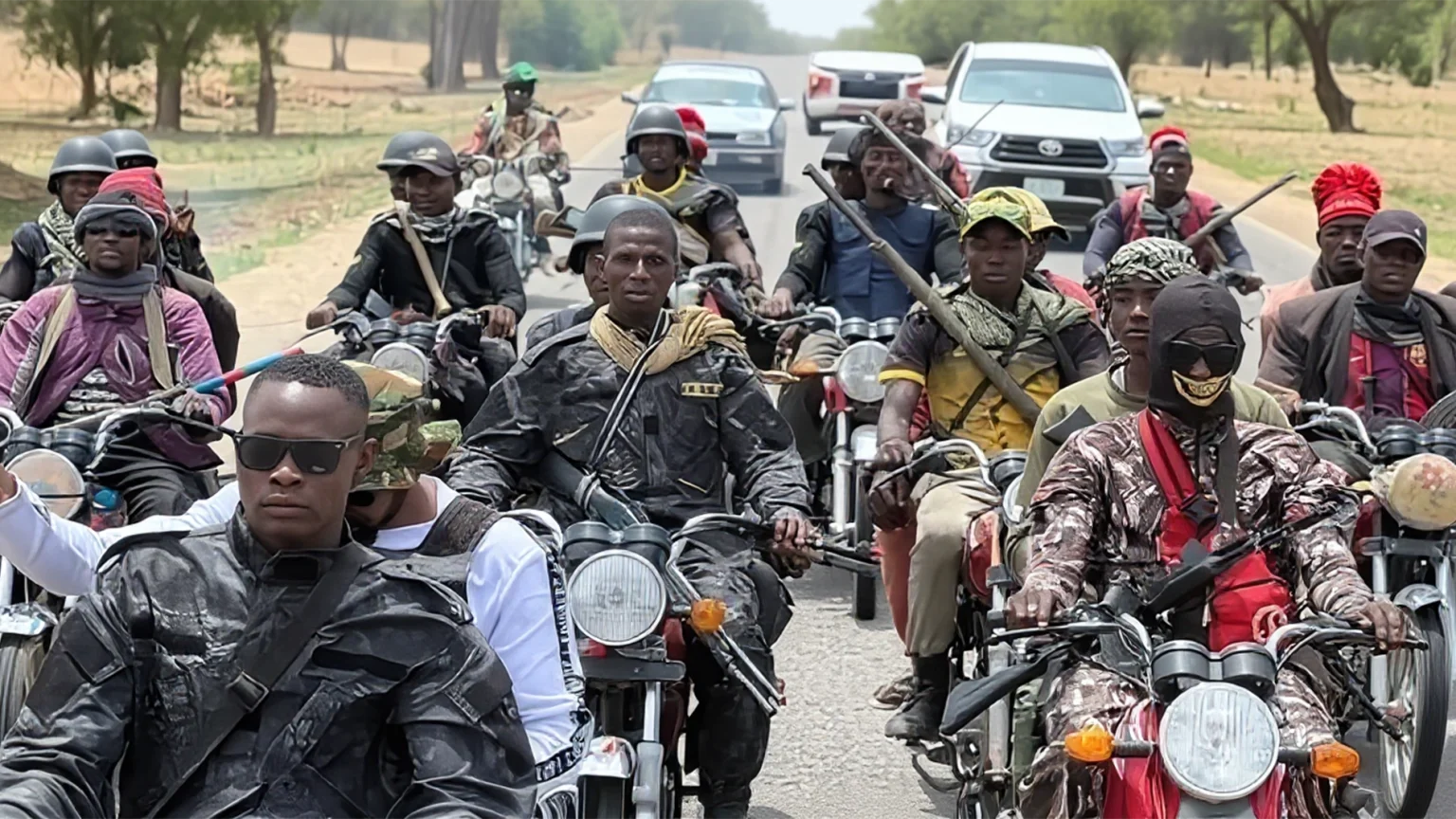
Eyewitnesses reported that over 200 terrorists, riding about 70 motorcycles, stormed the Konkoso community for the second time in one week, setting more houses ablaze before moving to Segbana, a border village between Benin Republic and Nigeria in Kebbi State.
“The police outposts in the areas were last week burnt by terrorists, resulting in operatives fleeing the communities, while the terrorists have now set up base in Konkoso town,” a villager said. Residents of Konkoso reportedly fled in thousands to Segbana, seeking safety.
A villager, who spoke on condition of anonymity, added: “Over 200 terrorists returned to Konkoso communities on Tuesday morning with about 70 motorcycles, and burnt down the remaining houses that were not set ablaze during their first operation last week.”
The Senate has condemned the killings of 56 Nigerians and the abduction of women and children in Konkoso village, describing the attacks as brutal and unacceptable.
During an emergency sitting, Senator Sani Musa, who moved the motion, explained that affected communities share borders with strategic forests, which terrorists exploit for cross-border movement and coordinated criminal operations.
He urged an overhaul of Nigeria’s security architecture, including improved intelligence coordination, unified operational command, deployment of surveillance technology, and stronger community policing.
Meanwhile, the United Nations has confirmed that over 3.7 million Nigerians are internally displaced, with insecurity spreading beyond the Northeast into Northwest regions.
Mohamed Malick Fall emphasised that displacement affects livelihoods, education, and stability, calling for durable solutions focused on recovery, reintegration, and resilience.
Addressing the spike in terrorism, kidnapping, and violent crimes, Inspector General of Police Kayode Egbetokun met with former police chiefs, led by Aliyu Attah, to tap into their experience, build institutional memory, and boost public confidence in the force.
The IGP stressed that misinformation campaigns would not deter the police from reducing crime and addressing emerging threats.
This wave of attacks highlights the urgent need for coordinated national responses to secure communities, protect lives, and mitigate the growing humanitarian crisis.