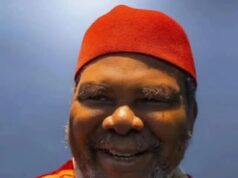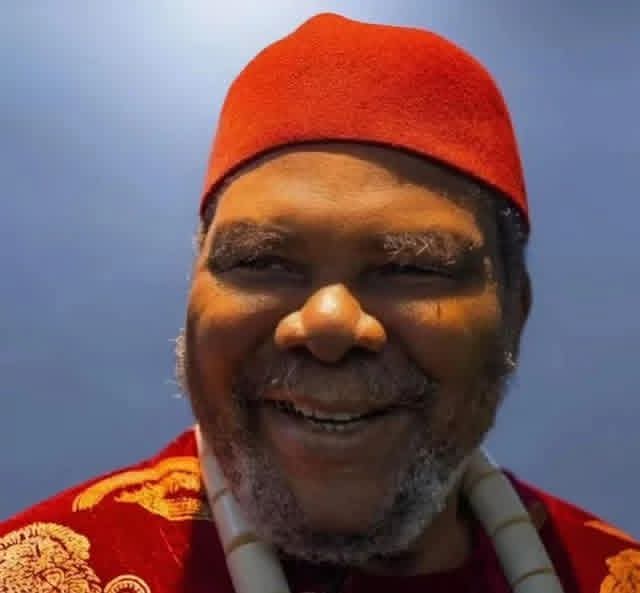

Veteran Nollywood actor Pete Edochie has expressed concern over the rising cost of electricity in Nigeria, revealing that he now spends about ₦40,000 every day to keep his home powered amid persistent instability in the country’s power supply.
Edochie made the disclosure during an interview with African Independent Television (AIT), where he spoke about the financial strain caused by the unreliable electricity supply and the need to depend on alternative energy sources.
The veteran actor, who will turn 79 on Saturday, explained that his daily electricity expenses include payments for prepaid power units as well as fuel and diesel used to run generators.
“I pay about ₦10,000 every day for electricity units in my house. In addition to that, I spend ₦20,000 on diesel and another ₦10,000 on fuel,” he said.
“Altogether, I spend about ₦40,000 every day just to keep the lights on. It is very disturbing because one cannot be working simply to pay for electricity,” he added.
Edochie noted that the increasing cost of power had become a heavy burden for many Nigerians, suggesting that the hardship reflects deeper structural problems in the country’s energy sector.
He also remarked that political leaders should focus more on addressing the everyday challenges facing citizens rather than prioritising the privileges of public office.
His comments come amid fresh concerns about declining electricity generation across Nigeria, as data from the national grid indicates that power output has dropped further in recent days.
According to operational figures released by the Nigerian Independent System Operator, electricity generation stood at 3,940.53 megawatts in the early hours of March 5, 2026.
However, the figure later declined after several generation units were forced offline due to inadequate gas supply.
The disruption caused a further drop of about 292 megawatts between 6:00 a.m. and 8:00 a.m., reducing the volume of electricity available for distribution companies.
As a result, the country’s 11 electricity distribution companies collectively received only about 2,830 megawatts of power on Thursday, leaving many homes and businesses without adequate supply.
Further reports indicated that generation later fell to around 1,490 megawatts by about 6:00 p.m., worsening electricity shortages in several parts of the country.
Among the distribution companies, Abuja Electricity Distribution Company received the highest allocation with about 490 megawatts.
This was followed by Ikeja Electric with 484 megawatts and Eko Electricity Distribution Company with 413 megawatts.
Other allocations included 306 megawatts to Ibadan DisCo, 207 megawatts to Benin DisCo, and 198 megawatts to Enugu DisCo.
Port Harcourt DisCo received 178 megawatts, Kano DisCo got 173 megawatts, Kaduna DisCo received 161 megawatts, Jos DisCo got 144 megawatts, while Yola DisCo received 76 megawatts.
The development underscores Nigeria’s continuing electricity challenges, as poor gas supply, weak infrastructure, and years of underinvestment continue to constrain power generation despite the country’s abundant natural gas resources.
Meanwhile, the Federal Government says it is expanding efforts to improve electricity access through renewable energy projects.
The Rural Electrification Agency disclosed that more than 1,000 mini-grid projects are currently being developed under a rural electrification programme.
Managing Director of the agency, Abba Aliyu, said the initiative is expected to add more than 200 megawatts of solar power to the national electricity system as part of a $750 million public programme aimed at improving energy access in underserved communities.