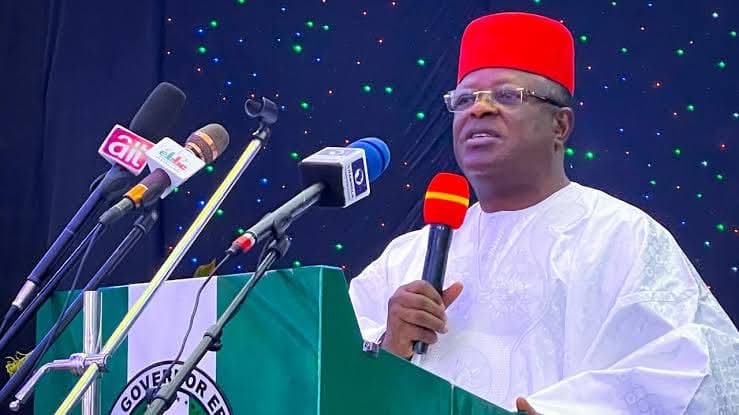

Nigeria’s Minister of Works, David Umahi, has declared that any ambition by the Southeast to produce the president in 2027 is unrealistic, insisting the region must instead rally behind Bola Ahmed Tinubu through to 2031.
Speaking in Enugu during the commissioning of a 15-kilometre stretch of the Abakpa–9th Mile–Onitsha Federal Highway, Umahi described the Southeast presidency bid as a “dead end,” urging political leaders in the region to adopt a more strategic approach.
According to him, the “Emilokan” mandate—which powered Tinubu’s rise to power—must be allowed to run its full course.
“We’re not getting the presidency through insults or wishful thinking,” he said.
“We must be strategic. No matter the candidate other parties present, Southeast people should support the President.”
Umahi, a former governor of Ebonyi State, also stirred controversy by claiming divine backing for his political stance.
He said he was acting on “God’s instruction” to align the Southeast with the ruling All Progressives Congress, expressing confidence that Tinubu would secure re-election.
Highlighting infrastructure development as a key benefit of such alignment, Umahi pointed to the ongoing reconstruction of the Enugu–Onitsha expressway, which he said is costing over ₦352 billion.
He described the project as a major federal intervention and suggested the region should reciprocate with strong electoral support—targeting at least 80% of votes for Tinubu in 2027.
The minister also dismissed long-standing complaints of marginalisation in the Southeast, noting that the region now holds significant positions in government, including his own appointment and the inclusion of Southeast indigenes among service chiefs.
In a veiled swipe at opposition figures such as Peter Obi, Umahi argued that agitation and criticism would not secure political power for the region.
He further warned that any Southeast leader unwilling to openly support and promote the current administration’s projects should not expect political backing, underscoring growing divisions over the region’s political direction ahead of 2027.