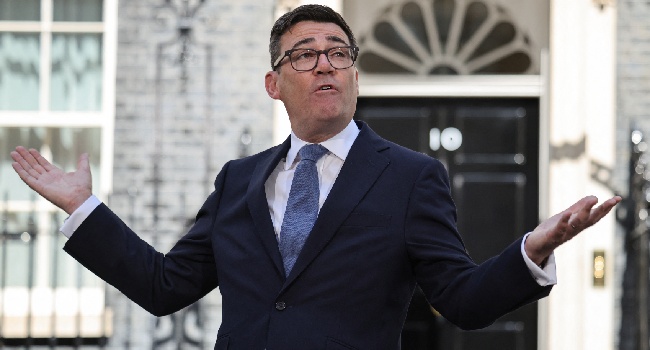

Britain’s newly elected Prime Minister, Andy Burnham, has declined to state whether he would support future efforts to legalize assisted dying, insisting that the United Kingdom must first address longstanding challenges in palliative and social care.
Speaking on Wednesday at a London event focused on adult social care, Burnham said improving care for the elderly, terminally ill, and vulnerable should take priority before Parliament revisits the contentious issue.
Responding to a question about his position on assisted dying, the Prime Minister said the country must first ensure adequate funding for palliative and social care.
“I think there is something that needs to happen first,” Burnham said.
“That is the fixing of the funding of palliative care and social care. It is very difficult to have that wider debate when many people are not receiving the care and reassurance they deserve.”
The remarks mark Burnham’s first public comments on assisted dying since assuming office less than two weeks ago.
Efforts to legalize assisted dying suffered a setback in April after a proposed bill stalled in the House of Lords, despite clearing the House of Commons.
Burnham, who was raised in a Catholic family, abstained during a parliamentary vote on the issue in 2015 while serving as a Member of Parliament.
However, in 2024, he indicated that he would likely support the principle of assisted dying, provided robust safeguards and adequate hospice funding were in place.
He has maintained that any change in the law should come only after the country’s hospice system and end-of-life care services receive sufficient financial support.
Despite the bill’s defeat earlier this year, campaigners have vowed to continue pushing for legislative reform.
Under the proposed Terminally Ill Adults (End of Life) Bill, mentally competent adults in England and Wales diagnosed with less than six months to live would be eligible to request an assisted death, subject to approval by two doctors and an independent expert panel.
The legislation is expected to return to Parliament in September when Labour lawmaker Lauren Edwards reintroduces it as a Private Member’s Bill.
As with previous attempts, the proposal will not be backed by the government, allowing Members of Parliament to vote according to their personal convictions rather than along party lines.