
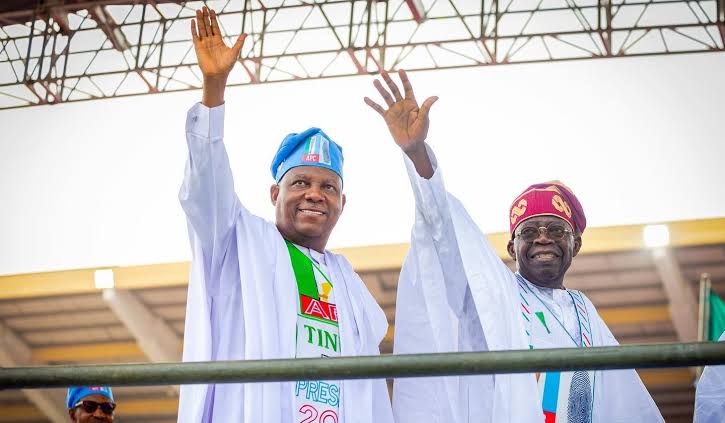

President Bola Tinubu has unveiled his re-election agenda ahead of the January 2027 general elections, promising faster economic growth, improved security and affordable housing as his administration seeks another mandate from Nigerians.
The manifesto, titled From Reform to Prosperity, was launched by the ruling All Progressives Congress (APC) on November 10 and builds on the economic reforms introduced by Tinubu since assuming office in May 2023.
Among its major targets are achieving six per cent annual economic growth by 2031, recruiting an additional 78,000 security personnel and providing 200,000 affordable homes.
However, the President’s re-election bid comes against the backdrop of widespread public dissatisfaction over the rising cost of living, fuel prices and economic hardship associated with his administration’s policies.
Since taking office, Tinubu has implemented major economic reforms, including the removal of petrol subsidies, harmonisation of official and parallel foreign exchange rates and changes to the tax system.
Although the policies have received commendation from the World Bank and the International Monetary Fund (IMF) for their potential to strengthen the economy, their immediate impact has continued to weigh heavily on Nigerian households.
Joshua Osiyemi, who heads Tracka, a government accountability platform established by BudgIT Foundation, said the initial reforms were intended to stabilise an economy facing serious fiscal challenges.
However, he noted that the removal of fuel subsidies triggered increases in transportation costs and prices of essential commodities, making survival increasingly difficult for many families.
A survey conducted by his organisation indicated that many Nigerian households were struggling to survive on N10,000 daily.
Similarly, an analysis by the International Centre for Investigative Reporting (ICIR) showed that the price of imported rice increased by 184 per cent between May 2023 and October 2025, while other essential food items also recorded significant price increases.
Although recent figures suggest some moderation in food prices, the relief has yet to translate into substantial improvements in household purchasing power.
Ikenna Okonkwo, head of research at SBM Intelligence, observed that Nigerians continued to spend an increasing proportion of their income on basic necessities.
Official figures, however, indicate that headline inflation declined to 14 per cent in September 2026 from its peak of 34 per cent in 2024, while the gap between the official and parallel foreign exchange markets has narrowed.
Tinubu has also defended the removal of fuel subsidies, arguing that it has freed up substantial resources for government spending and development.
His administration recently announced a N125 billion intervention package for small businesses, including grants for smaller enterprises and loans for manufacturers.
Nevertheless, the opposition has continued to criticise the policy.
Former Vice-President Atiku Abubakar has maintained his position that fuel subsidy should be restored to ease the financial burden on Nigerians.
However, economic analysts have questioned the feasibility of returning to the subsidy regime, citing the country’s debt burden and limited fiscal capacity.
Beyond the economy, insecurity remains another major challenge confronting the Tinubu administration.
Under his re-election agenda, the President is proposing the recruitment of an additional 28,000 military personnel and 50,000 police officers to strengthen the country’s security architecture.
However, analysts have warned that increasing the number of security personnel alone may not adequately address the complex threats posed by insurgents, kidnappers and farmer-herder conflicts, particularly in northern and central Nigeria.
Tinubu has also promised to grow the economy by six per cent annually, reduce youth unemployment by half and expand affordable housing if re-elected.
Meanwhile, his major challengers are also positioning themselves ahead of the election.
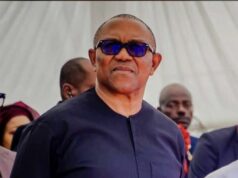
The NDC presidential candidate, Peter Obi, who finished third in the 2023 presidential election, has unveiled his 2027 Governance Agenda under the campaign slogan, “A New Nigeria Is Possible.”
Obi has placed national unity and security at the centre of his proposed policy direction, while promising a different approach to governance.