
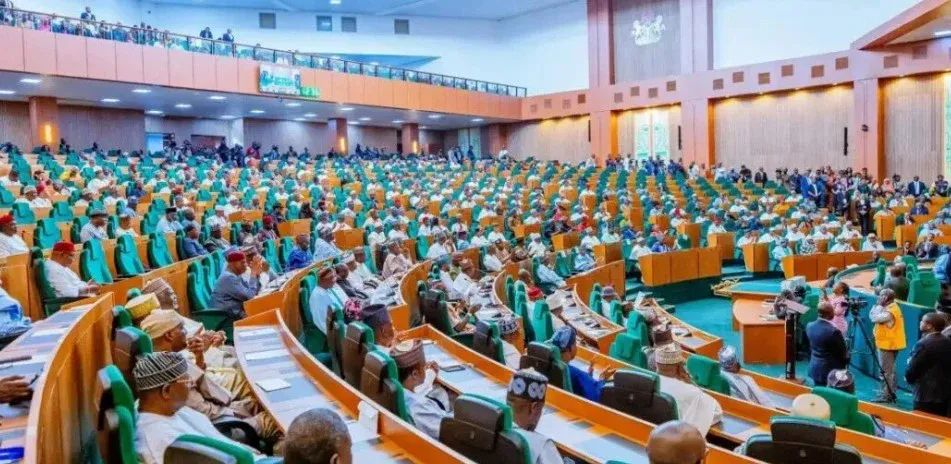

The House of Representatives Committee on Science and Technology has threatened to escalate the failure of the Minister of Innovation, Science and Technology, Dr Kingsley Tochukwu Udeh, to attend a public hearing on a proposed National Research and Innovation Development Fund.
The committee accused the minister and his ministry of frustrating efforts to establish the fund, warning that their continued absence could delay the passage of the proposed legislation and deny Nigeria access to crucial international research grants.
The lawmakers expressed disappointment that neither Udeh nor the ministry’s Permanent Secretary sent a representative to the hearing on a bill seeking to establish the fund, despite the ministry’s direct responsibility for the sector.
Speaking at the hearing, a committee member representing Chibok, Damboa and Gwoza Federal Constituency of Borno State, Ahmed Usman Jaha, described the ministry’s absence as an act capable of undermining the cordial relationship between the executive and legislative arms of government.
Jaha, who spoke on behalf of the committee, said it was unacceptable for a ministry directly responsible for an executive-sponsored bill of national importance to disregard the legislative process.
He said the committee had invited several ministers, including those of Justice, Education, Environment, Agriculture and Food Security, Health, Livestock Development, and Industry, Trade and Investment, but none attended.
The lawmaker expressed particular concern that the ministry responsible for driving research and innovation in the country failed to participate in the consideration of a bill directly affecting its mandate.
He noted that an international stakeholder who travelled from Kenya honoured the invitation, while the Nigerian ministry failed to send even a representative.
Jaha referenced the African Technology Policy Studies Network, whose representative reportedly informed the committee that several African countries had established national research and innovation funds, while Nigeria was yet to put a similar framework in place.
The committee member disclosed that the minister and Permanent Secretary would be given another opportunity to appear before the conclusion of the public hearing.
He warned that failure to honour the invitation would compel the committee to raise a motion of urgent public importance at the next sitting of the House.
Jaha argued that the proposed fund was critical to Nigeria’s ability to attract research grants from donor agencies, Nigerians in the diaspora, international organisations, United Nations agencies and non-governmental organisations.
He added that the hearing would have provided the minister an opportunity to raise objections, identify contentious provisions and recommend amendments to the bill.
Earlier, the Chairman of the committee, Zakariya Tijjani Zannah, said Nigeria needed a sustainable funding mechanism to support research, coordinate scientific activities and transform discoveries into commercially viable products.
He maintained that although the country had the intellectual capacity and research talent to drive innovation, the absence of a dependable legal and institutional framework had continued to undermine the sector.
Zannah urged stakeholders to scrutinise the proposed governance structure, funding arrangements and grant allocation mechanisms to ensure transparency and accountability.
He specifically highlighted the proposed 20 per cent contribution from the Nigerian Content Development Fund under Section 19 of the bill, as well as other proposed revenue sources, including government appropriations, grants and proceeds from commercialisation.
He also called for a review of the proposed 2.5 per cent limit on administrative expenditure under Section 21 and provisions relating to competitive grant allocation and intellectual property rights.
Declaring the hearing open, Speaker of the House of Representatives, Tajudeen Abbas, represented by Deputy House Leader, Abdullahi Ibrahim Halims, described the proposed legislation as essential to Nigeria’s economic development and global competitiveness.
Abbas lamented that despite the country’s enormous intellectual resources in universities, research institutions, professional communities and the diaspora, research findings had largely failed to translate into practical solutions and industrial growth.
He observed that many research projects ended with academic publications, while promising innovations struggled to secure funding and commercialisation opportunities.
According to him, the proposed legislation seeks to bridge the gap between research, funding, investment and industrial development.
The Speaker said the proposed National Research and Innovation Development Fund and the National Council on Research and Innovation, to be chaired by the Vice President, would provide an institutional framework for coordinating research priorities, securing sustainable funding and promoting the commercialisation of discoveries.
He, however, cautioned against political interference in the administration of the proposed fund, insisting that research grants must be awarded based on merit, scientific relevance and demonstrable potential.
Abbas also advocated an inclusive funding structure that would accommodate polytechnics, specialised research institutions, emerging technology companies and independent innovators alongside universities and established research centres.
He urged stakeholders to make practical recommendations on governance, funding, grant administration, intellectual property rights, commercialisation and accountability.
The Speaker maintained that Nigeria must move beyond dependence on imported solutions and build an environment where homegrown innovations attract investment, generate employment and contribute meaningfully to economic development.