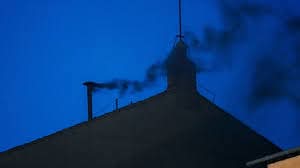

Black smoke rose once again from the chimney of the Sistine Chapel on Thursday, signalling that Catholic cardinals have yet to elect a successor to Pope Francis, who passed away on April 21 at the age of 88.
The plume of smoke, witnessed by thousands gathered in St Peter’s Square, came after the second and third rounds of voting failed to yield a winner.
According to tradition, black smoke means no candidate has received the required two-thirds majority, 89 of the 133 votes, while white smoke indicates the election of the new, 267th pope.
Among those observing the event was Barbara Mason, 50, who traveled from Canada.
“I don’t want it rushed , whatever they need to do to make the right decision,” she said, expressing hope for a pontiff who would uphold Pope Francis’s progressive values, particularly on climate and migration.
She added that she is praying the Church continues “going forward, not going backward.”
The 133 cardinal electors, all under the age of 80, entered the conclave on Wednesday evening and are now completely sequestered from the outside world.
Their only communication comes in the form of smoke rising from the chapel.
Each round of ballots is burned in a traditional cast iron stove, and chemicals added to a newer stove determine the smoke’s color.
Paolo Cabrera, 40, from the Philippines, arrived early with his wife Cynthia to secure a spot near St Peter’s Basilica.
“It is very, very exciting to be here,” he said.
The couple expressed their support for Cardinal Luis Antonio Tagle but emphasized their faith in divine guidance: “Anybody appointed by God,” they said, would be acceptable.
The cardinals are lodged in the Santa Marta guesthouse and attend private Mass each morning before beginning their voting sessions, which may include up to four rounds daily.
On Thursday, they held two votes in the morning and were expected to conduct two more in the afternoon, with additional ballots planned for Friday if necessary.
“The church has many divisions between liberals and conservatives, which are divisions that should not be, because I believe that the Church is universal,” said Juan Benitez, 37, a Colombian pilgrim reflecting on the challenges the new pope will face.
This year’s conclave is the most diverse and largest in history, drawing participants from nearly 70 countries. Roughly 80 percent of the electors were appointed by Pope Francis, suggesting his influence will loom large over the outcome.
Still, no clear frontrunner has emerged. Potential candidates include Italian Cardinal Pierbattista Pizzaballa, Hungarian Cardinal Peter Erdo, and Sri Lankan Cardinal Malcolm Ranjith.
As anticipation builds, Catholics around the world continue to wait for the moment white smoke will rise, heralding the next spiritual leader of the world’s 1.4 billion Catholics.