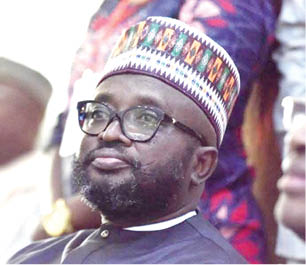

Professor Kabir Mato, a seasoned political scientist and former commissioner, shares his insights on the ongoing efforts by opposition parties in Nigeria to form a political coalition.
Drawing from historical contexts and current developments, he emphasizes the importance of sincerity and purpose in achieving success.
On the Current Coalition Efforts:
Prof. Mato acknowledges that forming coalitions is a strategic necessity for opposition parties aiming to unseat ruling governments.
“Well, I think it’s one of the strategies that are open to political parties, mainly that are in opposition,” he said.
“You have to come together in order to wrest power from the party that is in government. This has happened in several countries across the world, especially in the third world nations of Africa.”
He referenced the successful coalition that birthed the APC and led to the PDP’s loss in 2015.
“In Nigeria, particularly, it was a coalition that led to the formation of the All Progressives Congress (APC) in 2013-2014 that led to the defeat of the then very dominant ruling People’s Democratic Party (PDP) in 2015,” he recalled.
Lessons from Past Republics:
Reflecting on Nigeria’s political history, Prof. Mato noted that earlier coalition attempts in the First and Second Republics failed to yield meaningful results.
“In my view, it is too early to call it,” he said regarding the current effort.
“That will depend on several factors, among which is the level of seriousness of those who are seeking to forge the alliance… and the sincerity of purpose in terms of what the coalition intends to achieve.”
He recalled the UPGA alliance in the First Republic, which included Action Group, NCNC, and NEPU, and its inability to overcome regional divisions.
“The obvious stress of the regional politics… did not allow these alliances to take the meaningful position that would have given the necessary defeat to the ruling party.”
In the Second Republic, he said the coalition’s potential was stifled by widespread electoral fraud.
“One could comfortably say that the election was not just flawed, but it was merely a design by the NPN government to simply rebuild the map of the state that it controlled in Nigeria.”
He pointed to examples like Plateau and Oyo states, where leaders such as Solomon Lar and Sam Mbakwe resisted manipulative federal interference.
Changing Role of Governors and Political Power:
On the current landscape, Prof. Mato emphasized that electoral dynamics are evolving.
“Let’s start by saying that the Nigerian electoral map, the Nigerian electoral system in general is transforming,” he said.
“What you had in 2023 wasn’t what actually happened in 2003, 2007, and even 2011.”
He argued that voter awareness and system maturity have grown.
“This shows therefore that the electoral system is improving… We are not there yet… But there were clear indications that the electoral system has been improving.”
Regarding governors’ influence, he observed a shift.
“The role of the governments and all political officials in managing the outcome of electoral contest is increasingly diminishing in Nigerian politics. And that is the beauty of it.”
He gave a specific example from the 2023 elections: “The APC had 23 states… five other governors of the opposition PDP supported the APC candidate. Yet… the winner was only able to win 12 states. Now, this is one indication to show you that Nigeria’s political electoral system is gradually changing.”
Grassroots Influence and Incumbency:
Prof. Mato further explained that incumbents can no longer dictate outcomes as they once did.
“If 2023 is anything to make reference to, being a governor in the state does not mean that you have the total control of the voting pattern of the citizens in that state.”
“In primary elections, you can say so, because the governors determine who the delegates are. But once it is general election, it’s different,” he clarified.
“The Nigerian electoral system is gradually getting out of that scenario, where you talk about incumbency advantage, the power of governors, the power of senators, and so on.”
On the Ruling Party’s Suppression of Opposition:
While noting positive shifts, he admitted that some old patterns persist.
“Though you said the political system in Nigeria is evolving for the better, but the tendency by ruling [parties] to muzzle opposition has remained the same.”
He pointed to the PDP’s dominance in the early 2000s.
“At a point, you recall that in 2003, the PDP was able to emasculate the entire southwestern state in this country… And by 2007, the PDP had taken over almost two-thirds of the states of the federation.”
Advice on the Atiku–Obi Rivalry:
Finally, when asked about a major potential stumbling block, who would lead between Atiku Abubakar and Peter Obi, Prof. Mato was blunt.
“The coalition is likely to fail in the event that individual idiosyncrasies and aspirations are placed before the desire for attainment of national objectives.”